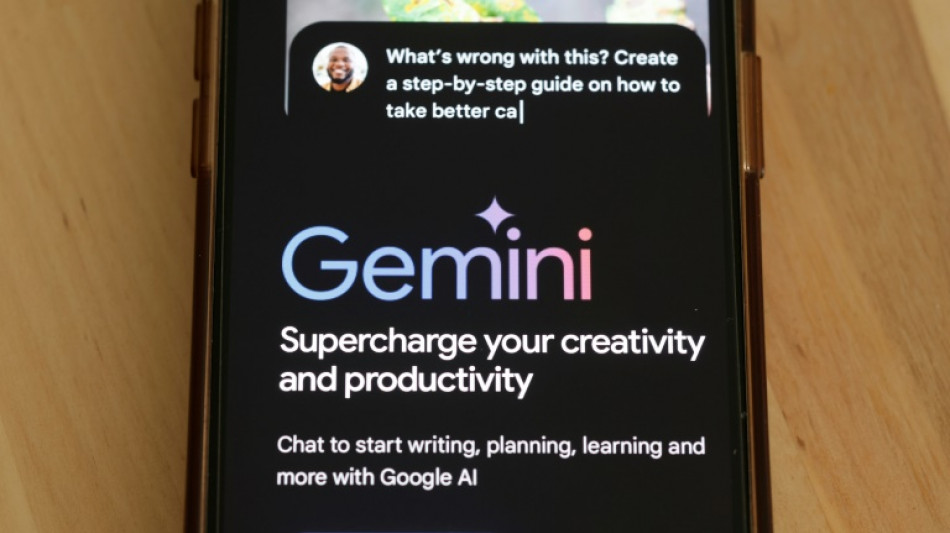
Google renews push into mixed reality headgear / Photo: Michael M. Santiago - GETTY IMAGES NORTH AMERICA/AFP

 Former soldier stopped with blank round at Incheon Airport

 Korea Post breach exposes data of at least 113,855 customers

 Many AAPI Candidates Win Seats in Orange County Local Elections

 Holly Ramsay and Adam Peaty Welcome Daughter Daphne June at Portland Hospital

 Honda and Toyota Recall 1.6 Million Vehicles Over Takata Airbag Risks

 Court Dismisses Fenech’s Bid to Revoke Theuma’s Pardon

 Fundraiser launched for Daniel Buttigieg after boat accident

Google is ramping up its push into smart glasses and augmented reality headgear, taking on rivals Apple and Meta with help from its sophisticated Gemini artificial intelligence.
The internet titan on Thursday unveiled an Android XR operating system created in a collaboration with Samsung, which will use it in a device being built in what is called internally "Project Moohan," according to Google.
The software is designed to power augmented and virtual reality experiences enhanced with artificial intelligence, XR vice president Shahram Izadi said in a blog post.
"With headsets, you can effortlessly switch between being fully immersed in a virtual environment and staying present in the real world," Izadi said.
"You can fill the space around you with apps and content, and with Gemini, our AI assistant, you can even have conversations about what you're seeing or control your device."
Google this week announced the launch of Gemini 2.0, its most advanced artificial intelligence model to date, as the world's tech giants race to take the lead in the fast-developing technology.
CEO Sundar Pichai said the new model would mark what the company calls "a new agentic era" in AI development, with AI models designed to understand and make decisions about the world around you.
Android XR infused with Gemini promises to put digital assistants into eyewear, tapping into what users are seeing and hearing.
An AI "agent," the latest Silicon Valley trend, is a digital helper that is supposed to sense surroundings, make decisions, and take actions to achieve specific goals.
"Gemini can understand your intent, helping you plan, research topics and guide you through tasks," Izadi said.
"Android XR will first launch on headsets that transform how you watch, work and explore."
The Android XR release was a preview for developers so they can start building games and other apps for headgear, ideally fun or useful enough to get people to buy the hardware.
This is not Google's first foray into smart eyewear. Its first offering, Google Glass, debuted in 2013 only to be treated as an unflattering tech status symbol and met with privacy concerns due to camera capabilities.
The market has evolved since then, with Meta investing heavily in a Quest virtual reality headgear line priced for mainstream adoption and Apple hitting the market with pricey Vision Pro "spacial reality" gear.
Google plans to soon begin testing prototype Android XR-powered glasses with a small group of users.
Google will also adapt popular apps such as YouTube, Photos, Maps, and Google TV for immersive experiences using Android XR, according to Izadi.
Gemini AI in glasses will enable tasks like directions and language translations, he added.
"It's all within your line of sight, or directly in your ear," Izadi said.
L.E.Campos--PC