Ukraine folk artists harness music to fight Russian 'assimilation' / Photo: Sébastien DUPUY - AFP

 American Nobel laureate in medicine hopes to illuminate the brain
 Trump approves firing squad for convicted US military base shooter

 Grappling with 'homework scams,' US universities shun AI detectors
 Separatists win Quebec election in test for Canada PM

 Leaders visit Pacific atoll at frontline of climate change

 Yemen's Houthis claim striking Riyadh airport, other Saudi sites
 Best-selling British author Jeffrey Archer dies aged 86

 Military plane crash kills 32 in Nigeria

 Olise powers France to win over Belgium in Nations League
 High-flying Blazy turns to birdlife at Chanel
 Riyadh's allies pledge troops as Yemen, Saudi Arabia attack Houthis

 Clashes erupt outside Kosovo parliament over war crimes court
 Milan's Saelemaekers suffers ankle setback, faces lengthy spell out
 Rubio arrives in Iceland to push for greater US presence in Arctic
 Putin allows Italy's UniCredit to sell part of Russian business
 Djokovic into China Open final as Medvedev out for hitting fan with ball

 ICC unseals arrest warrants for Taliban education ministers
 Modric hopes fans back Croatia against Spain after England shame
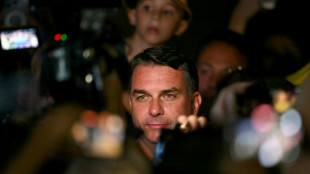 Bolsonaro rides right-wing surge into Brazil's election runoff

 Turkey blocks X account of British reporter
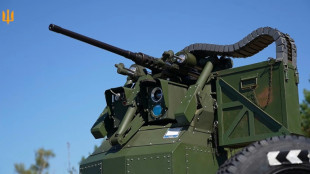 Ukraine says using AI robot guns to shoot down new Russian drones
 At Oct 7 memorial, Netanyahu says will be no Hamas rule in Gaza
 Ukraine blames Russia for deadly sinking of Turkish ship in Black Sea
 UN rights council slams Taliban's 'oppression' of women
 Norway eyes partial ban of smart glasses
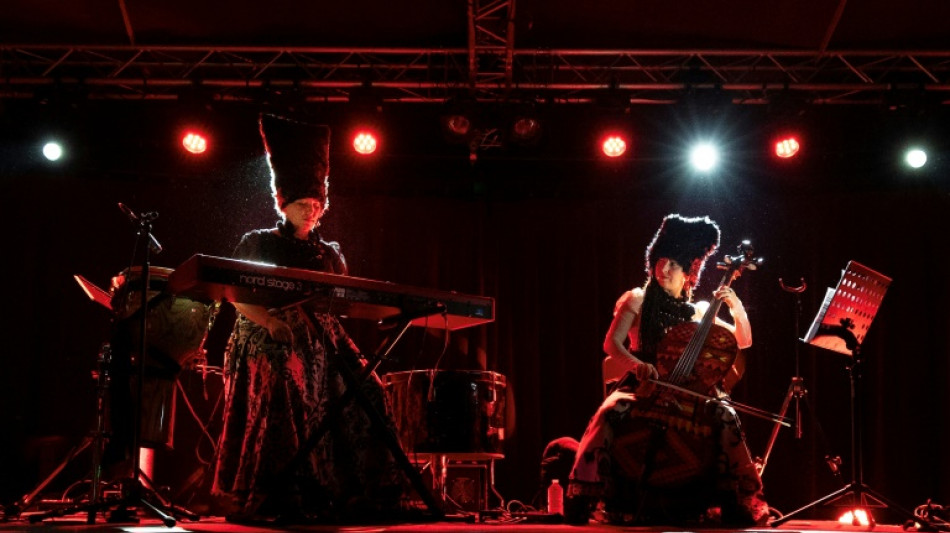
A Ukrainian band is treating international audiences to their country's traditional folk music, spiced up with world music and some rap, with the stated aim of aiding the struggle against cultural "assimilation" of their country by its neighbour Russia.
Ukraine's DakhaBrakha ensemble starts the performance at the Parisian Cabaret Sauvage venue with the greeting "Good evening from free Ukraine", before singer Marko Halanevych, cellist Nina Garenetska, keyboardr Iryna Kovalenko and percussionist Olena Tsybulska launch into the evening's programme.
With identical traditional peasant blouses and layers of necklaces, the group's three women could pass for sisters. Their tall black hats resembling stove pipes, however, are just a fun prop with no actual roots in Ukrainian folklore.
"We've been suffering from Russia's assimilation policy for three hundred years," said Halanevych.
After "so many tragic episodes", added the trained philologist, "it's a miracle that Ukrainian identity, culture and language still exist".
Much of modern Ukraine's territory was part of the Russian empire under the tsars and then the Soviet Union following the Bolshevik revolution.
Many Western analysts believe that President Vladimir Putin long dreamed of absorbing Ukraine into Russian territory even before the February 2022 full-scale invasion.
In conversation, the singer's fatigue becomes apparent. He admits to being tired, not just from the group's ongoing tour taking it to France, Switzerland and Luxembourg, but also from the strain brought on by Russia's war on his country.
DakhaBrakha's concerts are interspersed with reminders of the conflict, and part of the proceeds go to the national war effort.
- 'We don't judge' -
"We are aware of course that people in Europe are tired of hearing about it," said Halanevych. "We understand, and we don't judge."
After a two-year break due to the Russian invasion, DakhaBrakha, which has been around for two decades, resumed touring. Mostly abroad, but sometimes at home.
Last spring, the quartet performed in Dnipro in the east of the country -- where the gig was interrupted three times by air raid sirens -- as well as in Chernivtsi, Odesa and Vinnytsia.
Next month, it is planning its first studio session since 2020 in Kyiv, which they call "an important and symbolic choice" of location.
The folkloric repertoire has seen a resurgence in Ukraine over the past decades, with ethnomusicologists often recording elderly women to preserve the heritage as faithfully as possible.
But DakhaBrakha is not shy about lacing central European polyphonic traditions with thumping bass lines, distorted electric guitars and vocal lines akin to rapping.
Their concerts, which have taken them across Europe, the United States, Canada, Australia and New Zealand, sometimes have moments of "disconnect" as news from home abruptly bursts into joyful performances via alarm signals from Ukraine flashing up on their smartphone apps.
"Each time we worry about our loved ones," said Halanevych.
The quartet's frontman is the first to acknowledge that weaponising music may not be enough of a contribution to the war effort indefinitely, given that Ukraine is finding it increasingly difficult to recruit soldiers.
"We may need more people to take up arms or dig trenches," he said. "I am ready to defend my country."
Halanevych's brother Taras, 37, a journalist and sound engineer, already began his military training last month.
F.Moura--PC