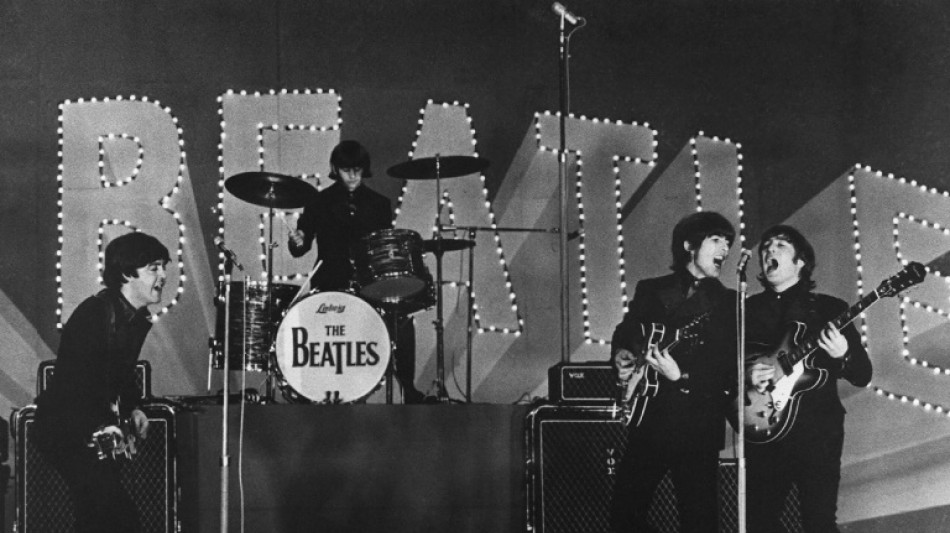
Beatles' Grammy nod spotlights music industry's AI debates / Photo: JIJI PRESS - JIJI PRESS/AFP/File

 American Nobel laureate in medicine hopes to illuminate the brain
 Trump approves firing squad for convicted US military base shooter

 Grappling with 'homework scams,' US universities shun AI detectors

 Separatists win Quebec election in test for Canada PM

 Leaders visit Pacific atoll at frontline of climate change

 Yemen's Houthis claim striking Riyadh airport, other Saudi sites

 Best-selling British author Jeffrey Archer dies aged 86

 Military plane crash kills 32 in Nigeria

 Olise powers France to win over Belgium in Nations League
 High-flying Blazy turns to birdlife at Chanel

 Riyadh's allies pledge troops as Yemen, Saudi Arabia attack Houthis
 Clashes erupt outside Kosovo parliament over war crimes court
 Milan's Saelemaekers suffers ankle setback, faces lengthy spell out

 Rubio arrives in Iceland to push for greater US presence in Arctic
 Putin allows Italy's UniCredit to sell part of Russian business
 Djokovic into China Open final as Medvedev out for hitting fan with ball
 ICC unseals arrest warrants for Taliban education ministers
 Modric hopes fans back Croatia against Spain after England shame

 Bolsonaro rides right-wing surge into Brazil's election runoff
 Turkey blocks X account of British reporter
 Ukraine says using AI robot guns to shoot down new Russian drones
 At Oct 7 memorial, Netanyahu says will be no Hamas rule in Gaza
 Ukraine blames Russia for deadly sinking of Turkish ship in Black Sea

 UN rights council slams Taliban's 'oppression' of women

 Norway eyes partial ban of smart glasses
Beyonce, Kendrick Lamar and...The Beatles?
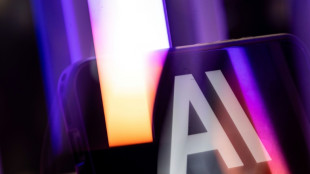
The Fab Four broke up more than half-a-century ago and only two members are living, but they are among the contenders for the Grammy celebrating the year's best record, a head-scratching nomination that highlights the Recording Academy's ongoing debate on how to handle artificial intelligence.
News that The Beatles would release the song "Now and Then" with an AI assist triggered excitement for some fans but outrage among others, as some jumped to the conclusion that deepfakes were involved.
That isn't the case: "Now and Then" was made using "stem separation," a type of AI technology that allowed for cleaning up the decades old, lo-fi demo plagued by excess noise.
They used it to isolate John Lennon's vocals from the unwanted bits of the recording, making it usable.
Creators then added electric and acoustic guitar recorded in 1995 by the late George Harrison, completing the song with drums from Ringo Starr and bass, piano and slide guitar from Paul McCartney, along with additional backing vocals.
And the Recording Academy behind the Grammys gala -- set for Sunday in Los Angeles -- deemed it eligible to win Record of the Year, one of the night's top prizes, as well as Best Rock Performance.
- 'Elements of AI material' eligible -
The institution has been grappling for years with AI's implications for the music industry, as many artists voice serious concern over the ethics of music generated by the technology.
The Academy released a ruling in 2023 that "only human creators are eligible" to be considered for Grammys.
"A work that contains no human authorship is not eligible in any categories," read the detailed rules.
But, it adds, "a work that features elements of AI material (ie, material generated by the use of artificial intelligence technology) is eligible in applicable categories."
The takeaway: as it stands, work created with purely generative AI isn't eligible.
Songs touched by AI tools that polish rather than create -- like "Now and Then" -- can be considered.
As McCartney has put it regarding the Beatles track: "Nothing has been artificially created."
- 'Slippery slope' -
Nashville singer-songwriter Mary Bragg told AFP the type of technology used on "Now and Then" is quite common, calling its development a real "a-ha moment" for producers and engineers.
She said the tool is used routinely enough that the shock in media coverage over its use on the Beatles song was a bit overwrought.
Still, Bragg said the implications of AI tools in music remains a "big deal, because it is a new realm that we're all existing in now."
The questions are far-reaching and "it is certainly a slippery slope," she told AFP. "You have people learning about what's possible more and more."
"If the integrity of the art is not preserved, that's when it's of major concern."
At the forefront of artists' concerns are issues like their work being used without clear permission or to train AI software, or their likeness being forged, with Bragg calling those examples "definitely part of the slippery slope category."
Linda Bloss-Baum, a lecturer at American University and a member of the board of directors of the Songwriters of North America, said many aspects of AI worry her -- but not the tech used on the Beatles track.
"There's a lot of bad that can come to artists from AI, but this is an example of something really good," she said.
"I think it's a really good example of how AI can come to benefit artists, if they so want," she added about the song, which was made with permission from the estates of Lennon and Harrison.
The announcement that The Beatles were in the running for one of the top Grammys triggered some eyerolls from industry watchers and social media users over the nomination of a legacy act alongside, or instead of, contemporary acts.
But the Grammys are an industry award and not fan-chosen -- and sometimes nominations have a behind-the-scenes thought process that makes sense to Academy members even if it leaves the general public puzzled.
For one thing, Bragg noted that the prize for Record of the Year goes to song engineers and producers as well as the artists.
Including The Beatles is "a nod to what is likely to be the case in the future in the world of recording," she said.
Several of the acts up for the prize have been nominated before but never won it, including Beyonce, Lamar and...The Beatles.
It's the group's fifth chance in the category; the last time was in 1971, for "Let It Be."
Ferreira--PC