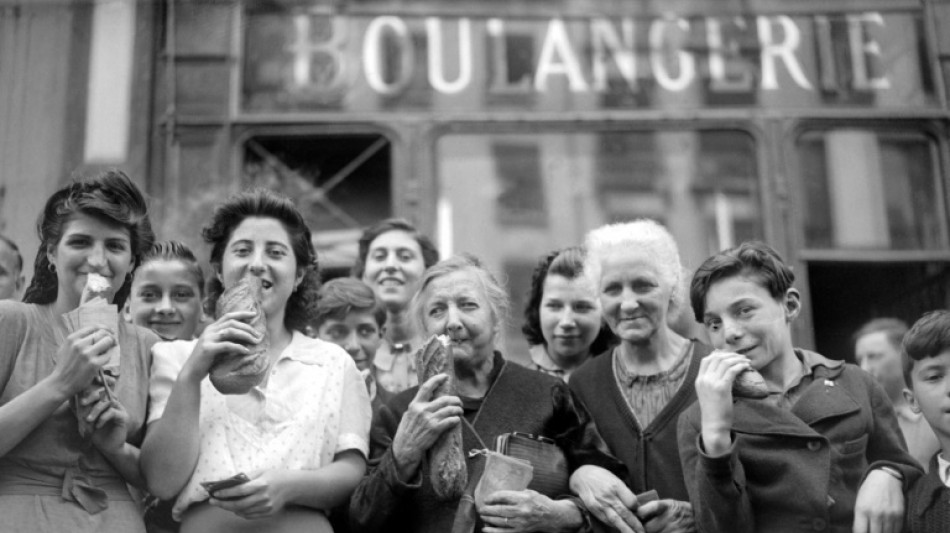
Let them eat bread: the origins of the baguette / Photo: STF - AFP/File

 Iran, US trade threats after fresh strikes

 US not 'stealing Venezuelan oil,' energy secretary insists

 Farming experts tout 'conscious' food systems to fix agriculture woes

 George Lucas unveils art galaxy at his new LA museum

 Veteran Wallaby Slipper targets fifth World Cup after Brumbies deal

 Sabalenka storms into US Open third round as Pegula, Medvedev advance

 Zverev looks to improve after first-round scare

 Raiders to start Cousins over top NFL Draft pick Mendoza

 Palantir chief says France's digital sovereignty push 'backfiring'

 US energy firms dominate Venezuela deals worth billions

 Iran, US trade threats after escalation in fighting

 US jury deadlocks again in Lindsay Clancy's child murder trial

 Lake America? No way, Canadians say

 Spain report flags Moroccan police failings in Ceuta migrant rush

 Tech bosses press G20 to build data centers, but split on risk

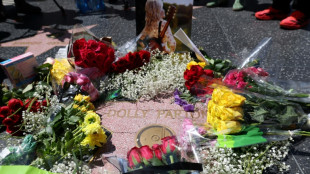 Dolly Parton to get new Hollywood star after vandalism

 Trump 'happy' Prince Harry and Meghan have left US

 Michelson shocks Nakashima in US Open clash of rising Americans

 Another body recovered after ferry capsizes off northern Cyprus: official

 Cupertino Chamber President Claudio Bono Invited to White House with GiveaRoof 3-Year Plan to End Homelessness

 Trump floats renaming Strait of Hormuz as 'Trump Strait'
 Man City, Chelsea fuel record-breaking Premier League transfer window

 Balogun rejected Everton move over transfer 'treatment'

 Northampton seek 'happy medium' in bid to keep England star Pollock

 US energy secretary in Venezuela to sign Trump's 'biggest' oil deal

It is as much a part of French culture as the Eiffel Tower or Edith Piaf but the origins of the humble baguette, which UNESCO on Wednesday added to its List of Intangible Cultural Heritage, remain a mystery.
Here are some of the more popular theories:
- Napoleon's bread of war -
The oldest tale has the baguette being kneaded by bakers in Napoleon's army. Less bulky than a traditional loaf, the long slim shape of the baguette made it faster to bake in brick ovens hastily erected on the battlefield.
France's most famous man of war was preoccupied with getting his men their daily bread.
During his Russian campaign in 1812, he toured the ovens daily to sample the day's offering and ensure the crusty batons were being distributed regularly, according to historian Philippe de Segur.
He also had portable bread mills sent to occupied Moscow, but the setbacks suffered by the Grande Armee in one of the deadliest military campaigns in history ended his bid to export the doughy staple.
- The Viennese connection -
Another theory has the baguette starting out in a Viennese bakery in central Paris in the late 1830s.
Artillery officer and entrepreneur August Zang brought Austria's culinary savoir-faire to Paris in the form of the oval-shaped bread that were standard in his country at the time.
According to the Compagnonnage des boulangers et des patissiers, the French bakers' network, Zang decided to make the loaves longer to make them easier for the city's breadwomen to pluck from the big carts they pushed through the city's streets.
- Breaking bread -
Another theory has the baguette being born at the same time as the metro for the 1900 Paris Exposition.
People from across France came to work on the underground and fights would often break out on site between labourers armed with knives, which they used to slice big round loaves of bread for lunch.
According to the herodote.net history site, to avoid bloodshed, one engineer had the idea of ordering longer loaves that could be broken by hand.
- Early rising -
In 1919, a new law aimed to improve the lives of bakers by banning them from working from 10 pm to 4 am.
The reform gave them less time to prepare the traditional sourdough loaf for the morning, marked the widespread transition to what was called at the time the yeast-based "flute", which rose faster and was out of the oven in under half an hour.
Standardised at 80 centimeters (30 inches) and 250 grams (eight ounces) with a fixed price until 1986, the baguette was initially the mainstay of wealthy metropolitans, but after World War II became the emblem of all French people.
T.Batista--PC