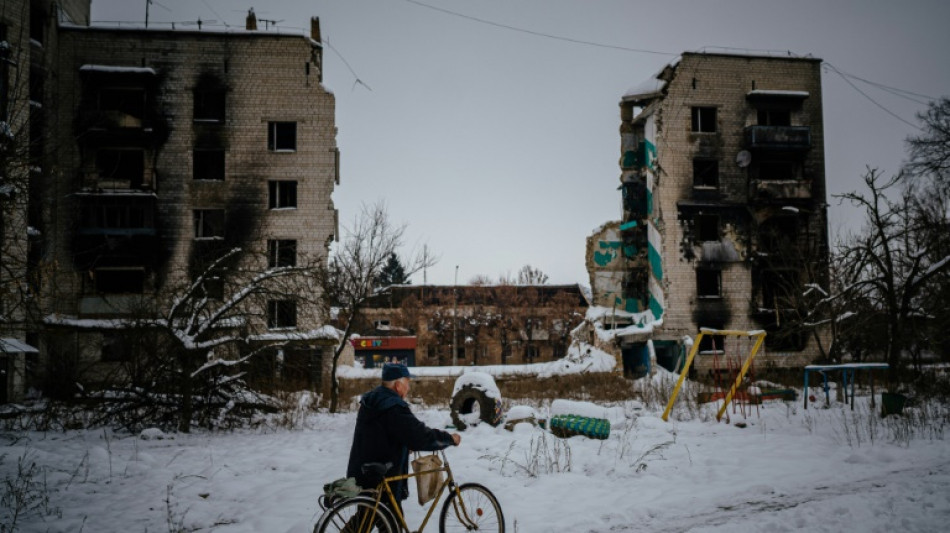
Ukraine races to restore power grid post-Russia strikes as winter comes / Photo: Dimitar DILKOFF - AFP

 US Open under the influence: content creators spark debate

 NBA hammers Clippers over Leonard salary cap violations
 NBA strips five first-round draft picks from Clippers for Leonard salary cap violations
 Kane brace helps Bayern win German Cup opener
 Migrant plight, local anger divide Ceuta one month after influx
 Outrage as Maltese tycoon acquitted of reporter's murder

 Rare train of Pacific cyclones fueled by historic El Nino
 Macron, King Charles hail UK-France ties after viewing Bayeux Tapestry
 Fury hits out at 'coward' Joshua as 'Battle of Britain' talks go on
 Maltese tycoon acquitted of masterminding reporter's murder
 George Clooney: a Hollywood icon and campaigner

 Europe, US closer than they look on tech rules, says EU tech chief
 Clooney honoured as Hollywood-light Venice Film Festival kicks off

 Third-ranked Pegula, Medvedev power into US Open third round
 Davis-Woodhall a doubt for Ultimate Championship after car crash

 Third-ranked Pegula powers into US Open third round

 Uber says laying off 'about 10%' of workforce worldwide

 US judge rejects bid to break up Google's ad business
 Rupert Murdoch 'very happy' to be played by Guy Pearce in new film

 Wall Street stocks rise despite bond yields, oil rising
 Brennan claims third Vuelta victory in stage 11 sprint

 Nepal flood survivors cling to zipline to cross treacherous river

 US Treasury issues $1 coin with Trump's face on it
 Fernandez 'didn't hesitate' over record Man City move
 Dutch shift 86 tonnes of gold from US, Canada to UK
Ukraine worked to restore power on Tuesday after Russia's latest wave of missile strikes caused power disruptions across the country, right as winter frost builds and temperatures plunge.
Out of the 70 missiles launched by Moscow, "most" were shot down, President Volodymyr Zelensky said, but the barrage still hit Ukraine's already battered infrastructure.
Fresh power cuts were announced in all regions "due to the consequences of shelling," national electricity provider Ukrenergo said on Telegram.
The head of Ukrenergo said he had "no doubt that Russian military consulted with Russian power engineers during this attack", judging by where the missiles landed.
"The time that Russians chose for this attack was connected with their desire to inflict as much damage as possible," Volodymyr Kudrytskyi told a Ukrainian news programme, explaining the attacks were launched as the country enters a "peak frost" period.
"Our repairmen will be working on the energy system restoration."
Nearly half of Ukraine's energy system has already been damaged after months of strikes on power infrastructure, leaving people in the cold and dark for hours at a time as outdoor temperatures drop below zero degrees Celsius (32 degrees Fahrenheit).
As missiles rained down on Kyiv, UN rights chief Volker Turk -- who arrived over the weekend on a four-day visit -- had to move his meetings with activists into an underground shelter.
Zelensky announced in his nightly address that four were killed in Russia's strikes.
But "our people never give up," the president said in a video statement.
Moscow in turn blamed Ukraine for drone attacks in Russia's Saratov and Ryazan regions which caused explosions at two of its airfields and killed three soldiers.
At the same time, it confirmed a "massive attack on Ukrainian military command systems and related defence, communications, energy and military facilities".
- Moscow vows to keep fighting -
The attacks come just after Russia shrugged off a Western-imposed price cap on its oil exports, warning the move would not impact its military campaign in Ukraine.
The $60-per-barrel cap agreed by the European Union, G7 and Australia aims to restrict Russia's revenue while making sure Moscow keeps supplying the global market.
"Russia's economy has all the necessary potential to fully meet the needs and requirements of the special military operation," Kremlin spokesman Dmitry Peskov told reporters, using Moscow's term for its Ukraine offensive.
"These measures will not affect this," he said.
Russia "will not recognise" the measures, which amounted to "a step towards destabilising the global energy markets", he added.
The market price of a barrel of Russian Urals crude is currently around $65 dollars, just slightly higher than the $60 cap -- suggesting the measure may have only a limited impact in the short term.
The cap is the latest in a number of measures spearheaded by Western countries and introduced against Russia -- the world's second-largest crude oil exporter -- after Moscow sent troops into Ukraine over nine months ago.
It comes on top of an EU embargo on seaborne deliveries of Russian crude oil that came into force on Monday.
The embargo will prevent maritime shipments of Russian crude to the European Union, which account for two-thirds of the bloc's oil imports from Russia, potentially depriving Moscow of billions of euros.
Kyiv had initially welcomed the price ceiling, but later said it would not do enough damage to Russia's economy.
Meanwhile, Russian state media released footage of President Vladimir Putin driving a Mercedes car across the Crimea bridge -- the closest the 70-year-old leader has come to the frontline in Ukraine.
The bridge connects the annexed peninsula to the Russian mainland, and was damaged in a blast in October.
- 'Impossible to prepare' -
The G7 nations -- Britain, Canada, France, Germany, Italy, Japan and the United States -- along with Australia have said they are prepared to adjust the price ceiling of oil if necessary.
In recent months, gas prices have skyrocketed since Moscow halted deliveries to the EU in suspected retaliation for Western sanctions and the bloc struggled to find alternative energy suppliers.
In the Ukrainian town of Borodianka, outside Kyiv, where snow has already coated the ground, locals recently gathered around wood-fired stoves inside tents to keep warm and cook food during the blackouts.
Volunteer Oleg said it was hard to say how Ukraine would manage in the coming winter months.
"It is impossible to prepare for this winter because no one has lived in these conditions before," he said.
M.Carneiro--PC