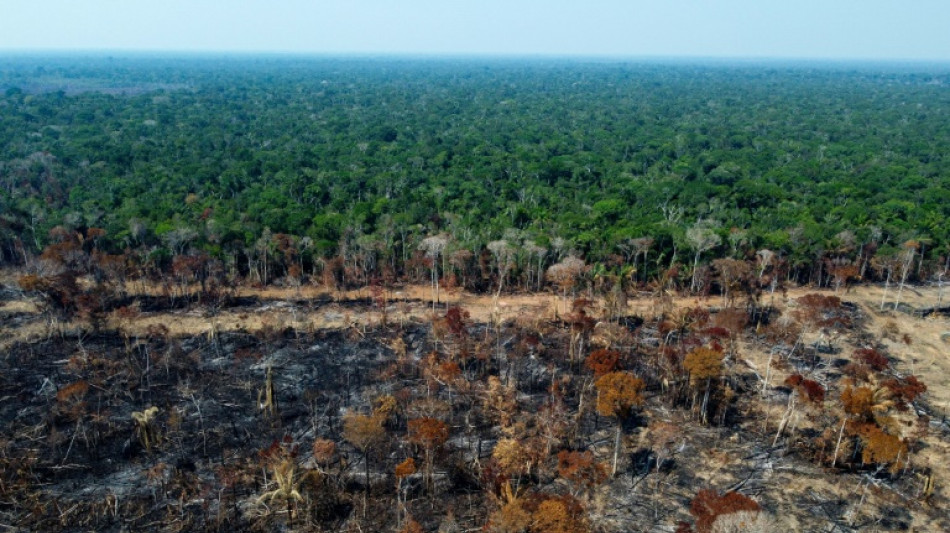
EU agrees ban on imports driving deforestation / Photo: MICHAEL DANTAS - AFP/File

 US Open under the influence: content creators spark debate

 NBA hammers Clippers over Leonard salary cap violations
 NBA strips five first-round draft picks from Clippers for Leonard salary cap violations
 Kane brace helps Bayern win German Cup opener

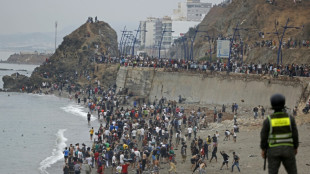
 Migrant plight, local anger divide Ceuta one month after influx

 Outrage as Maltese tycoon acquitted of reporter's murder
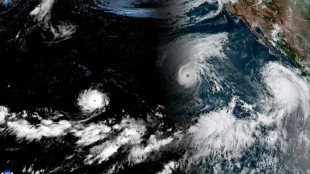 Rare train of Pacific cyclones fueled by historic El Nino
 Macron, King Charles hail UK-France ties after viewing Bayeux Tapestry
 Fury hits out at 'coward' Joshua as 'Battle of Britain' talks go on

 Maltese tycoon acquitted of masterminding reporter's murder
 George Clooney: a Hollywood icon and campaigner

 Europe, US closer than they look on tech rules, says EU tech chief

 Clooney honoured as Hollywood-light Venice Film Festival kicks off
 Third-ranked Pegula, Medvedev power into US Open third round
 Davis-Woodhall a doubt for Ultimate Championship after car crash

 Third-ranked Pegula powers into US Open third round

 Uber says laying off 'about 10%' of workforce worldwide

 US judge rejects bid to break up Google's ad business

 Rupert Murdoch 'very happy' to be played by Guy Pearce in new film

 Wall Street stocks rise despite bond yields, oil rising

 Brennan claims third Vuelta victory in stage 11 sprint

 Nepal flood survivors cling to zipline to cross treacherous river

 US Treasury issues $1 coin with Trump's face on it

 Fernandez 'didn't hesitate' over record Man City move

 Dutch shift 86 tonnes of gold from US, Canada to UK

The European Union reached an agreement Tuesday to ban the import of products including coffee, cocoa and soy in cases where they are deemed to contribute to deforestation.
The draft law, which aims to ensure "deforestation-free supply chains" for the 27-nation EU, was hailed by environmental groups as "groundbreaking".
It requires companies importing into the EU to guarantee products are not produced on land that suffered deforestation after December 31, 2020, and that they comply with all laws of the source country.
The scope encompasses palm oil, cattle, soy, coffee, cocoa, timber and rubber as well as derived products such as beef, furniture and chocolate.
Illegal production has spurred massive deforestation in countries such as Brazil, Indonesia, Malaysia, Nigeria, the Democratic Republic of Congo, Ethiopia, Mexico and Guatemala.
The United Nations' Food and Agriculture Organization estimates that an aggregate area of land bigger than the European Union, or some 420 million hectares (more than one billion acres), has been deforested around the world over the past three decades.
The European Union is the second-biggest market for consumption of the targeted products after China.
Pascal Canfin, chairman of the European Parliament's environment committee, hailed the agreement, and how its impact would feed through to everyday items Europeans consume.
"It's the coffee we have for breakfast, the chocolate we eat, the coal in our barbecues, the paper in our books. This is radical," he said.
- 'Historic' -
The environmental lobby group Greenpeace called the draft law, agreed between the European Parliament and EU member states, "a major breakthrough".
Another, WWF, called it "groundbreaking" and "historic".
"This regulation is the first in the world to tackle global deforestation and will significantly reduce the EU's footprint on nature," the WWF said in a statement.
Both groups called on the EU to go further, by expanding the scope of the law to include savannahs, such as Brazil's Cerrado, which are also under threat by encroaching ranchers and farmers.
Greenpeace noted that financial institutions extending services to importing companies would not initially come under the new law, but that they would come under review two years later.
Both the European Council -- representing the EU countries -- and the European Parliament now have to officially adopt the agreed law. Big companies would have 18 months to comply, while smaller ones would get a longer grace period.
"The new law will ensure that a set of key goods placed on the (European Union) market will no longer contribute to deforestation and forest degradation in the EU and elsewhere in the world," the European Commission said in a statement.
"The battle for climate and biodiversity is accelerating," French President Emmanuel Macron tweeted.
- Big fines -
The parliament said in a statement that the law opened the way for technology such as satellite monitoring and DNA analysis to verify the provenance of targeted imports.
High-risk exporting countries would have nine percent of products sent to the EU checked, while lower-risk ones would have lower proportions scrutinised.
Companies found violating the law could be fined up to four percent of annual turnover in the EU.
The legislation would be reviewed one year after coming into force, to see whether it should be extended to other wooded land.
Another review at the two-year mark would have the commission considering whether to expand it to cover other ecosystems and commodities, as well as financial institutions.
F.Carias--PC