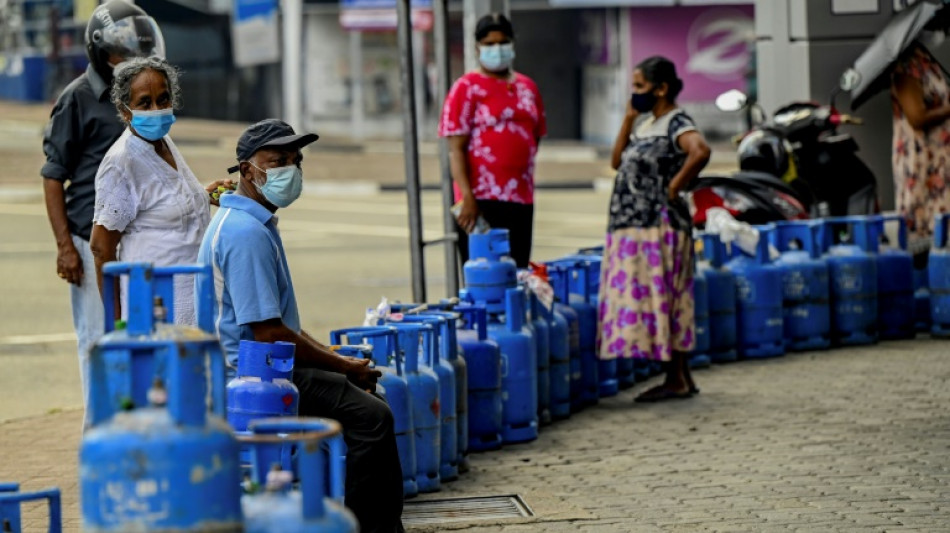
Fuel prices raised in Sri Lanka as energy crisis worsens

 Turkish Energy Minister Highlights Qatar as Key Partner for Regional and Global Energy Security

 London Museum Granted 24/7 License Ahead of November Opening

 Dana White Confirms Flight to Washington for Trump Meeting on Press Secretary Role

 Dengue Fever Expands Into High Himalayas as Climate Change Warms Nepal

 IoT Refrigerator Hacks Disrupt Blood Labs and Supermarkets Across Europe and US

 Post-election pressures complicate US and Israeli decisions on Iran

 UN members approve talks on treaty protocol against environmental crime

 Family-run West Sussex beach café prepares for first winter season

 CT scans reveal health and burial clues from Egypt’s Braided Lady mummy

 Oxford faces complaints over lecturer’s classroom attire

 Kyren Wilson and John Higgins reach International Championship snooker final
One of Sri Lanka's biggest fuel suppliers put up its prices by as much as 12 percent on Saturday, as the cash-strapped island's energy crisis worsened.
Lanka IOC, a fuel retailer which accounts for a third of the market, said it was increasing prices for diesel -- commonly used by public transport -- by 12 percent, and petrol up 11 percent.
The increases came after a seven percent price rise three weeks ago and will add to the upward pressure on inflation, already at a record high.
The island is in the grips of an economic crisis after the tourism sector, a key foreign-exchange earner, collapsed in the wake of the Covid-19 pandemic.
The government imposed a broad import ban in March 2020 in an effort to save foreign currency.
The country is now suffering widespread shortages, including fuel, electricity, automotive parts and cement, with supermarkets forced to ration staple foods including rice, sugar and milk powder.
The shortages pushed food inflation to 25 percent last month with overall inflation at 16.8 percent.
There was no immediate energy price revision by the state-run Ceylon Petroleum Corporation (CPC), but most of its pumps have been out of fuel for days.
Energy minister Udaya Gammanpila announced this week that he expected fuel shortages to ease in "days", but warned that a sharp price increase was necessary to retain the viability of the loss-making CPC.
Gammanpila said the CPC continued to haemorrhage cash and was already carrying debts exceeding $3.5 billion. The CPC loss for last year was $450 million, he added.
"Earlier, we were short of dollars to import oil. Now we don't have the rupees to buy the dollars," Gammanpila said.
Several thermal power stations, meanwhile, have closed with the electricity utility extending daily power cuts to five-and-half-hours a day from Friday.
Three international rating agencies have downgraded the island since late last year on fears it may not be able to service its $35 billion sovereign debt.
Sri Lanka has also sought more loans from Beijing to help repay its existing Chinese debt, which accounts for about 10 percent of the country's external borrowings.
Authorities have borrowed heavily from China for infrastructure projects in the past, some of which ended up as costly white elephants.
Ferreira--PC

