Chinese banks limit financing for Russian purchases: Bloomberg

 Turkish Energy Minister Highlights Qatar as Key Partner for Regional and Global Energy Security

 London Museum Granted 24/7 License Ahead of November Opening

 Dana White Confirms Flight to Washington for Trump Meeting on Press Secretary Role

 Dengue Fever Expands Into High Himalayas as Climate Change Warms Nepal

 IoT Refrigerator Hacks Disrupt Blood Labs and Supermarkets Across Europe and US

 Post-election pressures complicate US and Israeli decisions on Iran

 UN members approve talks on treaty protocol against environmental crime

 Family-run West Sussex beach café prepares for first winter season

 CT scans reveal health and burial clues from Egypt’s Braided Lady mummy

 Oxford faces complaints over lecturer’s classroom attire

 Kyren Wilson and John Higgins reach International Championship snooker final
Several Chinese public banks are limiting financing to purchase raw materials from Russia for fear of Western sanctions following the invasion of Ukraine, Bloomberg news agency reported on Saturday.
China and Russia have strengthened their ties considerably since Moscow's 2014 annexation of Crimea and subsequent Western sanctions.
To power its growth, the Asian giant has also increased its purchases of Russian commodities, with about 30 percent of Russian oil and gas now sold to China.
With the Russian invasion of Ukraine, at least two of China's largest state-owned banks, ICBC and Bank of China, are restricting funding for the purchase of Russian commodities, Bloomberg said.
The decision was taken for fear that allowing funding could be perceived as support for Moscow's invasion and risk sanctions from the United States and its allies, the US news agency said, citing unidentified sources.
Bloomberg said the move may only be temporary.
ICBC is the world's largest bank by assets, while Bank of China is the country's largest commercial bank for currency trading.
US sanctions could potentially deprive them of access to the dollar.
Russian President Vladimir Putin's invasion of Ukraine on Thursday sparked a wave of international sanctions against Moscow, mainly from Western countries.
Washington has, among other things, imposed sanctions on energy giant Gazprom and other large Russian companies, which will no longer be able to raise money on Western financial markets.
China is walking a diplomatic tightrope over the Ukraine conflict.
It does not want to directly oppose its ally Russia.
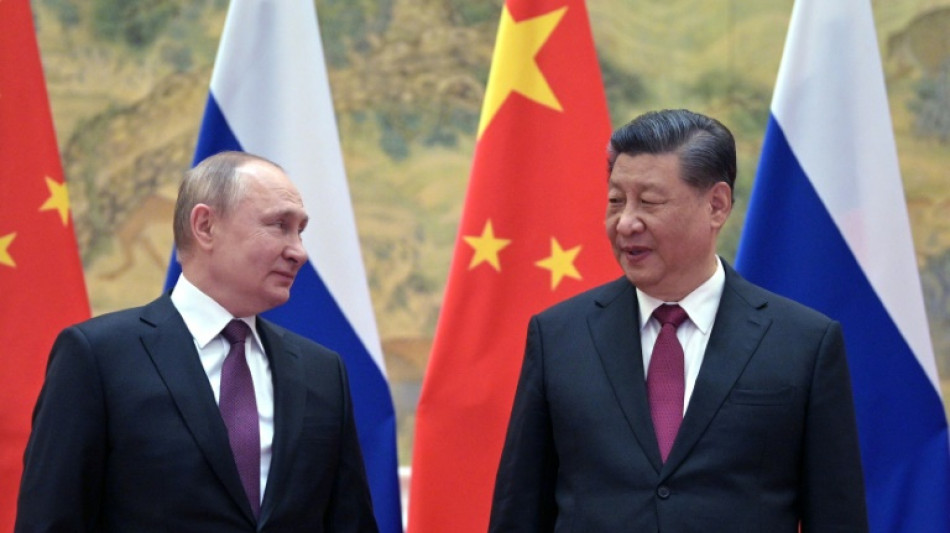
While visiting Beijing for the Winter Olympics earlier in February, Putin signed important agreements with his Chinese counterpart Xi Jinping.
The two countries notably agreed to strengthen their cooperation in the financial sector and on the supply of gas.
But while Beijing has not condemned the invasion of Ukraine, it has also stopped short of outright support.
China abstained on Friday's United Nations resolution condemning Russia's "aggression" against Ukraine and demanding the immediate withdrawal of its troops, which Russia vetoed.
On Saturday the Chinese embassy in Ukraine advised its citizens to "refrain... from displaying signs of identification", just days after telling those leaving Kyiv to clearly fix a Chinese flag to their vehicles.
F.Cardoso--PC

