Chip firms play down Ukraine war supply fears

 Google-parent Alphabet shakes up AI division

 FIFA back Infantino, apologise for World Cup privatisation plan

 Auger-Aliassime out of Montreal ATP event with injury

 Colombian baby hippo of Escobar stock dies after rescue

 Preakness shifts 2027 dates to entice more Derby horses
 Guatemalan volcano eruption ends, locals return home
 WHO chief urges stronger Ebola response in DR Congo visit

 Newcastle appoint Jaissle as new head coach after Howe exit

 Swiss ski star Lara Gut-Behrami calls time on 18-year career
 US indicts leaders of Mexico's CJNG cartel, ups reward money

 Noosha Aubel: Klarar hon av Potsdams problem?

 نوشا أوبيل: هل هي على مستوى التحديات التي تواجهها بوتسدام؟

 Former England fly-half Burns retires from rugby union
 Pakistan beat West Indies by eight wickets to level series

 Reusser holds lead as Vollering wins in Tour de France hills

 Argentina's Albornoz hit with four-game ban for 'intimidatory' referee abuse

 Guatemala volcano eruption eases off, but alert remains in place
 Baby hippo descended from Escobar's herd rescued in Colombia

 Woman arrested after four men stabbed in central London

 Celtic boss O'Neill in hospital after 'small procedure'

 Israeli forces raid Palestinian refugee camp near Jerusalem

 Explosive drone found near Ukrainian plane at German airport

 Leftist Democrat wins stunning primary victory in crucial Michigan

 Inter Milan and AC Milan battle to 1-1 draw in Perth friendly

 Butterflies seek new habitats as climate changes: study

The tech industry is playing down fears of widespread raw materials shortages as a result of the war in Ukraine, after reports that chipmakers would face a severe crunch.
Russia and Ukraine are key suppliers of neon, a gas used in the lasers that etch microscopic patterns on to tiny slivers of silicon.
Russia also supplies palladium, which has several uses in electronic components.
The sector has already been hit hard by a shortage of components for chipmaking, blamed on a boom in global demand for electronic products and disruption to supply chains caused by the pandemic.
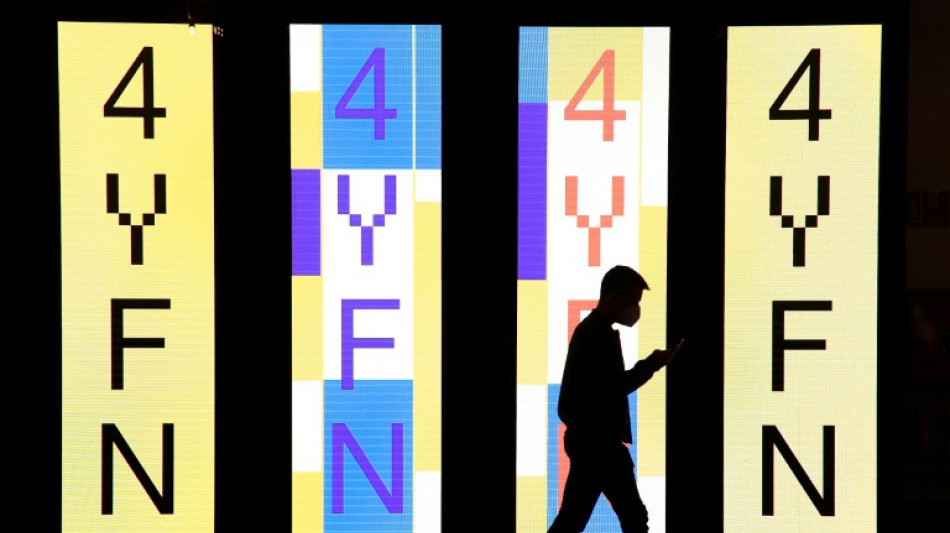
But at the Mobile World Congress in Barcelona, one of the sector's biggest get-togethers, industry figures were bullish.
"We only use a small amount of neon gas. And less than 20 percent of that small amount is sourced from Ukraine and Russia by our supplier," said Monique Mols of Dutch firm ASML, adding that they were looking into alternative sources.
While automakers and some parts of the IT sector have been hard hit by pandemic-induced shortages, smartphone makers have weathered the storm a little better.
Research group IDC said phone sales fell by 3.2 percent in the fourth quarter last year, and big brands have been forced to delay product launches.
But the likes of Apple and Samsung are still posting massive profits.
"The situation remains very complicated for the entire sector -- we will have to be patient," said Ariane Bucaille, a specialist in the semiconductor market at Deloitte.
- 'There will be an impact' -
Should the supply chain be further disrupted, analysts believe more products could be delayed and prices could rise, affecting the entire sector.
"Ukraine is a major supplier of raw material gases for semiconductors including neon, argon, krypton and xenon," said Taiwanese research firm TrendForce.
"Although the proportion of neon gas used in semiconductor processes is not as high as in other industries, it is still a necessary resource. If the supply of materials is cut off, there will be an impact on the industry."
Marina Koytcheva of CCS Insight agreed that the tech industry was "unlikely to remain sheltered from the impact of the crisis in Ukraine".
Whatever the impact of the Ukrainian crisis, a quick return to normal is unlikely.
Even before the war broke out, US bank JP Morgan reckoned the shortage of semiconductors was likely to continue through 2022, and Deloitte expected no improvement until 2024.
- 'Complex technologies' -
But the industry is more sanguine about the immediate effects of the war on their supply lines.
US chipmaker Intel has already said it did not expect the war to cause any disruption, and computer memory firm Micron said it sourced its noble gases and other minerals from across the EU, US and Asia.
Semiconductor industry group SIA stressed that there was "a diverse set of suppliers of key materials and gases".
"So we do not believe there are immediate supply disruption risks related to Russia and Ukraine," it said in a statement.
Of the longer-term prospects, actions speak louder than words, and several big firms -- Samsung and TSMC among them -- have announced huge investments in new factories to diversify production.
But Ariane Bucaille warns that these investments are likely to take two or three years to bear fruit.
They involve "complex technologies", she warned, meaning the firms will need to find "an extremely skilled workforce".
X.M.Francisco--PC