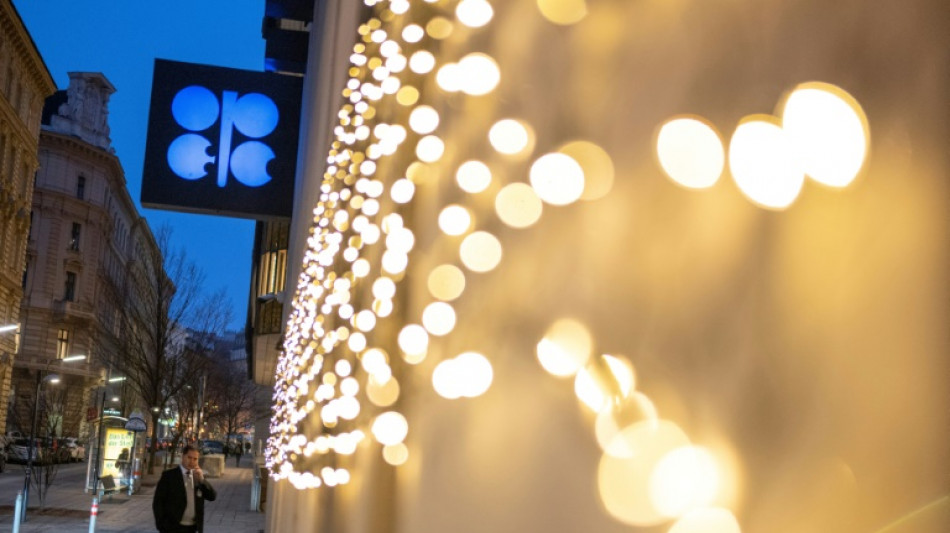
Top oil producers likely to hold course despite Ukraine war

 Turkish Energy Minister Highlights Qatar as Key Partner for Regional and Global Energy Security

 London Museum Granted 24/7 License Ahead of November Opening

 Dana White Confirms Flight to Washington for Trump Meeting on Press Secretary Role

 Dengue Fever Expands Into High Himalayas as Climate Change Warms Nepal

 IoT Refrigerator Hacks Disrupt Blood Labs and Supermarkets Across Europe and US

 Post-election pressures complicate US and Israeli decisions on Iran

 UN members approve talks on treaty protocol against environmental crime

 Family-run West Sussex beach café prepares for first winter season

 CT scans reveal health and burial clues from Egypt’s Braided Lady mummy

 Oxford faces complaints over lecturer’s classroom attire

 Kyren Wilson and John Higgins reach International Championship snooker final
Saudi Arabia, Russia and other top oil producers are expected Wednesday to agree to hold firm on only gradually opening the taps despite Russia's assault on Ukraine sending prices spiralling.
Both WTI crude and Brent broke above $110 a barrel Wednesday. Brent is at a high last seen in 2014, while WTI is at levels not seen since 2013.
But analysts expect the 23-member OPEC+ group at its monthly meeting Wednesday to stick to a decision from last year for an output target of 400,000 barrels per day for April as well.
On Sunday, OPEC leader Riyadh confirmed the commitment of the 13-country group to the agreement with its 10 partners, led by Moscow, which faces international criticism and sanctions over its invasion of Ukraine.
Crown Prince Mohammed bin Salman "affirmed the kingdom's keenness on the stability and balance of oil markets," according to the Saudi Press Agency.
- 'Risk for disruptions' -
The gathering starts with a technical discussion at 1:00 p.m. local Vienna time (1200 GMT) followed by a formal meeting to endorse any decision, scheduled for 1:30 p.m.
The meetings, held via video conference, come a day after International Energy Agency (IEA) countries agreed to release 60 million barrels of oil to stabilise global markets.
The United States will contribute half of the amount, President Joe Biden announced.
But the move has failed to assure markets, and analysts have low expectations that OPEC+ will take any decision to rein in surging prices.
"The war in Ukraine is getting very ugly and destructive and hostilities between the West and Russia are intensifying. High risk for disruptions to both crude and natural gas," Bjarne Schieldrop of Seb said.
"Could OPEC help? Yes, but it will probably choose not to," Ipek Ozkardeskaya of Swissquote said.
- 'Paper promise' -
OPEC+ has so far resisted pressure from major oil consumers, such as the US, to open the taps more as some of its members, including Nigeria and Angola, struggle to meet quotas.
Between December and January, OPEC members boosted their production by 64,000 barrels per day (bpd), far below their 400,000 bpd agreement, according to the organisation's last monthly report.
"The pledge from OPEC+ to increase supply is so far a paper promise... adding to the shortness in the supply market and further stoking the bullish price environment," Louise Dickson of Rystad Energy said.
The Organization of the Petroleum Exporting Countries (OPEC), whose secretariat is based in Vienna, had drastically slashed production in 2020 as the Covid-19 pandemic began to spread through the world, pummelling demand and prices.
Wednesday's meeting takes place at a key moment as negotiations to revive the 2015 Iran nuclear deal are widely expected to come to a head in the coming days.
The deal provided sanctions relief for Tehran in return for strict curbs on its nuclear programme but has been disintegrating since former US president Donald Trump withdrew from it in 2018 and reimposed sanctions, including on Iran's oil exports.
If an agreement were to be found and sanctions lifted again, it could unlock the Iranian exports.
P.Mira--PC

