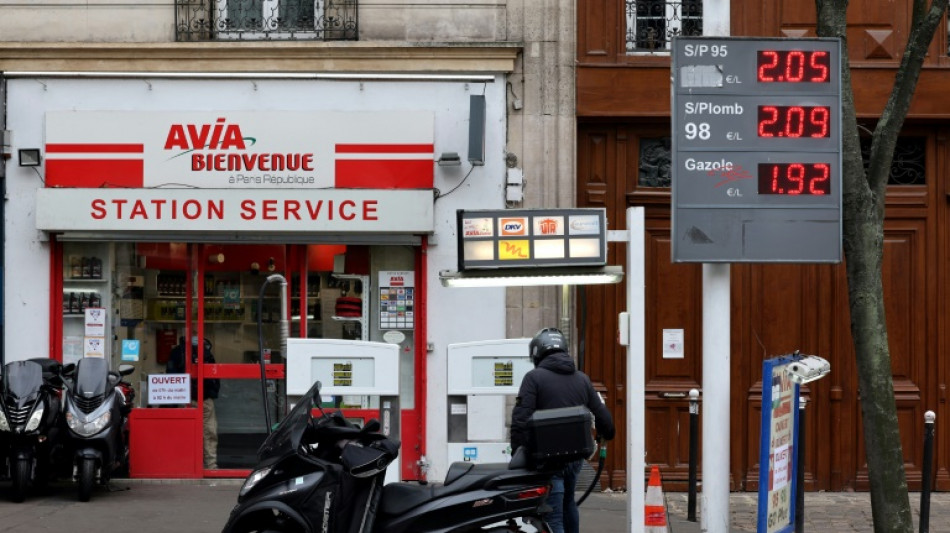
US, Europe mulling bans on Russian oil imports, Blinken says

 Turkish Energy Minister Highlights Qatar as Key Partner for Regional and Global Energy Security

 London Museum Granted 24/7 License Ahead of November Opening

 Dana White Confirms Flight to Washington for Trump Meeting on Press Secretary Role

 Dengue Fever Expands Into High Himalayas as Climate Change Warms Nepal

 IoT Refrigerator Hacks Disrupt Blood Labs and Supermarkets Across Europe and US

 Post-election pressures complicate US and Israeli decisions on Iran

 UN members approve talks on treaty protocol against environmental crime

 Family-run West Sussex beach café prepares for first winter season

 CT scans reveal health and burial clues from Egypt’s Braided Lady mummy

 Oxford faces complaints over lecturer’s classroom attire
 Kyren Wilson and John Higgins reach International Championship snooker final
The United States said Sunday it was in "active discussions" with European nations about banning Russian oil imports as further economic penalty against Moscow for invading Ukraine, but stopped short of announcing an outright boycott.
With Western nations mulling the prospect of a boycott, Ukraine's Foreign Minister Dmytro Kuleba waded into the debate to strongly call for a ban on such imports, saying Russian oil "smells of Ukrainian blood."
Late last week the White House said it was looking for ways to reduce US consumption of Russian oil while protecting American families from price hikes, but pressure has mounted on Western nations to cut off Russian energy imports as a way to tighten the screws on the Kremlin.
"We are now in very active discussions with our European partners about banning the import of Russian oil to our countries, while of course at the same time maintaining a steady global supply of oil," US Secretary of State Antony Blinken told NBC talk show "Meet the Press."
"The actions we've taken to date have already had a devastating impact on the Russian economy," he added, referring to biting sanctions that have economically isolated Russia and its president, Vladimir Putin.
Ukraine's Kuleba, however, stressed that choking off Russia's oil exports is crucial.
Asked Sunday on CNN about Shell's announcement that it continued to buy Russian oil -- and donate the profits to Ukrainian causes -- Kuleba urged Shell and other energy giants to cut off Moscow's biggest revenue source and "stop buying Russian oil."
"Russian oil and gas smells of Ukrainian blood," he said.
European and British gas prices surged to record peaks last week on supply disruption fears. And oil prices continued to push higher, with Brent futures ending at $118.11 a barrel, the highest level since 2008.
Like Blinken, European Commission president Ursula von der Leyen, who has spoken of ramping up sanctions on Russia, did not fully advocate an outright ban on Russian oil -- at least not yet.
"The goal is to isolate Russia and to make it impossible for Putin to finance his wars," she told CNN on Sunday. "For us, there is a strong strategy now to say we have to get rid of the dependency of fossil fuels from Russia."
US lawmakers have directly sought an all-out boycott, with Republican and Democratic senators last week urging President Joe Biden to ban oil imports from Russia.
"I think... you can construct a plan to phase that in rapidly," Senator Marco Rubio told ABC. "We have more than enough ability in this country to produce enough oil to make up for the percentage we buy from Russia."
Only eight percent of imports of crude oil and refined products to the United States come from Russia, according to Lipow Oil Associates in Houston, Texas.
E.Raimundo--PC

