Financial aid for Ukraine critical to keep services working

 Turkish Energy Minister Highlights Qatar as Key Partner for Regional and Global Energy Security

 London Museum Granted 24/7 License Ahead of November Opening

 Dana White Confirms Flight to Washington for Trump Meeting on Press Secretary Role

 Dengue Fever Expands Into High Himalayas as Climate Change Warms Nepal

 IoT Refrigerator Hacks Disrupt Blood Labs and Supermarkets Across Europe and US

 Post-election pressures complicate US and Israeli decisions on Iran

 UN members approve talks on treaty protocol against environmental crime

 Family-run West Sussex beach café prepares for first winter season

 CT scans reveal health and burial clues from Egypt’s Braided Lady mummy

 Oxford faces complaints over lecturer’s classroom attire

 Kyren Wilson and John Higgins reach International Championship snooker final
As the crisis worsens in Ukraine, humanitarian and security aid is flowing into the country, but financial support to keep the government running also is critical.
"The economy is collapsing," said Adnan Mazarei of the Peterson Institute for International Economics, a think tank based in Washington.
With Kyiv unable to access tax revenue, "it is absolutely crucial for the international community to provide quick assistance not only for humanitarian purposes, but also to keep some of the basic government functions," he said.
And with a flood of refugees leaving the country in the face of Russia's invasion, often taking their savings with them, the banking sector also needs support, Mazarei said.
Of the $13.6 billion in aid expected to be released by Washington this week, $1.8 billion is earmarked to ensure "continuity of government," prevent cyberattacks and support the energy sector, according to the bill introduced in the US Congress.
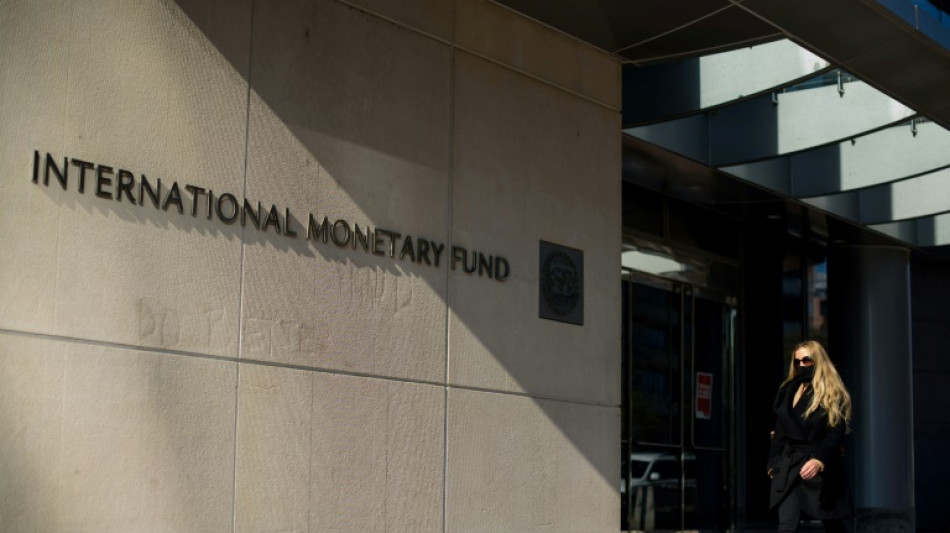
The International Monetary Fund (IMF) board is meeting on Wednesday and expected to approve a $1.4 billion emergency package for Kyiv.
The World Bank already released nearly $500 million of what is expected to be a $3 billion package of aid, dubbed the "Financing of Recovery from Economic Emergency in Ukraine," or "FREE Ukraine."
These sums are significant compared to the size of Ukraine's economy, valued at $155.5 billion at the end of 2020, according to World Bank data.
The IMF already had an ongoing $2.2 billion program with the government that was expected to end in June.
- Money without conditions -
But IMF Managing Director Kristalina Georgieva said late Tuesday that since the start of Moscow's military assault, the focus has shifted "from 'reforms' to 'crisis management.'"
The additional IMF funding, under its Rapid Financing Instrument, fast-tracks aid and imposes few conditions.
The same is true for the World Bank.
Axel van Trotsenburg, the World Bank's chief of operations, stressed in an interview with Sky News on Wednesday that the government desperately needs "budgetary resources to pay pensioners, to pay the salaries of civil servants, to keep the health system going."
But experts caution that the aid likely will not be enough to avoid a major economic crisis in the country which -- even before the Russian invasion -- was among the poorest countries in Europe.
"The flows of money can never really replace the losses in output," said Homi Kharas, an economist at the Brookings Institution in Washington, noting in particular the shutdown of trade.
"Money can help to reduce the impact of that a bit, but certainly will not be able to offset it."
Mazarei said the international community needs to prepare for the post-conflict period and the impact of the war on neighboring countries as well.
"Even when this war stops, even if the Russians just turn around and leave, there is a huge issue of the reconstruction of Ukraine," he said.
H.Silva--PC

