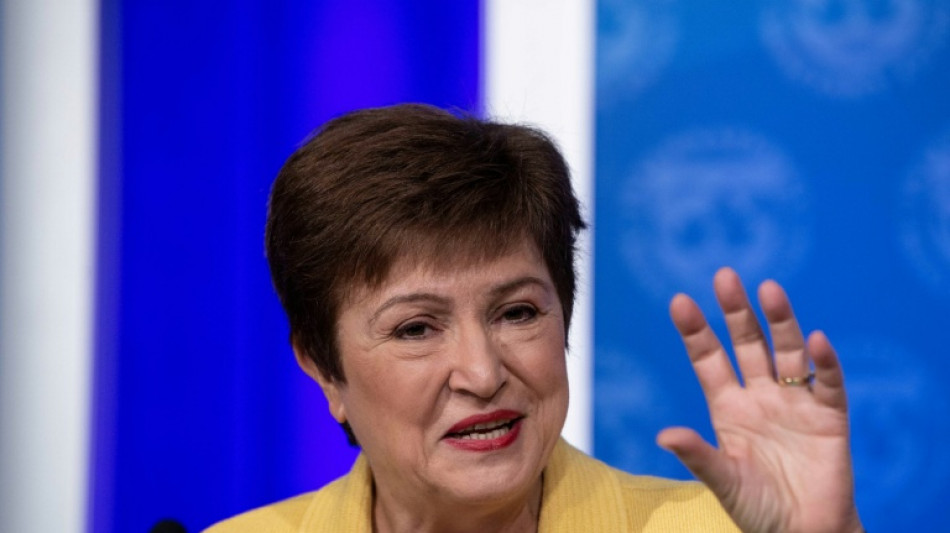
IMF expects to cut global growth forecast due to Ukraine war

 Turkish Energy Minister Highlights Qatar as Key Partner for Regional and Global Energy Security

 London Museum Granted 24/7 License Ahead of November Opening

 Dana White Confirms Flight to Washington for Trump Meeting on Press Secretary Role

 Dengue Fever Expands Into High Himalayas as Climate Change Warms Nepal

 IoT Refrigerator Hacks Disrupt Blood Labs and Supermarkets Across Europe and US

 Post-election pressures complicate US and Israeli decisions on Iran

 UN members approve talks on treaty protocol against environmental crime

 Family-run West Sussex beach café prepares for first winter season

 CT scans reveal health and burial clues from Egypt’s Braided Lady mummy

 Oxford faces complaints over lecturer’s classroom attire

 Kyren Wilson and John Higgins reach International Championship snooker final
The IMF expects to cut its global growth estimate due to the economic damage caused by Russia's invasion of Ukraine, Managing Director Kristalina Georgieva said Thursday.
"You all see the horrific toll on people, loss of lives, human suffering, massive increase in refugees. But there is also a significant economic toll," the head of the Washington-based crisis lender told reporters.
In addition to the damage to Ukraine, the sanctions Western countries have imposed on Moscow in response to the war will lead to a "sharp contraction" of the Russian economy, Georgieva said.
Russia is "moving into a deep recession" with massive depreciation of the ruble and sinking purchasing power for its citizens, she said, adding that a debt default is no longer "an improbable event."
The IMF in January cut the global growth forecast for 2022 to 4.4 percent due to the negative impacts of the Omicron variant of Covid-19, after worldwide GDP rose by 5.9 percent last year.
The IMF is due to publish an updated World Economic Outlook next month which will include "a downward revision of our growth projections," she said.
The war and sanctions, which include a US ban on Russian oil imports, are spilling over to the global economy, causing costs for energy and other key commodities like wheat, fertilizers and metals to surge, the IMF chief explained.
And that comes "on top of already high inflation," which is "causing grave concern in so many places around the world," Georgieva said.
"We got through a crisis like no other with the pandemic. We are now in an even more shocking territory. The unthinkable happened: We have a war in Europe."
- Faster, further -
Earlier Thursday, Oleg Ustenko, chief economic advisor to Ukrainian President Volodymyr Zelensky, said the Russian invasion has so far destroyed about $100 billion in roads, bridges and businesses in Ukraine, a huge hit to its economy.
"The situation in terms of economic growth is going to be really very depressing, even if the war immediately stops," he said in a virtual speech to the Peterson Institute for International Economics.
Georgieva said the fund is ready to do more to help the country rebuild.
The International Monetary Fund on Wednesday approved $1.4 billion in fast-disbursing aid for Ukraine, and the World Bank this week released nearly $500 million of what is expected to be a $3 billion financing package.
In addition, the US Congress on Wednesday approved $14 billion in aid for Ukraine.
Georgieva said the most immediate spillovers of the war will be felt by neighboring countries, who will receive an influx of over two million refugees and bear the brunt of disrupted trade flows that cause prices to surge.
"It's especially dangerous for families that are living in poverty, for whom food and fuel are a higher proportion of their expenses," she said.
And central banks, which already were beginning to raise interest rates to tamp down inflation pressures, may have to "go faster and go further."
T.Resende--PC

