Agriculture giant Brazil nervously eyes Ukraine war

 Turkish Energy Minister Highlights Qatar as Key Partner for Regional and Global Energy Security

 London Museum Granted 24/7 License Ahead of November Opening

 Dana White Confirms Flight to Washington for Trump Meeting on Press Secretary Role

 Dengue Fever Expands Into High Himalayas as Climate Change Warms Nepal

 IoT Refrigerator Hacks Disrupt Blood Labs and Supermarkets Across Europe and US

 Post-election pressures complicate US and Israeli decisions on Iran

 UN members approve talks on treaty protocol against environmental crime

 Family-run West Sussex beach café prepares for first winter season

 CT scans reveal health and burial clues from Egypt’s Braided Lady mummy

 Oxford faces complaints over lecturer’s classroom attire
 Kyren Wilson and John Higgins reach International Championship snooker final
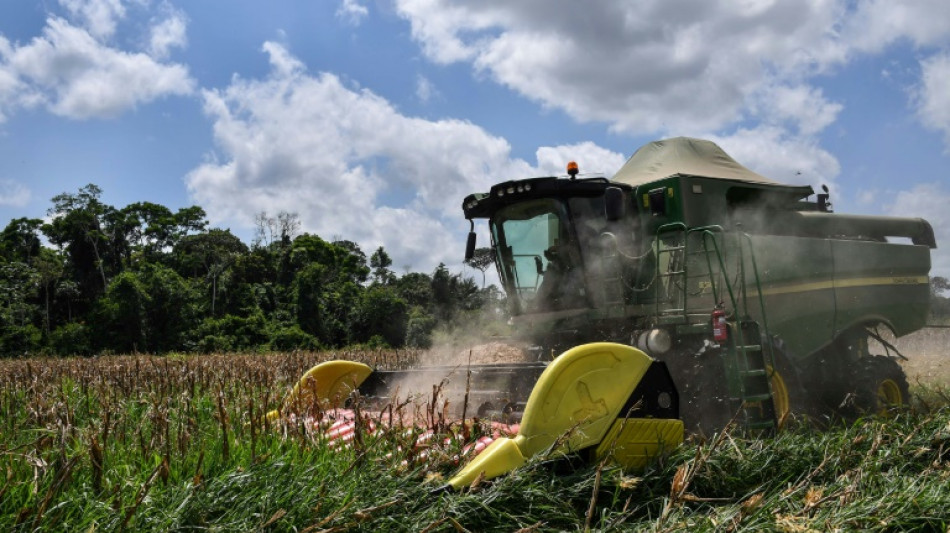
Agricultural powerhouse Brazil is nervously watching the impact of Russia's war on Ukraine, uncertain whether the upside -- an expected boost to Brazil's corn exports -- will outweigh the hit to its crucial fertilizer imports.
Brazil, a top exporter of agricultural products including beef, chicken, soy and corn, stands to gain a windfall from surging commodities prices, driven higher worldwide by the war.
But the country also depends heavily on imported fertilizer, and is facing a collapse in stock from top supplier Russia, whose exports have been hit hard by Western sanctions.
Corn has been particularly affected by the war.
Ukraine's invasion by Russia on February 24 has cast doubt on whether either country -- the world's fourth- and fifth-biggest corn exporters, respectively, in 2019-20 -- will be able to make expected deliveries this year.
That is causing prices to soar, and could be a boon for Brazil, the number-three exporter.
Its corn crop was hit hard last year by bad weather, including the worst drought in nearly a century. But the harvest stands to increase by 29 percent in 2021-22, according to the latest forecast from the National Supply Company (Conab).
"The corn price has hit one of the highest levels ever seen, making it attractive for Brazilian producers, a factor driving an increase in planting area" for the second harvest, the biggest of the year, said Joao Pedro Lopes of commodity-market analysis firm StoneX.
Strong global demand and a favorable exchange rate "should allow an increase of 67 percent in exports" of Brazilian corn in 2022, Conab said.
The US Agriculture Department meanwhile has predicted that if Brazil's harvest is as big as expected, the country could pass neighboring Argentina to become the world's number two corn exporter this year, trailing only the United States.
"International demand has suddenly appeared for immediate shipment of Brazilian corn, which is unusual for the first half of the year. And demand for the second half has accelerated, too," said analyst Paulo Roberto Molinari of agribusiness consultancy Safras e Mercado.
- Fertilizer problem -
But there is a big downside.
"There's no guarantee on the key question of shipping merchandise," with the maritime transport sector upended by the war, said Cesario Ramalho, head of the Brazilian Association of Corn Producers (Abramilho).
"And fertilizer supplies are uncertain too," he told AFP.
Brazil imports around 80 percent of its fertilizers -- 20 percent of that from Russia, its leading supplier.
Belarus, another key supplier and which has supported Russia in the Ukraine crisis, has also been hit hard by Western sanctions.
Agriculture Minister Tereza Cristina said earlier this month that Brazil had enough fertilizer stocks to last until October. She has been negotiating with other major exporters to source more.
Farmers are already feeling the pinch: the price of a ton of imported fertilizer skyrocketed in Brazil by 129 percent from February 2021 to February 2022.
- Mining indigenous lands -
The fertilizer issue got swept up in a politically loaded debate last week when President Jair Bolsonaro called the Russia-Ukraine war an "opportunity" to pass a controversial bill to legalize mining on indigenous reservations.
Backers argue the bill would allow Brazil to fully exploit its mineral wealth, including reserves of potassium, a key fertilizer ingredient.
Opponents warn mining would be disastrous for protected indigenous lands, including in the Amazon rainforest, where they say there is little potassium anyway.
Bolsonaro said Friday the proposed legislation would help "integrate our indigenous brothers into society," adding: "They're almost like us."
His administration launched a plan the same day seeking to nearly halve Brazil's dependence on foreign fertilizer by 2050 with tax incentives, loans and other measures to spur domestic production.
Meanwhile, the market turmoil is also sending shock waves through other sectors of the agriculture industry.
It has caused prices to rise for corn- and soy-based animal feed, hitting Brazil's chicken and pork producers. The country was the number one and number four exporter worldwide in 2020, respectively.
"That could have an impact on production, since profit margins will be weaker," said Fernando Ferreira of XP Investimentos.
E.Paulino--PC

