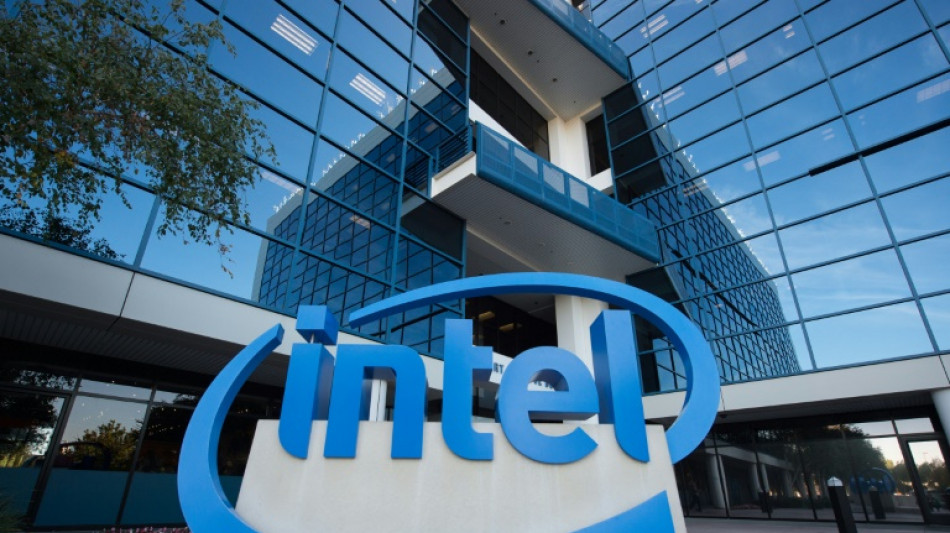
Intel investment fuels EU chips race with Asia

 Turkish Energy Minister Highlights Qatar as Key Partner for Regional and Global Energy Security

 London Museum Granted 24/7 License Ahead of November Opening

 Dana White Confirms Flight to Washington for Trump Meeting on Press Secretary Role

 Dengue Fever Expands Into High Himalayas as Climate Change Warms Nepal

 IoT Refrigerator Hacks Disrupt Blood Labs and Supermarkets Across Europe and US

 Post-election pressures complicate US and Israeli decisions on Iran

 UN members approve talks on treaty protocol against environmental crime

 Family-run West Sussex beach café prepares for first winter season

 CT scans reveal health and burial clues from Egypt’s Braided Lady mummy

 Oxford faces complaints over lecturer’s classroom attire

 Kyren Wilson and John Higgins reach International Championship snooker final
American chip-making giant Intel said on Tuesday it planned to invest tens of billions of euros in the European Union, as the continent seeks to reduce its reliance on semiconductors from Asia.
The project to boost the entire production process, from the research of new technologies to the manufacturing and packaging of semiconductors, could total up to 80 billion euros ($87.9 billion) over the next decade, the group said in a statement.
The production of the key technology, also known as chips, has become a strategic priority in Europe as well as the United States, after the shock of the pandemic choked off supply, bringing factories to a standstill and emptying stores of products.
The details of the of the announcement were hotly anticipated in Europe, where governments have been jostling to host new production facilities as the continent seeks to reduce its dependence on Asian chip imports.
Earlier this year the EU passed the Chips Act, a 43-billion-euro plan to boost production on the continent of the component, used in everything from electric vehicles to wind turbines.
Speaking at the Intel launch event, European Commission President Ursula von der Leyen said the US group's announcement was the "first major achievement" under the act.
- 'Mega site' -
Intel's planned investments span the EU, from Spain to Poland, addressing "the global need for a more balanced and resilient supply chain", said CEO Pat Gelsinger.
Semiconductors were "more critical than ever", and were the "brains powering essential digital technologies", he said in a press conference.
The cornerstone of the "landmark" investment was a 17-billion-euro "mega site" in the eastern German city of Magdeburg.
Intel plans to begin building the manufacturing hub in the "first half of 2023" with production to begin as soon as 2027.
The US group would also develop its research and development centre near Paris and a foundry design centre in France.
The new R&D base around Plateau de Saclay would in time employ 1,000 people, working on Intel's "high performance computing (HPC) and artificial intelligence (AI) design capabilities", the group said.
Intel would also hand a 12-billion-euro funding boost to its facilities in Ireland, while it said it had entered into negotiations with the Italian government to invest "up to 4.5 billion euros" in a manufacturing facility.
As part of the package, the chip-maker would also be expanding its lab capacity in Poland and developing joint centres with the Barcelona Supercomputing Center in Spain.
L.Carrico--PC

