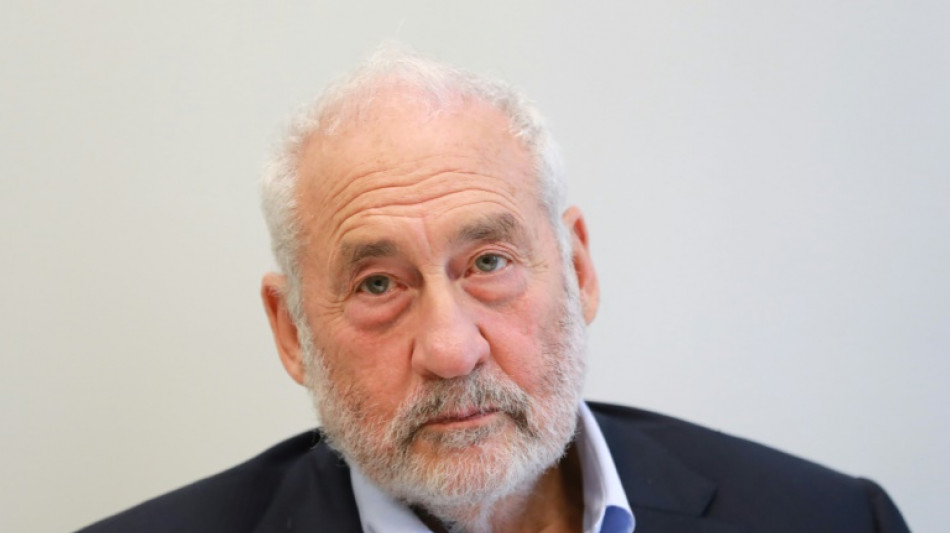
Nobel laureate Stiglitz calls on Europe to do without Russian gas

 Turkish Energy Minister Highlights Qatar as Key Partner for Regional and Global Energy Security

 London Museum Granted 24/7 License Ahead of November Opening

 Dana White Confirms Flight to Washington for Trump Meeting on Press Secretary Role

 Dengue Fever Expands Into High Himalayas as Climate Change Warms Nepal

 IoT Refrigerator Hacks Disrupt Blood Labs and Supermarkets Across Europe and US

 Post-election pressures complicate US and Israeli decisions on Iran

 UN members approve talks on treaty protocol against environmental crime

 Family-run West Sussex beach café prepares for first winter season

 CT scans reveal health and burial clues from Egypt’s Braided Lady mummy

 Oxford faces complaints over lecturer’s classroom attire

 Kyren Wilson and John Higgins reach International Championship snooker final
Nobel economics prize laureate Joseph Stiglitz said Tuesday that the speed and intensity of economic and financial sanctions against Russia would make them efficient but warned Europe must stop buying Russian oil and gas.
He said that Moscow's ability to conduct the war in Ukraine would be impaired by the repercussions from sanctions on its economy.
"They've lost an enormous amount of military equipment... that they will need to replace," he told AFP in an interview on the sidelines of a conference in Paris on Europe's future.
Whether Russia has the manufacturing and financial capacity is, however, "really questionable", he said.
A major element in the potential success of sanctions is their "rapid imposition", he added.
"I think it is important because when you notch it up gradually, they can adapt."
Washington and its EU allies have imposed unprecedented economic sanctions on Russia in response to Moscow's military onslaught against its pro-EU neighbour.
But it's hard to know whether the impact of the sanctions on the Russian people and oligarchs could push President Vladimir Putin into easing his position on Ukraine and its invasion, Stiglitz said.
"There is a massive misinformation propaganda, so that ordinary people are blaming not him but the West" for the sanctions they face, he added.
The academic, who was a senior economic adviser to US president Bill Clinton in the 1990s, also said that Europeans should stop gas and oil purchases from Russia that help Moscow finance the war.
To compensate, he suggested a system of "sharing the burden" among European countries that rely on Russian gas.
Although the United States has decided to block all imports of Russian oil and gas, some European countries such as Germany and the Baltic states which import Russian gas don't have an alternative in the short term.
"There is enormous pressure we should put on Saudi Arabia, Abu Dhabi, the UAE, and relax sanctions against Iran and Venezuela, and get their oil," he said.
"There is a priority here."
The conflict and sanctions have driven up inflation, especially energy and raw materials prices, but Stiglitz said concern about inflation was "out of proportion".
"From a political point of view, it is an issue," he said.
"But from an economic point of view, actually, in a world where you have a lot of economic transformations going on... high rates of inflation actually facilitate economic transformation."
A.F.Rosado--PC

