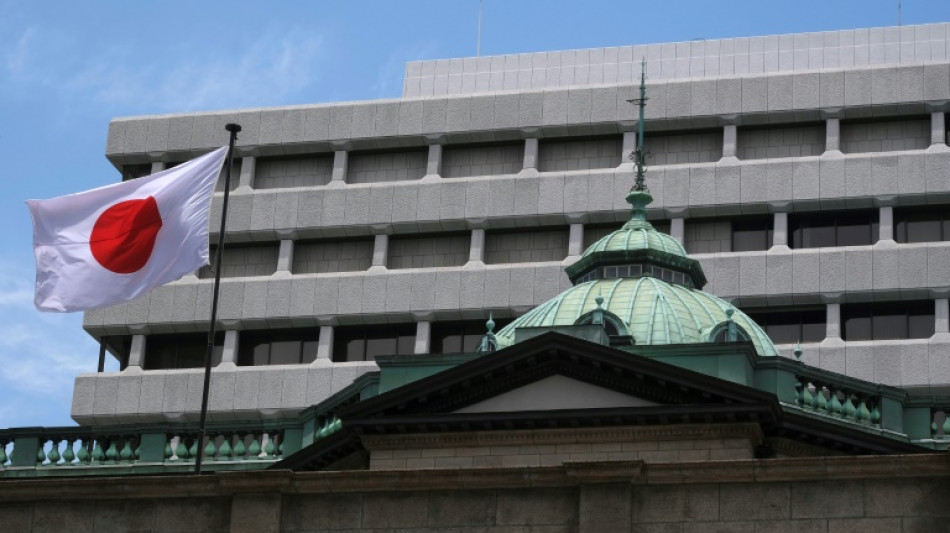
Bank of Japan says no tightening as oil stirs inflation

 Turkish Energy Minister Highlights Qatar as Key Partner for Regional and Global Energy Security

 London Museum Granted 24/7 License Ahead of November Opening

 Dana White Confirms Flight to Washington for Trump Meeting on Press Secretary Role

 Dengue Fever Expands Into High Himalayas as Climate Change Warms Nepal

 IoT Refrigerator Hacks Disrupt Blood Labs and Supermarkets Across Europe and US

 Post-election pressures complicate US and Israeli decisions on Iran

 UN members approve talks on treaty protocol against environmental crime

 Family-run West Sussex beach café prepares for first winter season

 CT scans reveal health and burial clues from Egypt’s Braided Lady mummy

 Oxford faces complaints over lecturer’s classroom attire

 Kyren Wilson and John Higgins reach International Championship snooker final
Japan's central bank chief said on Friday the country will likely reach its key two-percent inflation target as oil rates surge, but the bank will continue monetary easing policies because the price rises are caused by external factors.
The Bank of Japan has struggled to lift inflation for nearly a decade with the world's third-largest economy swinging between periods of sluggish inflation and deflation, both considered bad for growth.
"Unlike in the US and Europe, inflation is currently at around 0.6 percent, and is likely to rise to about two percent after April," BoJ governor Haruhiko Kuroda told reporters following a two-day policy meeting.
"Most of the rise in prices will be caused by increases in international commodity supplies, energy, and food import prices, so naturally it is not necessary or appropriate to tighten monetary policy."
The United States Federal Reserve raised its benchmark interest rate on Wednesday for the first time since 2018 in a bid to tackle soaring inflation.
Kuroda said consumption in Japan is expected to further recover from a pandemic dip as the government lifts restrictions -- which mainly require restaurants and bars to limit opening hours -- in Tokyo and elsewhere on Monday.
Japan's core consumer prices, which exclude volatile fresh food, rose 0.6 percent in February from a year earlier, government data showed Friday.
The internal affairs ministry said the rise was driven by food prices and utility bills due to a surge in energy costs linked to the Ukraine crisis.
It met market expectations as the sixth straight monthly gain, and the sharpest rise since February 2020.
The BoJ's target of sustained two-percent inflation is seen as key to spurring healthy economic growth in Japan.
But analysts say that even if the target is hit in the coming months, it is unlikely to last.
"Once the energy-price shock and deterioration in terms of trade is gone, prices will decline again," Shigeto Nagai of Oxford Economics told AFP ahead of the BoJ meeting.
Excluding energy prices as well as fresh food, Japan's consumer prices were down 1.0 percent in February, the 11th straight monthly fall, the ministry said.
F.Moura--PC

