Biodiversity loss threatens economic stability: central banks report

 Trump says US scaling back military drills with South Korea hours before start

 Jason Arday: UK academic who died amid plagiarism storm

 Sabbath cafe clash lays bare Israel faultlines

 Top-ranked Scheffler powers to PGA St. Jude Championship victory

 Jacquet scores on Liverpool debut in friendly win over Como

 Hawaii's Big Island begins recovery efforts as Hurricane Lala downgrades, moves west

 Spidey swings high for third weekend in N. American box office

 Eagle and late birdie lift Jeeno to LPGA Portland Classic win
 Duplantis masterclass for fourth Euro pole vault title

 Records for Asher-Smith, Hunt as Britain win 4x100m mixed relay

 Barcelona reach deal with Man City to sign Rodri

 Misery for Maresca as Man City make dismal start to life after Guardiola
 Strikes kill 19 in Russia and Ukraine

 Lula and Bolsonaro court women voters as Brazil election campaign kicks off

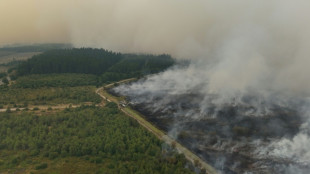 Belgium races to tame huge wildfire creeping towards Germany
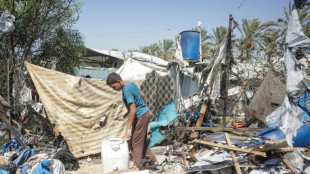
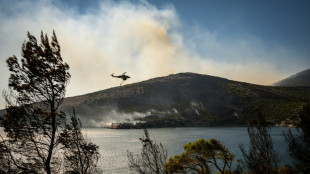 Two dead, hundreds evacuated from fires on island near Athens

 Real Madrid crush Schalke in friendly as Diomande debuts

 Calls for UK inquiry into 'hounding' of ex-Cambridge academic

 Strikes kill 16 in Russia and Ukraine

 Marchand tries for European swim gold in unfamiliar event
 India's Padikkal steals the show with 167 in first Sri Lanka Test

 Hollywood duo underline Premier League ambition for Wrexham

 India's Padikkal makes 167 in first Sri Lanka Test

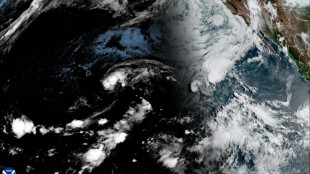 Hurricane Lala pulls away from Hawaii's Big Island

 Petros, Vainio set new championship records to win Euro marathons

Central banks have underestimated the significant threat posed by biodiversity loss, a new report said Thursday, warning that financial institutions and businesses were destroying the natural assets that they depend on.
While climate change is increasingly factored into calculations of systemic economic risks, the report by central bankers, financial supervisors and academics said the comparable threats from the biodiversity crisis had only recently begun to be appreciated.
"Biodiversity supports all life on our planet," said Ravi Menon, chairman of the Central Banks and Supervisors' Network for Greening the Financial System, in his foreword to the report.
"But we are eroding this biodiversity at a pace that is severely damaging the natural ecosystems that provide us with food, water and clean air. This in turn could pose significant risks to economic, financial and social stability."
The report, compiled with input from dozens of central banks, comes amid international negotiations in Geneva to thrash out a global deal to protect nature up to mid-century that has been compared to the Paris Agreement for climate change.
Some 200 nations are set to sign off on this biodiversity framework, which includes a proposal to protect 30 percent of the world's habitats, at the UN's COP15 conference later this year in China.
The new report stressed the impact the financial system can make on biodiversity, through lending, investment and insurance choices.
- Appetite for destruction -
It also underscored how dependent economic and financial systems are on healthy and functioning ecosystems and the risks that arise when these natural processes are damaged.
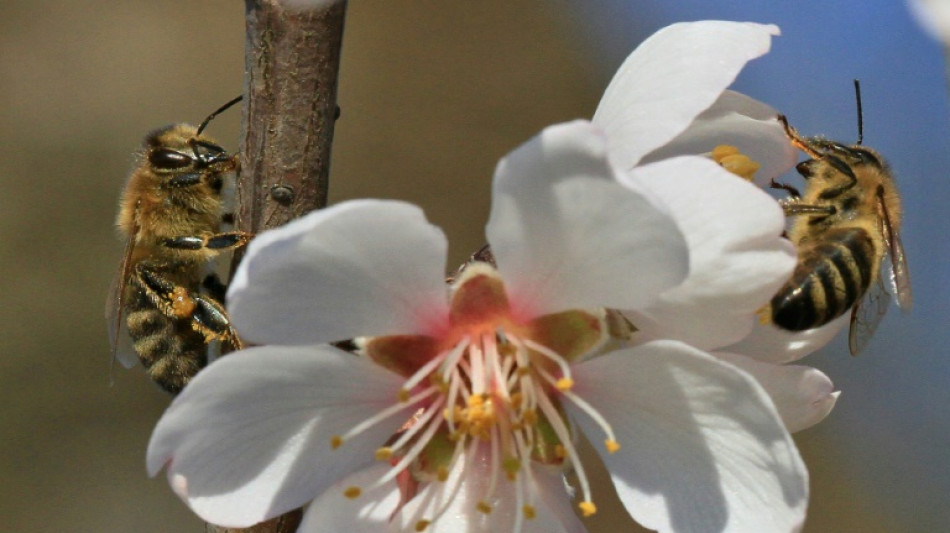
For example, crops yields are threatened by losses of pollinator species, which are caused by the destruction and break-up of habitats, pesticide pollution, and climate change.
Meanwhile, deforestation can cause changes not just to the local habitat, but the hydrological cycle as well, it said, noting research suggesting human pressures could cause the Amazon rainforest to pass a tipping point that would transform it into a savannah.
The Inter-American Development Bank has estimated that policies to prevent the Amazon reaching this threshold -- curbing deforestation, investing in sustainable agriculture, improving fire management -- would generate approximately $339.3 billion in additional wealth.
Researchers did, however, also warn that transition to a global economy that protects nature creates its own potential challenges.
"It's not that these government policies are wrong," said Nick Robins, of the Grantham Research Institute on Climate Change and the Environment at the London School of Economics, who was co-chair of the study group behind the report.
"It's just that maybe the current investments of these businesses and financial institutions are misaligned with a healthy ecosystem."
The report said some countries had begun to take action, but it urged central banks to come up with a coordinated global response to the biodiversity crisis.
"Inaction is also a choice" with inherent costs, said Robins, stressing that threats to nature should be integrated into the risk outlooks and calculations of central banks.
"Biodiversity loss is a threat to financial stability," he added.
A.Aguiar--PC