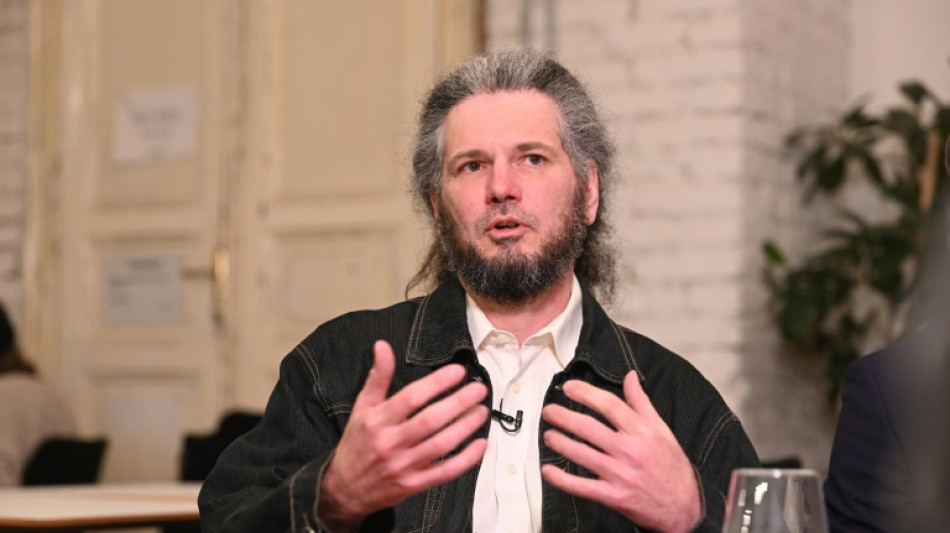
Activists mobilise over Hungary election fraud fears

 Mali jails junta-critic broadcaster, influencer for seven years

 'Nowhere to run': Indonesian quake survivors plead for help
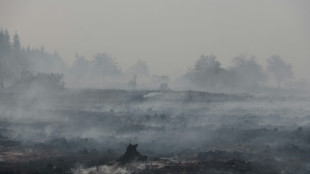 Belgium fire makes 'limited' spread overnight, more help on way

 Vingegaard brings curtain down on season
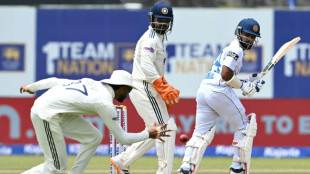 Dickwella, Dinusha hit fifties as Sri Lanka fight back
 Bangladesh Test cricket reboot delivers in style with historic win
 Virgin moves closer to launching Eurostar rival in 2030
 Indian marble waste dump becomes unlikely tourist attraction

 Coach says Australia 'let standards slip' in shock Bangladesh loss
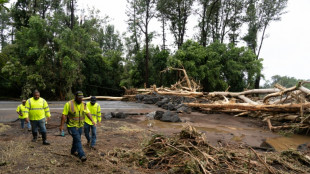 Hawaii recovery efforts begin as Lala downgraded, moves west

 Food safety crackdown snares Mumbai's famed restaurants
 Trump says US scaling back military drills with Seoul hours before start
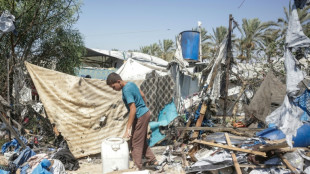
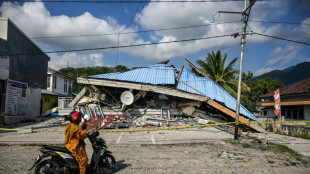 Nearly 13,000 displaced after deadly Indonesian quake
 Axe hangs over Australian batters after Darwin 'disaster'

 Is this cave in Turkey where Homer wrote 'The Odyssey'?

 Winning back walls from gangs, artists fill El Salvador's towns with color

 Opening arguments expected in Tupac murder trial
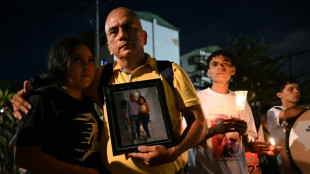 As machinery removes rubble, hopes for survivors from Colombian quake dwindle
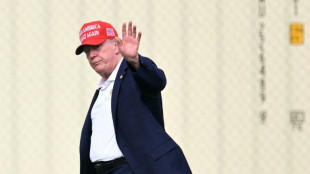 Trump says US scaling back military drills with South Korea

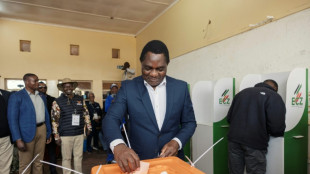 Zambia's Hichilema takes early lead in reelection bid
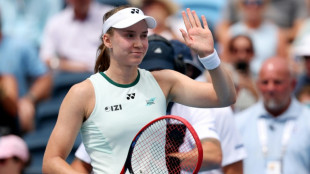 Sabalenka squeezes out a win on sixth match point in Cincinnati

 Duplantis dominant, Hunt hits four and Asher-Smith makes history

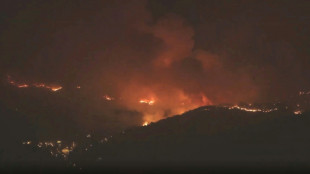 Spanish soldier dies in Aragon wildfire

 PSG beaten by Lens in French Champions' Trophy

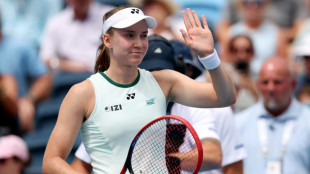 Rybakina, Andreeva race into Cincinnati third round

As Hungary's April 3 general election looms, civil society activists are gearing up to combat what they say are dirty tricks which have been normalised under nationalist Prime Minister Viktor Orban.
Firebrand Orban has been at the helm for 12 years and is seeking a fourth straight term at Sunday's poll, for which an unprecedented 20,000 volunteer poll observers are being mobilised.
The Organization for Security and Co-operation in Europe (OSCE) will also have a full-scale monitoring mission, only the second time it has ever done this for an election in a European Union country.
In a preliminary report published this week the OSCE mission voiced concerns about several aspects of the election, including bias in the public media and the potential for postal vote abuses.
It also said many of the concerns it identified at the 2018 vote had not been addressed.
In response, the government cited the pro-Orban Centre for Fundamental Rights think-tank which called the OSCE report "baseless" and an attempt "to provide a convenient excuse for the Hungarian Left, should they lose at the polls".
The last general election in 2018 was "the dirtiest of the last 30 years, since the end of communism," Zsofia Banuta, co-head of the Unhack Democracy election watchdog, told AFP in Budapest.
After interviewing 170 poll workers her group concluded that the 2018 election was marred by "major malpractice" such as transporting voters from neighbouring countries, bribery and intimidation, tampering with postal votes, missing ballots and election software malfunctions.
Banuta, 40, laments the fact that Supreme Court rulings, including against the practice of busing in voters from abroad to support Orban's Fidesz party, had "no consequences".
In contrast to Western European countries, "over the last 30 years cheating at Hungarian elections has become gradually normalised, that mindset should be changed", she said.
- 'Ballot tourism' -
Opinion polls indicate Sunday's vote will be the tightest since 2006, as Orban, 58, faces a united six-party opposition coalition for the first time.
Although analysts expect a close result, Orban is still favourite to win an election following a campaign dominated by the February 24 Russian invasion of neighbouring Ukraine.
Orban has adopted a safety-first neutral stance in the conflict, sparking accusations by the opposition that he is Russian President Vladimir Putin's closest ally in the EU and NATO.
Other parts of his "conservative revolution" have drawn the ire of European Union institutions, for example a new anti-LGBT law and the neutering of the judiciary.
In another development in a years-long tug of war with EU institutions, the European Court of Justice in February rejected a challenge by Hungary -- and Poland -- to a mechanism allowing Brussels to slash funding to member states that flout democratic standards.
According to the opposition, Orban's promising reelection prospects are in part due to his control of the media landscape and a redesign of election rules that favours Fidesz.
Unhack Democracy says electoral practices introduced under Orban are vulnerable to abuse and could be crucial in such a tight contest.
Banuta points to a law passed last November that allows voters to easily change the address where they are registered to vote.
"This opens the door to ballot tourism not only across Hungary's borders with Ukraine, Serbia and Romania but also domestically," she told AFP.
Unhack Democracy has designed an online course for poll workers to spot abuses but Banuta cautions that officials need to "not be afraid to report abuses".
She says in the group's investigations of recent local elections they found poll workers were on occasion intimidated out of filing complaints or were vulnerable to pressure from local Fidesz-linked officials.
- 'A small sacrifice' -
Another group called "20K" appointed by the opposition has recruited and trained around 20,000 volunteers to monitor the country's approximately 10,000 polling stations.
"For the first time ever there will be two trained poll observers delegated by the opposition in each station, even in the most distant village," said Peter Muller, a 45-year-old businessman, who helped set up 20K.
All volunteers have completed an online training course and have received a mobile phone app to log suspected incidences of fraud, said Muller's colleague Imre Kovacs, an IT expert.
"Last time around 13 percent of stations had no delegate representing the opposition, and another 13 percent had only one. Most suspected abuses in 2018 occurred in electoral districts where there was no opposition observer," Kovacs told AFP.
One volunteer, Laszlo Mero, told AFP that travelling 250 kilometres from Budapest to monitor polling in a village for one day "is a small sacrifice" for his country.
"In the last 12 years the rules in Hungary got blurred, and that needs to change," said Mero, a 72-year-old university professor.
F.Ferraz--PC