10-hour power cuts in Sri Lanka as crisis worsens

 Municipal Elections: How Service Failure Becomes a Public Health Crisis in South Africa

 Rene Eyre Revisits Autobiographical Performance 'Say A Little Prayer' in London

 UAE's HCT Holds Record Graduation and Announces Major Training Expansion

 NASA Awards $10B Lunar Contract Framework to SpaceX, Blue Origin

 Katy Perry Tells Fans Ex-Husband Russell Brand 'Should Be in Jail' During UK Concert

 South African election results renew debate over identity-based voting

 South African voters report smoother local election but declining IEC trust

 Dolly Parton museum and Nashville hotel open after singer’s death

 George and Amal Clooney attend New York political-comedy reading
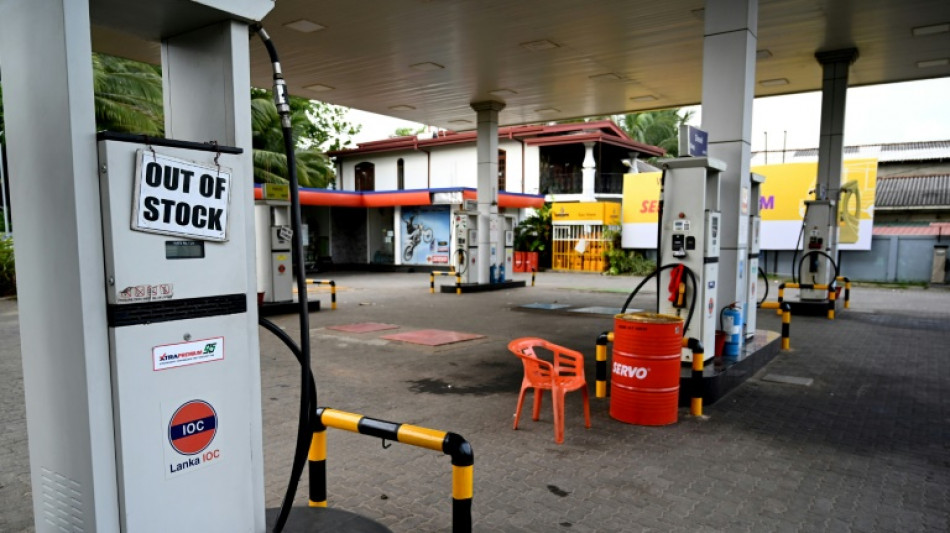
Sri Lanka on Wednesday began imposing record nationwide 10-hour daily power cuts as it ran out of hydro-electricity on top of a severe shortage of fuel.
The South Asian nation of 22 million people is in its worst economic crisis since independence in 1948, because of a severe shortage of foreign currency to pay for imports.
The state electricity monopoly said it was imposing the 10-hour power cut, up from a seven-hour outage since the beginning of the month, because there was no oil to power thermal generators.
More than 40 percent of Sri Lanka's electricity is generated from hydro, but most of the reservoirs were running dangerously low because there had been no rains, officials said.
Most electricity production is from coal and oil. Both are imported but in short supply as the country does not have enough foreign exchange to pay for supplies.
Meanwhile, the main fuel retailer, the state-owned Ceylon Petroleum Corporation (CPC), said there would be no diesel in the country for at least two days.
The CPC told motorists waiting in long queues at petrol stations to leave and return only after imported diesel is unloaded and distributed.
Fuel prices have also been increased frequently with petrol up by 92 percent and diesel by 76 percent since the beginning of the year.
The government took 12 days to find $44 million to pay for the latest shipment of LP gas and kerosene, officials said.
Colombo imposed a broad import ban in March 2020 to save foreign currency needed to service its $51 billion in foreign debts.
But this has led to widespread shortages of essential goods and sharp price rises.
Many hospitals have stopped routine surgeries, and supermarkets have been forced to ration staple foods, including rice, sugar and milk powder.
The government has said it is seeking a bailout from the International Monetary Fund while asking for more loans from India and China.
The crisis was exacerbated by the Covid-19 pandemic, which torpedoed tourism and remittances. Many economists also blame government mismanagement including tax cuts and years of budget deficits.
L.E.Campos--PC


