World's fossil fuel assets risk evaporating in climate fight

 UK PM launches bid to help homeless, donating part of his wages

 Golden Shoe winner Kane hopes for Ballon d'Or after 'best season ever'

 Kyiv's ex-defence chief makes risky bet by venturing into electoral grounds

 Coventry have survival inspiration says Lampard

 Reijnders leaves Man City for Saudi's Al Qadsiah
 Trump says will meet North Korea's Kim later this year

 Stocks waver, dollar drops as US Treasury moves to lower bond yields

 France recalls rare disease drug Tavneos after deaths

 Arsenal agree to sign Villa defender Konsa: reports

 Evacuation orders lifted in Belgian wildfire zone

 UK media skewered for 'hounding' black academic

 More than 7,300 excess deaths in France's historically hot summer so far

 US socialists score shock Florida win as Trump picks stumble

 Iran warns Gulf countries against helping US after UAE cuts trade ties

 Senior FIFA official withdraws support from embattled Infantino

 Lawson replaces injured Hadjar for Red Bull at Dutch GP

 Robots sort packages and serve fast food at Beijing showcase

 Leeds sign Swiss defender Elvedi from Monchengladbach

 Robinson double rocks Pakistan in first Test before rain stops play

 Queen Camilla says was 'difficult' keeping King Charles' cancer private
 UK PM launches bid to get rough sleepers off streets by Christmas

 England bowl against Pakistan in first Test of post-Bazball era

 Villa sign Japanese 'keeper Suzuki, Italian defender Ruggeri

 Injury-plagued Pogba released by Monaco
 Japanese 'keeper Suzuki signs for Aston Villa

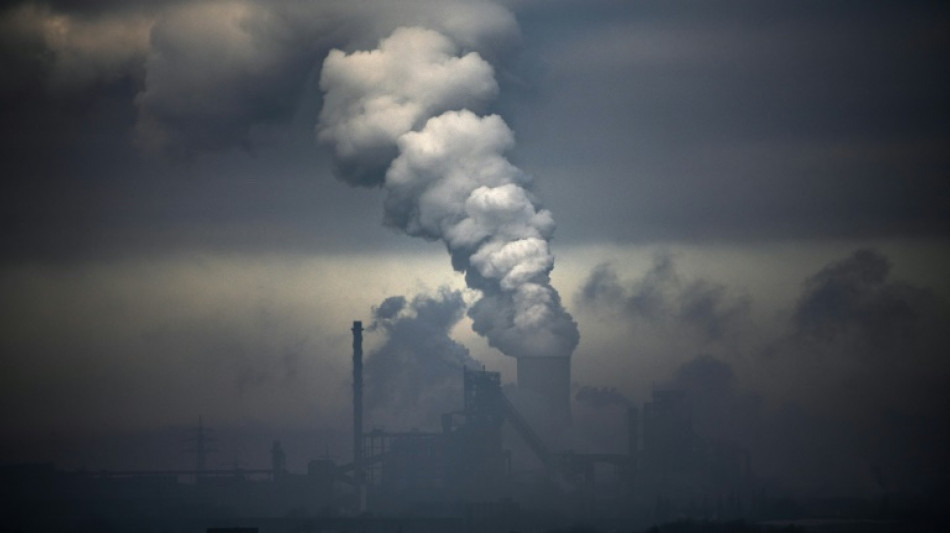
Oil platforms, pipelines, coal power plants and other fossil fuel assets could lose trillions of dollars in the battle against climate change in the coming decades, experts say.
The warning was issued in a 3,000-page report by UN experts who said fossil fuel assets must be retired and replaced with clean energy faster to mitigate financial losses.
Such assets will become "stranded" and worth less than expected because they may never be used since fossil fuel demand must fall in the near future to limit greenhouse gas emissions.
Limiting warming to the aspirational 1.5 degree Celsius target in the Paris Agreement, or the more conservative 2C goal, "will strand fossil-related assets", said the UN's Intergovernmental Panel on Climate Change (IPCC) in its latest report Monday.
"The combined global discounted value of the unburned fossil fuels and stranded fossil fuel infrastructure has been projected to be around 1–4 trillion dollars from 2015 to 2050 to limit global warming to approximately 2C, and it will be higher if global warming is limited to approximately 1.5C," the IPCC said.
Any move to alleviate the impact of climate change means using less fossil fuel, thus rendering assets obsolete as companies are under pressure to move away from harmful energy production.
The IPCC said that if current oil, gas and coal energy infrastructure were to operate for their designed lifetime -- without technology to capture and store carbon -- capping global warming at the 1.5C target would be impossible.
It said nations should stop burning coal completely and cut oil and gas use by 60 and 70 percent respectively by 2050 to keep within the Paris deal goals, noting that both solar and wind were now cheaper than fossil fuels in many places.
The idea of "stranded assets" dates back to the 2010s and was put forward by think tank Carbon Tracker.
Companies could be further affected by governments taking decisions such as increasing the price of coal or even banning certain energies.
Consumers could also turn to other products like electric vehicles.
Other assets impacted include infrastructure such as drilling platforms, which have become useless quicker than expected.
Some fossil fuel reserves will become too costly to exploit due to falling prices.
- Risky bets -
For the IPCC, coal-related assets are the most vulnerable before 2030, than those that are oil- and gas-related towards mid-century.
The idea of stranded assets, taken up by both environmentalists and investors, has gained popularity and has been used in shareholder meetings of energy companies such as ExxonMobil or TotalEnergies.
The climate issue has in fact become central to some companies, even if it has taken three decades after the IPCC's creation in 1988.
"It's really the financial risk that originally created this spark, which took a long time," said Hugues Chenet, research associate at Polytechnique and the University College London.
That "convinced financial actors there was a problem."
The idea of "stranded assets" -- which Chenet prefers to call "obsolete" -- has made it possible to pinpoint a "contradiction".
There is one "path that says we must live without fossil fuels, facing an economy that is rather more geared up to do the opposite".
Lucie Pinson of NGO Reclaim Finance, who does not find the climate commitments of major companies like TotalEnergies credible, also pointed out the inconsistency.
"We can see that (TotalEnergies) doesn't believe in its own (climate) rhetoric, because if it believed it, it would not develop projects which have no future," she added.
- Revenue losses -
It's decision time for countries which get revenue from fossil fuels.
From Azerbaijan to Angola to Nigeria and Saudi Arabia, oil producers risk losing a significant amount of their revenue over the next 20 years, warned Carbon Tracker.
But "if they continue to invest, you're betting on the failure of policy action on climate but you're also betting on the failure of renewables and other low carbon technologies to displace oil and gas", said Carbon Tracker's Mike Coffin, who calls on countries to diversify.
Another risky bet would be to ignore acting against climate change, hoping to make profits from oil and gas.
But "you'll lose way more on all your other assets when you've got forest fires, global migrations, famine," he said.
E.Borba--PC