Salmonella, a leading cause of foodborne outbreaks

 Israel army admits firing on car in death of five-year-old Hind Rajab

 Honduras places 80% of country on El Nino drought alert

 Some of Meta's safety tools were 'designed to fail': witness

 PSG Ligue 1 opener moved over state of Parc des Princes pitch

 UK PM launches bid to help homeless, donating part of his wages

 Golden Shoe winner Kane hopes for Ballon d'Or after 'best season ever'

 Kyiv's ex-defence chief makes risky bet by venturing into electoral grounds

 Coventry have survival inspiration says Lampard

 Reijnders leaves Man City for Saudi's Al Qadsiah

 Trump says will meet North Korea's Kim later this year

 Stocks waver, dollar drops as US Treasury moves to lower bond yields

 France recalls rare disease drug Tavneos after deaths
 Arsenal agree to sign Villa defender Konsa: reports

 Evacuation orders lifted in Belgian wildfire zone

 UK media skewered for 'hounding' black academic

 More than 7,300 excess deaths in France's historically hot summer so far

 US socialists score shock Florida win as Trump picks stumble

 Iran warns Gulf countries against helping US after UAE cuts trade ties

 Senior FIFA official withdraws support from embattled Infantino

 Lawson replaces injured Hadjar for Red Bull at Dutch GP
 Robots sort packages and serve fast food at Beijing showcase

 Leeds sign Swiss defender Elvedi from Monchengladbach

 Robinson double rocks Pakistan in first Test before rain stops play

 Queen Camilla says was 'difficult' keeping King Charles' cancer private
 UK PM launches bid to get rough sleepers off streets by Christmas

Salmonella, fears over which sparked a cautionary recall of Kinder chocolate eggs in several European countries on Tuesday, is one of the most common causes of food-borne outbreaks.
Named after the American veterinarian who helped discover the bacteria, Daniel Elmer Salmon, salmonella often causes mild illness, but can be life-threatening in extreme cases.
- Transmission -
It is most often transmitted to humans who eat food contaminated with the faeces of an infected animal, according to the US Centers for Disease Control (CDC).
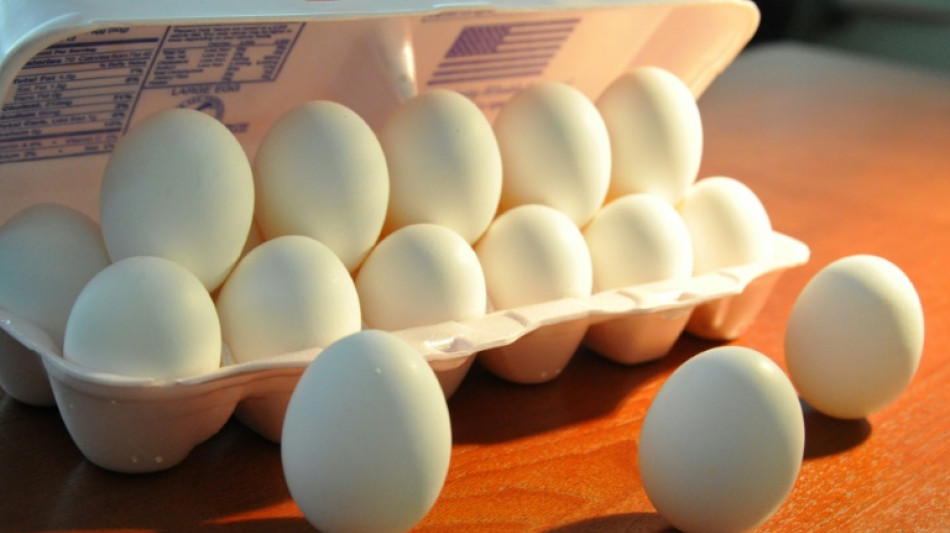
This often happens when people consume raw or undercooked food like meat and eggs, or when people handling food fail to wash their hands.
Less often, unwashed fruits and vegetables can become infected.
Whether or not a person contracts salmonellosis, the infection caused by salmonella, depends on the type of bacteria and the quantity consumed.
While an estimated 94 percent of salmonellosis is transmitted by food, contact with chicks and pet turtles can be a source of infection, the CDC said.
If contaminated foods are distributed widely across borders, it can infected vast numbers of people.
Around 224,000 people were made sick by infected ice cream in the United States in 1994.
A decade earlier in France, at least 25,000 were infected by a food source that was never identified, according to the Pasteur Institute.
- Symptoms -
Symptoms usually show up around three days after infection and often include diarrhoea, vomiting, fever and stomach cramps.
A healthy adult normally recovers within a few days but in some cases, an infection can be dangerous or even fatal.
Babies, young children, the elderly, pregnant women or immunocompromised people are the most at risk.
People with severe diarrhoea may need rehydration, the CDC said.
"Antibiotics are not recommended for uncomplicated cases and are only used if the infection spreads or is highly likely to spread from the intestines to the bloodstream and other organs," it added.
- How to avoid? -
To avoid salmonella, everyone should wash their hands before cooking, keep raw foods separated from others, and regularly clean areas where food is handled.
Thoroughly cooking meat is also highly recommended.
Avoiding eating raw eggs, in foods such as cookie dough and homemade ice cream, is also recommended, according to the Mayo Clinic in the United States.
Washing hands after using the toilet or changing a baby will also help limit transmission.
Most industries have strict rules in place to avoid contamination.
P.Serra--PC