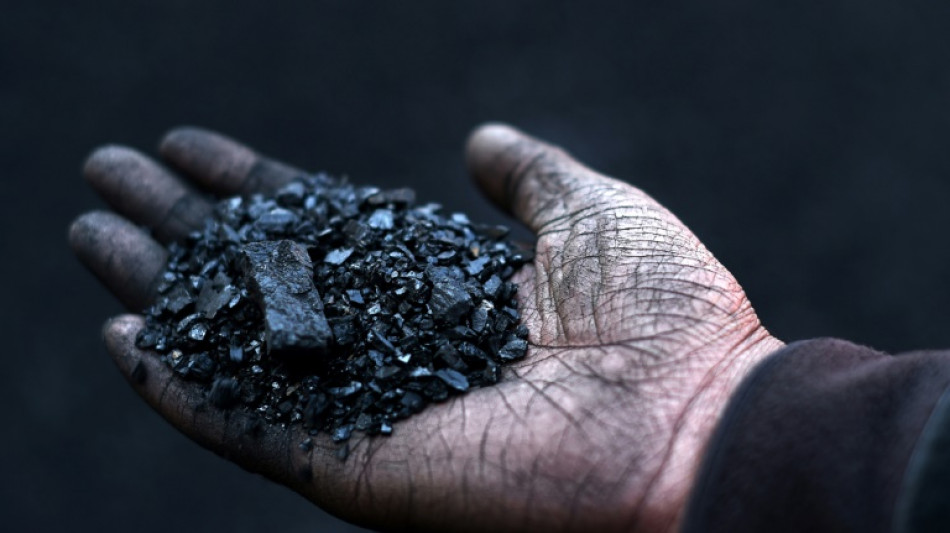
Greece to double coal output to reduce Russian gas use

 Municipal Elections: How Service Failure Becomes a Public Health Crisis in South Africa

 Rene Eyre Revisits Autobiographical Performance 'Say A Little Prayer' in London

 UAE's HCT Holds Record Graduation and Announces Major Training Expansion

 NASA Awards $10B Lunar Contract Framework to SpaceX, Blue Origin

 Katy Perry Tells Fans Ex-Husband Russell Brand 'Should Be in Jail' During UK Concert

 South African election results renew debate over identity-based voting

 South African voters report smoother local election but declining IEC trust

 Dolly Parton museum and Nashville hotel open after singer’s death

 George and Amal Clooney attend New York political-comedy reading
Greece's government said Thursday it plans to double production of lignite, or brown coal, in the coming two years despite the pollution it causes as Athens aims to reduce its dependence upon Russian gas.
Greece depends upon Russia for 40 percent of its natural gas and since Moscow invaded Ukraine in February it has been searching for alternatives to ensure normal supplies.
"Lignite is polluting and in normal circumstances, natural gas is cheaper," government spokesman Giannis Ekonomou said.
But given the conflict in Ukraine and the needed to diversify energy supplies, Ekonomou said increased brown coal production would be "necessary" for the next two years.
European countries have been seeking to reduce their use of brown coal to meet their climate pledges. Natural gas produces less emissions and has often been a relatively inexpensive alternative.
However, gas prices have surged this heating season as Russia reduced its sales on the European spot market, and deliveries under long-term contracts could be impacted by Western sanctions over Ukraine or Russian counter-sanctions.
Prime Minister Kyriakos Mitsotakis said Wednesday at the inauguration of a solar panel park that Greece's energy policy needs to be flexible given the current circumstances.
But he also said that "in no case" would it affect the government's objectives to reduce carbon emissions by 55 percent by 2030 and reach carbon neutrality by 2050.
Yet the increased coal production is a tacit abandonment of the goal to close the coal power plants by next year.
"It is an admission of failure," said the Kinal socialist party.
A.Motta--PC


