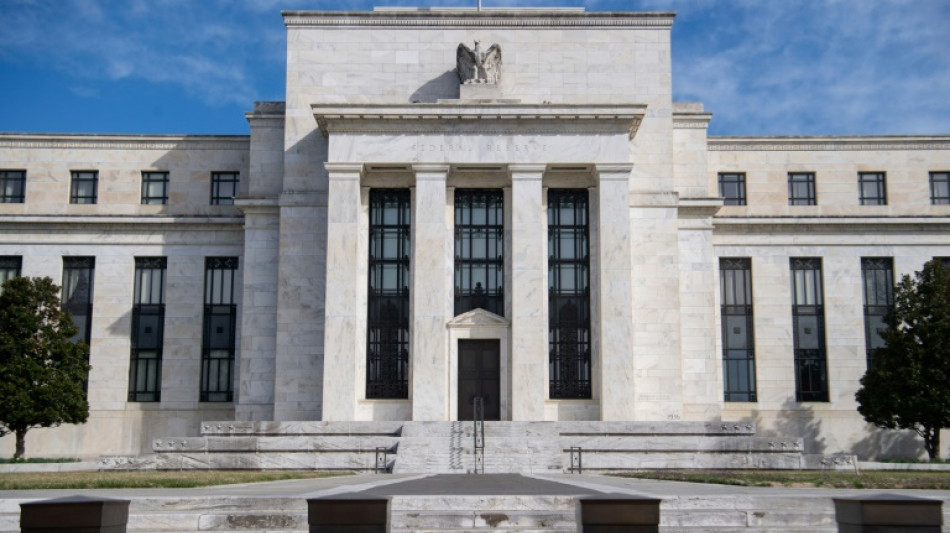
Asian markets track Wall St gains, traders wary of hawkish Fed

 Municipal Elections: How Service Failure Becomes a Public Health Crisis in South Africa

 Rene Eyre Revisits Autobiographical Performance 'Say A Little Prayer' in London

 UAE's HCT Holds Record Graduation and Announces Major Training Expansion

 NASA Awards $10B Lunar Contract Framework to SpaceX, Blue Origin

 Katy Perry Tells Fans Ex-Husband Russell Brand 'Should Be in Jail' During UK Concert

 South African election results renew debate over identity-based voting

 South African voters report smoother local election but declining IEC trust

 Dolly Parton museum and Nashville hotel open after singer’s death

 George and Amal Clooney attend New York political-comedy reading
Asian markets mostly rose Friday after a tough week dominated by the US Federal Reserve's hawkish tone that has set it on an aggressive tightening path, while oil ticked higher after another series of losses.
After a slow start, the region managed to take the lead from Wall Street, which recovered from steep intra-day losses to end on a positive note, having plunged in previous sessions as traders fretted over the prospect of higher interest rates.
While the Fed has made clear it intends to act more decisively to rein in 40-year-high inflation by ramping up borrowing costs and offloading bond holdings, analysts suggested that better clarity on policy was welcome.
The Fed's desire to tighten has sent the dollar rallying against most other major currencies, particularly the euro, which has been weighed by European officials' reticence to move as aggressively on prices. The euro is sitting around a one-month low.
Markets have come under huge pressure this year as the end of ultra-cheap central bank cash, a Covid-fuelled slowdown in China's economic activity, the war in Ukraine and soaring inflation come together in a perfect storm.
Highlighting the difficult task central banks will have in fighting inflation, the UN's Food and Agriculture Organization said Friday that world food prices hit their "highest levels ever" in March as Russia's invasion of Ukraine disrupted wheat and coarse grain exports.
Still, all three indexes on Wall Street ended slightly higher, having bounced back from heavy losses thanks to bargain-buying, while some observers suggested recent selling may have gone too far.
Asia saw a tepid start but most markets enjoyed mild gains towards the end of the day.
Tokyo, Hong Kong, Shanghai, Sydney, Seoul, Taipei, Mumbai, Manila, Jakarta and Bangkok all rose, though Singapore and Wellington were lower.
London, Paris and Frankfurt rallied in the morning, while US futures were also well up.
- Crude concerns -
Still, OANDA's Jeffrey Halley warned traders were "growing warier about China as the Shanghai lockdown drags on" owing to the fast-spreading Omicron virus variant.
"China's Covid-zero policy continues to be its Achilles heel, although there are plenty of other reasons to be a little cautious," he said in a note.
"A serious spread outside of its finance and commercial centre to other large cities will be a big headwind for China's growth, China stocks, and by default eventually, much of Asia."
Crude prices edged up having also endured a downcast week after the United States and allies pledged to release more than 200 million barrels over the coming months to offset the loss of Russian supplies.
The decision comes on top of concerns about demand from China owing to the lockdowns.
Still, there is a feeling that the war in Ukraine, and any possible further sanctions on Russia, could send the oil market higher again.
"I still think... the sentiment-driven sell-off will give way, and fundamentals will reassert themselves, especially as more market participants start fretting about how will the US administration replenish the SPR drawdown," said SPI Asset Management's Stephen Innes.
"Oil prices remain volatile amid concerns over Russian supply against the backdrop of slowing demand in China and a likely depressed US summer driving season due to higher prices at the pump."
He added that "deficits are likely to persist but only moderated by the accelerated strategic stock release from May to November and weaker demand growth".
- Key figures around 0810 GMT -
Tokyo - Nikkei 225: UP 0.4 percent at 26,985.80 (close)
Hong Kong - Hang Seng Index: UP 0.3 percent at 21,872.01 (close)
Shanghai - Composite: UP 0.5 percent at 3,251.85 (close)
London - FTSE 100: UP 1.0 percent at 7,625.18
Brent North Sea crude: UP 0.1 at $100.71 per barrel
West Texas Intermediate: UP 0.2 percent at $96.26 per barrel
Euro/dollar: DOWN at $1.0858 from $1.0880 late Thursday
Pound/dollar: DOWN at $1.3035 from $1.3071
Euro/pound: UP at 83.29 pence from 83.17 pence
Dollar/yen: UP at 124.11 yen from 123.95 yen
New York - Dow: UP 0.3 percent at 34,583.57 (close)
F.Moura--PC


