Greece softens 'tough' migration policy for Ukrainians

 Huge questions loom over Prince Harry's shock return to UK

 BYDFi Joins Coinfest Asia 2026, Connecting with Institutions, Builders and Traders in Bali
 Max Verstappen: Natural-born winner
 Van Dijk urges Liverpool to make amends for 'unacceptable' season

 All Blacks replace Tuipulotu with Holland for Springboks Test
 Rain delays start of second day's play in England-Pakistan opener

 Russian strikes kill 16 in Kyiv, surrounding region
 'It is tough': Indonesia battles wildfires, bracing for worse to come
 Seoul detects North Korean missile launches after Trump says to meet Kim
 Thai, Myanmar military chiefs meet as post-coup thaw progresses
 Asian stocks rally as US Treasury steps in to ease bond fears

 Verstappen signs new Red Bull contract until 2030: team

 What property giant Evergrande's sentence means for China's economy

 Australian prosecutors demand life in prison for mushroom killer
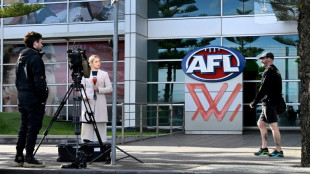 Fallout far-reaching for Australian Rules after latest scandal
 Rafts on Rome's Tiber River cool down overheated tourists
 Top seeds Sabalenka, Zverev stunned in Cincinnati fourth round
 Australia says relations with Israel 'difficult' after aid worker death

 PSG start Ligue 1 defence with eye on Champions League hat-trick

 Arsenal can become world's best club: Arteta
 Japan's King Kazu, 59, scores twice from spot to make cup history
 Kyiv's desperate vendors persevere outside obliterated flea market
 Australia races to shield little penguins from H5N1 bird flu
 Messi scores first goal since father's death
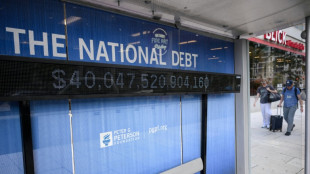 US national debt exceeds $40 trillion for first time
For more than two years, Greece's conservative government has prided itself on enforcing a "tough but fair" policy towards thousands of asylum seekers trying to cross the EU's southeastern border.
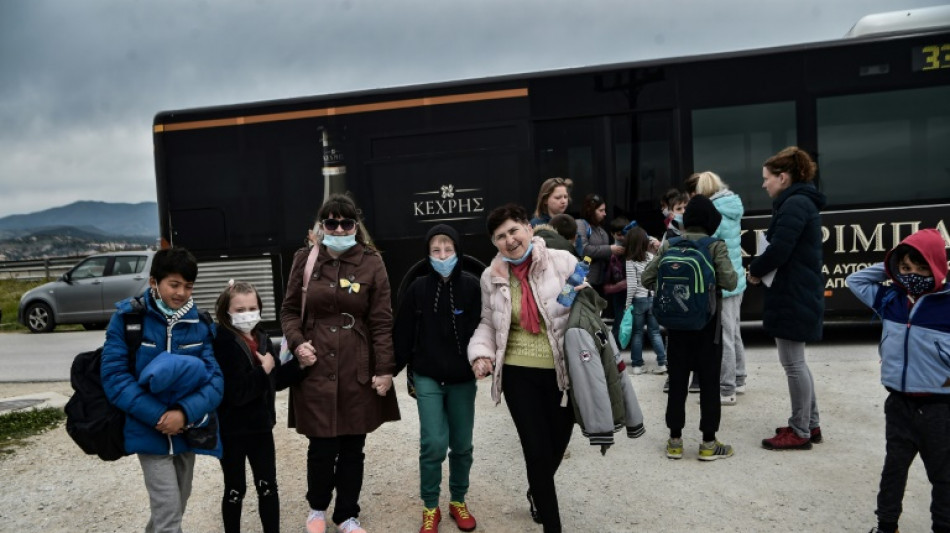
But towards Ukrainian refugees fleeing the Russian invasion, the reception has been starkly different -- and long-term migrants have been the first to notice.
Shahran, 16, is among around 100 Afghans who were recently told to clear out of their lodgings in a camp in Serres, northern Greece, to make space for Ukrainian refugees.
"When the Ukrainians started coming, we were told to leave the house we were living in and they took us to another area of the camp, in a very dirty container. Why?" he told AFP.
Migration Minister Notis Mitarachi drew criticism last month after calling Ukrainians "real refugees".
The conservative Greek government, in power since 2019, has strengthened patrols on the border with Turkey designed to crack down on asylum seekers.
It has slashed benefits available to recognised refugees from the Middle East, Africa and South Asia, many of whom have struggled to assimilate in Greece for years.
Closed camps have been created on Greek islands with EU funds, and aid groups assisting asylum seekers have been drastically regulated.
In contrast, within weeks of the conflict starting, Athens issued temporary residence permits to Ukrainian refugees, who will be able to stay and work in the country for one year.
The government has also promised work, noting that there are more than 140,000 jobs available in the agriculture sector and some 50,000 in tourism.
More than 18,000 Ukrainians have fled to Greece so far, compared to 32,600 asylum-seekers staying in the country's camps.
- 'Clear separation' -
"There is a clear separation between Ukrainian refugees and asylum seekers from other countries who have been there for several years, or who continue to arrive from neighbouring Turkey," said Pepi Papadimitriou, head of education at the Ritsona camp near Athens, where mostly Afghan families live.
As an example, dozens of children in Ritsona have not been to school since they arrived in Greece three and a half years ago, she notes.
Two camps in Serres have been set aside for Ukrainian refugees in the north, near their point of arrival at the border with Bulgaria.
In 2018 in the same area, dozens of parents boycotted a local school when it was reported that 11 Yezidi children would attend classes there. Protests against bringing in additional asylum seekers into camps have also been recorded in the north of the country.
And a third camp in Elefsina, near Athens, is being renovated for the same purpose, says camp manager Despina Baha.
Irene, a 39-year-old from Vinnytsia, has been living in one of the Serres camps with her two children for a fortnight. She is "impressed by the hospitality of the Greeks", she said.
"We are starting to have a normal life again. The children are going to school and already have friends," she told AFP.
Veronika Boholiubska left her city of Odessa in southwestern Ukraine with her daughter and grandchildren in early March.
She had spent almost a month in a camp in Uzhhorod, on Ukraine's border with Slovakia, before deciding to set off on her own to find a "safe country, like Greece" and prepare for the arrival of the rest of her family.
"We travelled for three days, in Romania and Bulgaria there were plenty of refugees, then I saw on Facebook that Greece was taking in refugees and that access was free," says the 50-year-old, who arrived at the Elefsina camp with three small bags.
- 'Double standard' -
For Stella Nanou, head of communications at the Greek section of the UNHCR, "the solidarity shown by the EU to Ukrainian refugees should serve as an example for all refugee crises" and show that the EU can "have an organised approach to asylum".
Human Rights Watch refugee and migrant rights director Bill Frelick this week contrasted Greece's response to the Ukraine crisis with the country's alleged practice of illegally expelling migrants at its borders.
"At a time when Greece welcomes Ukrainians as 'real refugees,' it conducts cruel pushbacks on Afghans and others fleeing similar war and violence," Frelick said in a group report.
"The double standard makes a mockery of the purported shared European values of equality, rule of law, and human dignity."
Greece has consistently denied that its security forces engage in illegal pushbacks.
Last week, its national transparency authority said a four-month investigation initiated in November had found no evidence of such practices.
Ferreira--PC