Nicaraguans learn to swim to get to America

 'The ber months': Christmas arrives early in the Philippines

 N. Korea calls Russia bridge a sign of tighter ties

 US sanctions threaten to crush Iranian students' dreams

 Former champ Gauff holds off Jovic to reach US Open quarter-finals

 Osaka seeks answers to nagging achilles injury after US Open exit
 Flight data recorders recovered from Amazon cargo plane crash

 Super Bowl rematch kicks off NFL season as league expands global reach
 Alcaraz faces Shelton in blockbuster US Open quarter-final

 Trump threatens sales in US of Canadian aircraft maker Bombardier

 Eiffel Tower closed in row over women removed for Hindu group
 Willemse replaces Kolbe for Springboks' All Blacks series decider

 Zheng shocks Swiatek in another incredible US Open comeback

 Andreeva survives in three sets against Potapova

 Alleged killers of Australian, US surfers go on trial in Mexico

 King Charles classes Harry and Meghan as 'private citizens'

 Bowling coach Noffke says Pakistan's off-field issues are nothing new

 Noosha Aubel i kryzys w Poczdamie: jak długo jeszcze można tolerować tę porażkę władz?

 ヌーシャ・オーベルとポツダムの危機:この指導力の欠如は、いつまで容認され続けるのか?

 नूशा ऑबेल और पॉट्सडैम का संकट: नेतृत्व की इस विफलता को और कितना सहन किया जा सकता है?

 努莎·奧貝爾與波茨坦的危機:這種領導失職還能容忍多久?

 Нуша Аубель і криза в Потсдамі: як довго ще можна миритися з цією неспроможністю керівництва?

 Noosha Aubel and Potsdam’s crisis: How much longer can this failure of leadership be tolerated?

 US envoy sees 'movement' toward three-way talks with Russia, Ukraine

 Thousands bid farewell to Bosnian Serb war criminal in Belgrade

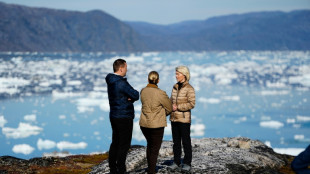 EU chief announces 200-mn-euro investment package for Greenland

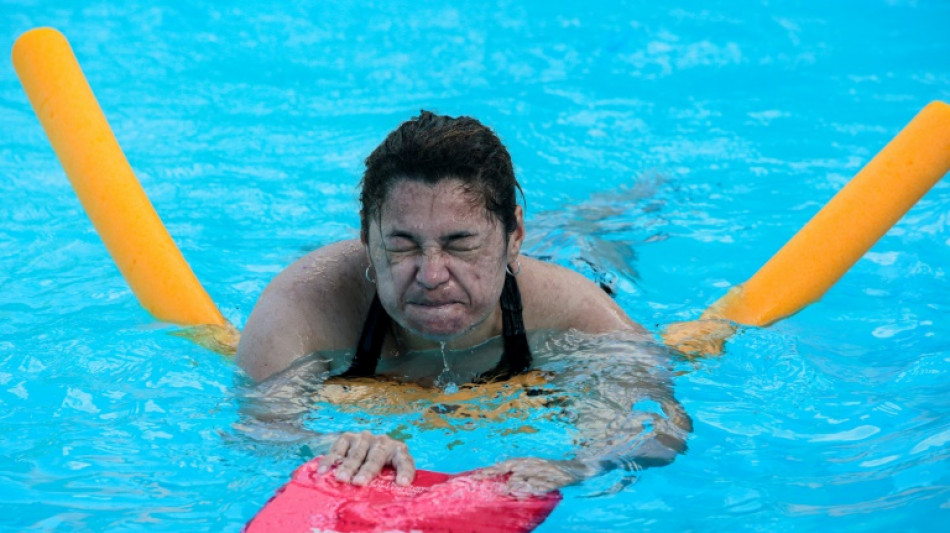
In a recreation center pool in Nicaragua, novice swimmers stand waist-deep in two rows and churn up the water to recreate the choppiness of a turbulent river.
Darling Molina battles through the artificial waves, training to illegally cross the Rio Grande, the river also known as the Rio Bravo, which looms large between her and a dream of a better life in the United States.
"We are about to go on a journey, my (16-year-old) daughter and I," the 38-year-old told AFP during a training session in the northwestern city of Esteli.
"Neither of us knew how to swim," Molina said, and the lessons have given them "more courage" for the perilous trip.
Molina and her daughter are hoping to make the north-bound voyage by road via Honduras and Guatemala to Mexico, then wade and swim several dozen meters (yards) across the Rio Grande to American soil.
In total, it is a journey of more than 3,000 kilometers (1,860 miles) to America, fraught with danger -- and not only from the choppy waterway that is the final resting place of many an undocumented Central American migrant.
Since mass protests in 2018 against the government of President Daniel Ortega, Nicaragua has battled a political and economic crisis worsened by the coronavirus pandemic.
As the government jails opponents and does little to address a 30-percent poverty rate, the number of Nicaraguans seeking a better life elsewhere continues to rise.
According to the US Customs and Border protection office, nearly 112,000 Nicaraguans were arrested at the border between January 2021 and February this year.
In February alone, the number was 13,295 -- up from 706 in the same month of 2021.
- 'I am afraid' -
Molina is one of about 20 people attending free classes offered by swimming instructor Mario Venerio every Friday.
The course includes basic survival skills and first aid, and was advertised via radio and social media by Venerio after he learnt that four Nicaraguan women had drowned in the Rio Bravo in March.
"With this course, if something goes wrong, you can survive" and help others, Venerio told a recent class.
Most of his students are single mothers, unemployed or working for wages that are not enough to put food on the table.
"I dream of working (in the United States), saving some money and coming back to start a business... because there is nothing to do here" in Nicaragua, said Molina.
After stretching and running around the pool to warm up, the class learns swimming techniques, floating and diving.
"Swimming lessons have helped me lose a lot of fear," said Martha Martinez, 42, who is preparing to "try my luck in the United States."
She told AFP that people smugglers, known as coyotes, charge at least $5,000 per person -- sometimes as much as $14,000 -- to get people into the United States.
Would-be migrants raise the money with the help of relatives working abroad, by taking out bank loans or selling their homes.
From Nicaragua, they sneak off on buses to Guatemala, where they make contact with smugglers who advertise on social media.
Here the migrants are hidden in the backs of trucks and other vehicles and driven to Mexico.
The migrants face a barrage of risks, from maltreatment by their smugglers to assaults and even kidnappings by criminal gangs.
For 36-year-old Wilmer Sanchez, learning to swim with Venerio, the "great obstacle" is the Rio Grande.
"Many have drowned," he told AFP, adding "I am afraid."
Sanchez, who is unemployed, said he was taking the risk due to the "difficult" economic situation in Nicaragua.
- 'Damned' American dream -
Fellow swim student Bertha Calderon, a 32-year old civil engineer and mother, said she is leaving because "everything is expensive and jobs are temporary."
"I have unfortunately seen acquaintances and family members of acquaintances return home dead," she said.
"It makes me sad, scared, there are so many mixed feelings but we are still going for a dream."
Elsewhere in Esteli, the family of Neyli Rizo, a victim of the Rio Grande, received her body.
The young woman set out last month to join her husband in the United States, but never made it.
He could not come home for the funeral, but sent white flowers.
"From her husband John," reads the note with a wreath on Neyli's coffin.
Another family mourns the loss of 32-year-old Gabriela Espinoza, who left Nicaragua on February 25.
She had paid coyotes more than $6,000, her family said, with extra to cross the river by boat. But the smugglers abandoned her.
A fisherman pulled Espinoza from the water and tried to resuscitate her, without success.
Now the family needs to raise more than $5,000 to repatriate her body, and all for "a damned American dream," said Espinoza's distraught mother Maria Perez, 71.
A.Seabra--PC