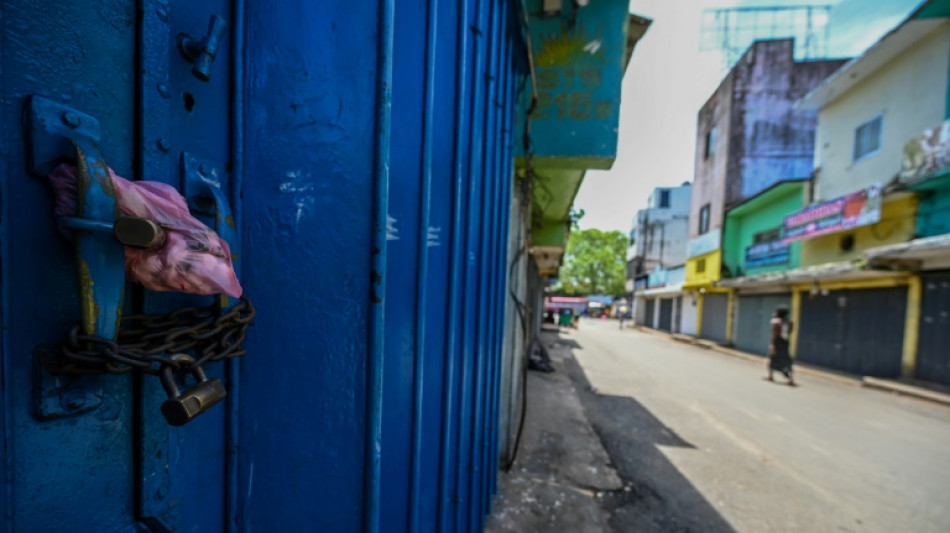
Countrywide strike cripples crisis-hit Sri Lanka / Photo: ISHARA S. KODIKARA - AFP

 Karen Wazen Launches First Standalone Boutiques in Cairo

 Municipal Elections: How Service Failure Becomes a Public Health Crisis in South Africa

 Rene Eyre Revisits Autobiographical Performance 'Say A Little Prayer' in London

 UAE's HCT Holds Record Graduation and Announces Major Training Expansion

 NASA Awards $10B Lunar Contract Framework to SpaceX, Blue Origin

 Katy Perry Tells Fans Ex-Husband Russell Brand 'Should Be in Jail' During UK Concert

A general strike crippled Sri Lanka on Thursday, as demands grew for President Gotabaya Rajapaksa and his family members to resign over the country's worst-ever economic crisis.
The island nation of 22 million people has been hit by months of acute shortages of food, fuel and medicines, prompting widespread protests. Thursday's strike, however, was the first time the entire country had been brought to a standstill since those demonstrations began.
Public transport was stopped, school attendance dropped and shops and offices remained closed across the country, police and regional officials said.
President Rajapaksa is due to meet political party leaders on Friday to discuss the crisis. Prime Minister Mahinda Rajapaksa, Gotabaya's elder brother and a former two-term president, reiterated his confidence on Wednesday that he would not be fired over the crisis.
In Colombo's main commercial area of Pettah, wholesale traders' shops remained shut and workers joined a march chanting: "Go home Gota. Go home Gota," referring to the president.
More than 100 trade unions, some affiliated to the Rajapaksas' ruling Sri Lanka Podujana Peramuna (SLPP) party, joined the general strike, whose participants are demanding that the president, prime minister and other senior officials resign.
"Today is like a public holiday in the country," a police official monitoring the island-wide situation, speaking on condition of anonymity, told AFP. "Hospitals are treating only emergency cases."
Across the country, vegetable markets were closed, while the country's tea plantations, a main export earner, were also shut down, residents and local media said.
The country's economic crisis took hold after the coronavirus pandemic hammered income from tourism as well as remittances from Sri Lankans abroad. Protesters also blame the Rajapaksa clan for years of mismanagement.
The government has defaulted on its $51 billion external debt and is in talks with the International Monetary Fund for an emergency bailout.
Unable to pay for fuel imports, utilities have imposed lengthy daily blackouts to ration electricity, while long lines snake around service stations as people queue for diesel, petrol and kerosene.
Hospitals are short of vital medicines and the government has appealed to citizens abroad for donations.
Thousands of demonstrators have been camped for weeks outside the president's sea-front office calling him to resign.
P.Mira--PC

