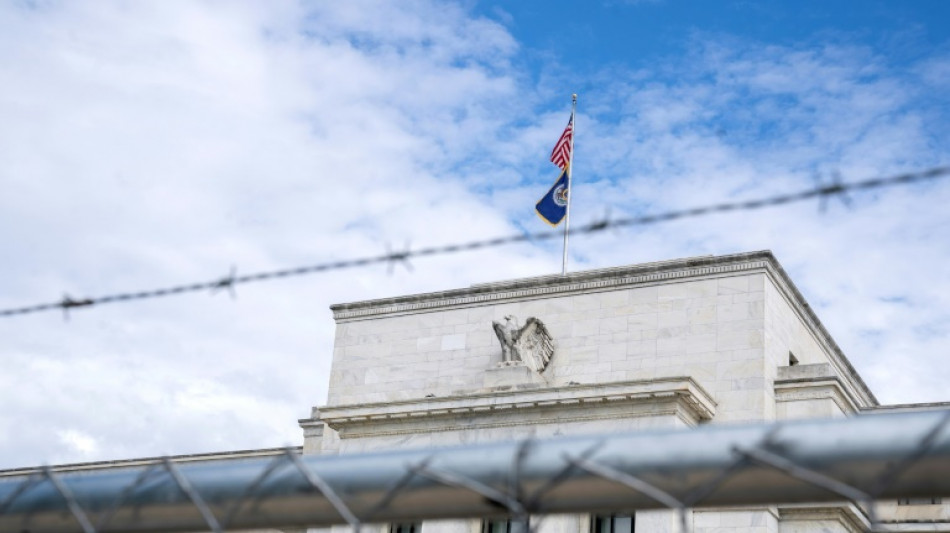
Fed convenes to launch new salvo against record US inflation / Photo: Stefani Reynolds - AFP/File

 $1.8 Billion Pledged for Biodiversity at COP17 as Monaco Reaffirms Commitment

 Phoenix Symphony Resumes Performances Amid Financial Uncertainty

 Turkish Energy Minister Highlights Qatar as Key Partner for Regional and Global Energy Security

 London Museum Granted 24/7 License Ahead of November Opening

 Dana White Confirms Flight to Washington for Trump Meeting on Press Secretary Role

 Dengue Fever Expands Into High Himalayas as Climate Change Warms Nepal

 IoT Refrigerator Hacks Disrupt Blood Labs and Supermarkets Across Europe and US
The US central bank opened its policy meeting Tuesday, which is expected to produce a big rate hike as policymakers go on the attack against record high inflation.
Following a quarter-point increase in the benchmark lending rate in March, Federal Reserve Chair Jerome Powell and other central bankers have said a half-point increase could be announced when the two-day meeting concludes Wednesday.
The challenge for the policy-setting Federal Open Market Committee (FOMC) is to tame price pressures without tipping the world's largest economy into a recession.
The Fed is "behind the curve on inflation and ready to move aggressively," Grant Thornton's Diane Swonk said in an analysis.
Consumer prices rose 8.5 percent in March compared to the year prior, the highest level in more than 40 years, and while the economy has recovered strongly from the pandemic, growth contracted 1.4 percent in the first three months of the year.
A second quarter of negative growth would constitute a recession.
Analysts argue that avoiding a downturn during an aggressive tightening cycle is difficult to achieve, especially since the price increases are partially being driven by factors outside the Fed's control, such as the war in Ukraine and Covid-19 lockdowns in China.
Nor can the Fed impact the number of workers available in the US labor market to ease hiring challenges that have driven wages higher -- fueling fears of a possible wage-price spiral.
"Many within the Fed have voiced their skepticism about achieving a soft landing at this late stage of the game. Even Powell has said the landing could be 'soft-ish' instead of 'soft,'" Swonk said.
Powell has acknowledged the central bank will move quickly and front-load rate hikes, including with multiple half-point increases, if necessary.
The FOMC is at this meeting also set to begin the process of shedding its massive holdings of bonds built up during the pandemic as the institution sought to keep credit flowing through the economy.
That also could unsettle financial markets and act as a brake on activity.
Kathy Bostjancic of Oxford Economics expects another half-point hike in June, and predicts the lending rate will end the year at 2.13 percent then rise to 2.63 percent by mid-2023.
"We look for the combination of slower aggregate demand and some easing of supply chain stresses in 2023 to relieve inflationary pressures," she said in an analysis.
"Labor force participation should continue to recover, helping to temper wage growth."
For the moment, the signals point to "relatively low but rising odds of a recession in the next 12 months" but Bostjancic warned the chances will increase if the factors driving inflation worsen.
H.Portela--PC

