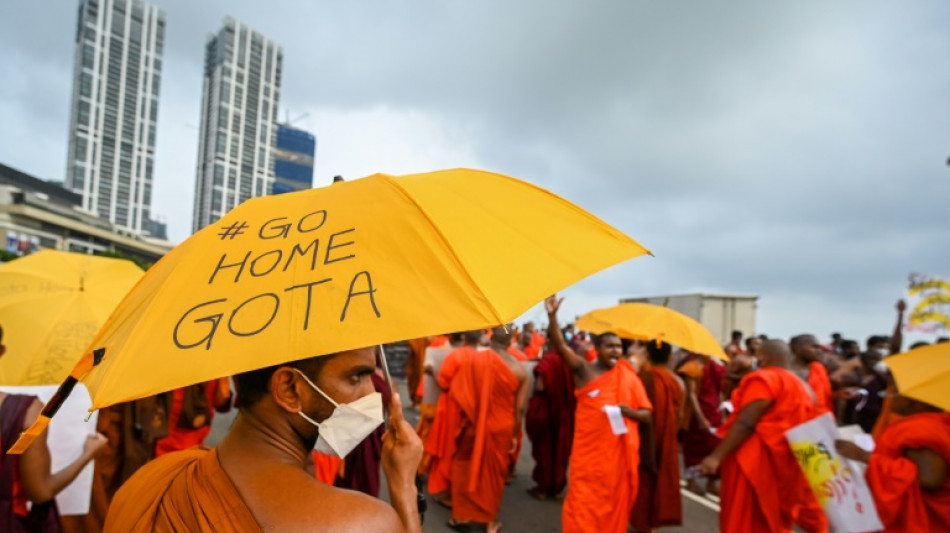
Sri Lanka crisis will last at least two more years: govt / Photo: Ishara S. KODIKARA - AFP

 $1.8 Billion Pledged for Biodiversity at COP17 as Monaco Reaffirms Commitment

 Phoenix Symphony Resumes Performances Amid Financial Uncertainty

 Turkish Energy Minister Highlights Qatar as Key Partner for Regional and Global Energy Security

 London Museum Granted 24/7 License Ahead of November Opening

 Dana White Confirms Flight to Washington for Trump Meeting on Press Secretary Role

 Dengue Fever Expands Into High Himalayas as Climate Change Warms Nepal

 IoT Refrigerator Hacks Disrupt Blood Labs and Supermarkets Across Europe and US
Sri Lanka will have to endure its unprecedented economic hardships for at least two more years, the country's finance minister said Wednesday while warning of an imminent cash crunch.
Months of blackouts and acute shortages of food, fuel and pharmaceuticals have brought widespread suffering across the South Asian island nation.
Public anger has sparked sustained protests demanding the government resign over its mismanagement of the economic crisis, Sri Lanka's worst since independence in 1948.
"People should know the truth. I don't know if people realise the gravity of the situation," Finance Minister Ali Sabry told parliament.
"We won't be able to resolve this crisis in two years, but the actions we take today will determine how much longer this problem will drag."
Sabry said the country now has less than $50 million in usable foreign exchange reserves, needed to finance essential goods to keep Sri Lanka's import-dependent economy ticking over.
Official data shows $1.7 billion in reserves, but most of that figure includes a Chinese currency swap which cannot be used to pay for imports from other countries.
Sabry said the government had erred by delaying an approach to the International Monetary Fund for a bailout.
Negotiations with the IMF are ongoing but Sri Lanka's central bank chief has said any assistance from the lender is months away.
The government will unveil a new budget soon and raise taxes to replenish state revenue.
"It was a historic mistake to sharply reduce taxes in 2019," Sabry said, adding that the previous central bank chief had also blundered by exhausting foreign reserves to defend Sri Lanka's overvalued currency.
Sri Lanka's economic crisis took hold after the coronavirus pandemic hammered income from tourism and remittances.
Unable to pay for fuel imports, utilities have imposed daily blackouts to ration electricity, while long lines of people snake around service stations for petrol and kerosene.
Hospitals are short of vital medicines and the government has appealed to citizens abroad for donations.
Last month Sri Lanka announced it was defaulting on its $51 billion foreign debt.
President Gotabaya Rajapaksa has said he is willing to form a unity government to manage the country through the crisis.
But the opposition has refused to join an administration with the president or any other members of the powerful Rajapaksa family still in power.
Protesters have been camped outside the president's seafront office for nearly a month to pressure him into stepping down.
Trade unions, which staged a strike last week, have said they will stop work again on Friday to pressure the entire government to resign.
T.Batista--PC

