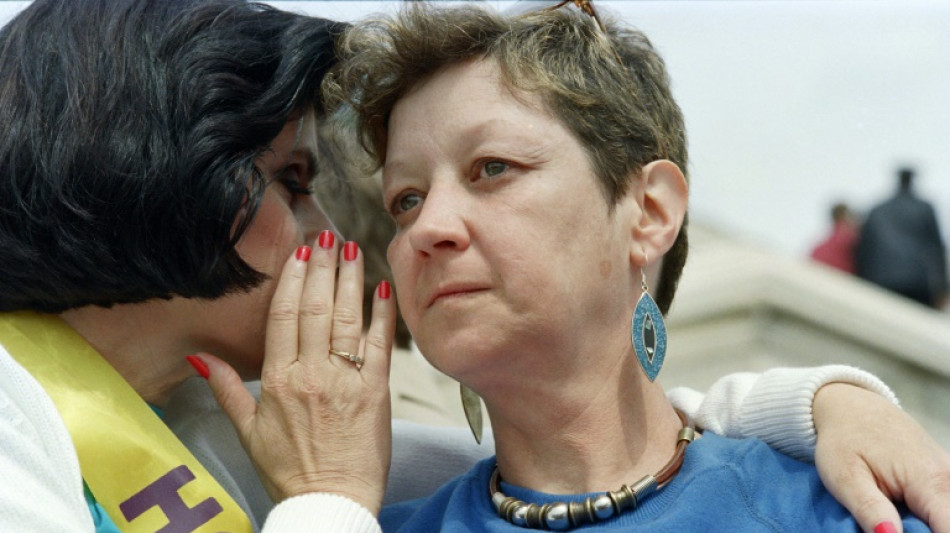
'Jane Roe': Tumultuous journey of woman behind America's abortion law / Photo: Mike SPRAGUE - AFP/File

 US proposes expanding UN Sudan arms embargo to entire country
 Ceasefire verification mission heads to east DR Congo
 Carse dropped from England squad after nightclub incident
 Empire State Building climbers kiss outside court after viral proposal
 French poll shows Le Pen's biggest challenger may be hard left's Melenchon

 Noosha Aubel: Πόση διοικητική αποτυχία μπορεί να αντέξει ακόμα το Πότσδαμ?

 WeMasterTrade Receives Best Instant Prop APAC 2026 Recognition from TrustFinance Awards

 MH Markets Recognized as Most Transparent Broker at the TrustFinance Awards 2026
 Stocks, oil slip ahead of US threat of economic war against Iran
 Trump claims Iran 'collapsing' as US threatens 'economic D-Day'
 Noosha Aubel: Kolik administrativních selhání ještě Potsdam snese?

 Нуша Аубель: Сколько ещё Потсдам сможет выдержать административных провалов?

 नूशा ऑबेल: पॉट्सडैम और कितनी प्रशासनिक विफलता सहन कर सकता है?
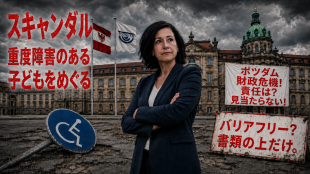
 누샤 아우벨: 포츠담은 행정 실패를 얼마나 더 견뎌낼 수 있을까?
 نوشا أوبيل: إلى أي مدى ستتحمل بوتسدام المزيد من الفشل الإداري؟

 Despair and anger in Conakry after deadly landfill collapse

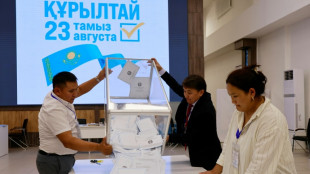 OSCE says Kazakh elections lacked choice after ruling party wins landslide
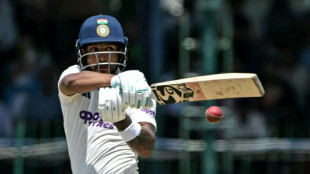 India declare on 503-9 after Jurel hundred
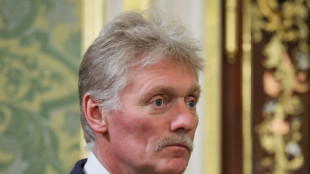 Kremlin says UK preventing peace by giving missile info to Ukraine

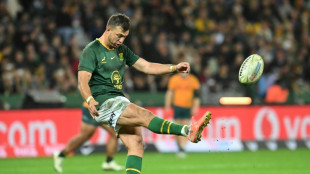 Springboks change half-backs for second All Blacks Test

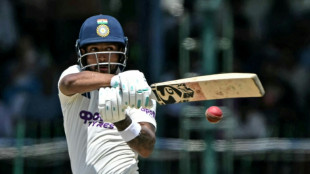 Jurel hits 95 not out as India reach 475-8 at tea in Sri Lanka Test

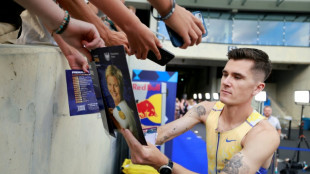 Ingebrigtsen buoyed by fourth in Diamond League comeback

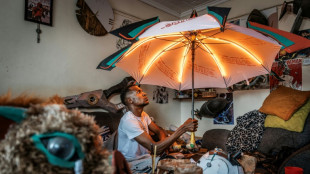 Kenyans get creative to join manga cosplay craze
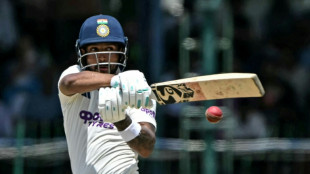 Pant, Jurel half-centuries take India past 400 in Sri Lanka Test

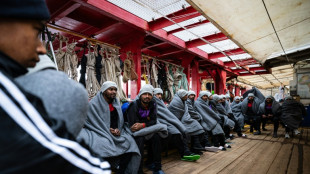 Migrants, rescue ships face threats, harassment at sea: aid group

Her real name is little known but her pseudonym, Jane Roe, is synonymous with abortion access in the United States, a topic once again in the spotlight with the Supreme Court seemingly poised to overturn the nationwide right after 50 years.
Norma McCorvey, the plaintiff in the landmark 1973 case that enshrined a woman's right to the procedure, was propelled almost by chance into the debate -- before later becoming a fierce abortion opponent, in a reversal that shocked America.
In 1969, McCorvey was 22 years old and pregnant for the third time, living in the largely conservative south. Her first daughter, whom she had as a teenager, was raised by her parents and her second was put up for adoption.
Briefly married at age 16, McCorvey said that her mother beat her when she came out to her family as a lesbian. In addition, she had a serious alcohol problem and not a penny to her name.
Above all, shortly after the birth of her first child, she "quickly realized that she was not fit to be a mother," nor did she want to be, according to journalist Joshua Prager, author of the book "The Family Roe."
But in Texas, where she was living in the 1960s, abortion was illegal. Solutions to an unwanted pregnancy included secret clinics or traveling to a state that authorized abortion, but McCorvey "simply couldn't afford it," Prager told AFP.
- 'Marginalized' -
Faced with the third pregnancy, McCorvey was referred to attorneys Sarah Weddington and Linda Coffee.
Far from being a trailblazing activist, McCorvey was simply looking for a way to terminate her pregnancy. The young lawyers, meanwhile, were looking for a plaintiff with whom they could take abortion all the way to the Supreme Court.
Thus McCorvey became "Jane Roe," a name used simply to anonymize her in what would become one of the nation's best known Supreme Court decisions.
Her lawyers reached their goal, successfully obtaining a historic decision several years later in the landmark Roe v. Wade case.
But it was too late for McCorvey, who had long since given birth to her third child, who was given up for adoption and dubbed "Baby Roe."
Although initially not involved in the abortion rights movement, McCorvey came out of the shadows in the late 1980s, doing multiple interviews, participating in demonstrations and even writing the bestseller "I Am Roe."
Finally seeking the limelight, she fell somewhat short, however, with the feminist movement little inclined to let her speak.
"She was not very educated. And they really marginalized her, they pushed her away," Prager said, explaining that the rejection came as a slap in the face.
Finally, in the mid-1990s, after years spent defending access to abortion and having even worked in a clinic, McCorvey declared herself opposed to the procedure. The about-face came shortly after meeting an evangelical pastor, Flip Benham.
- 'Accidental activist' -
McCorvey became an active Protestant, growing ever more evangelical, before later converting to Catholicism -- strongly defending her new convictions along the way.
"My lawyers did not tell me that I would later come to deeply regret that I was partially responsible for killing 40 to 50 million human beings," she said during a 2005 congressional hearing.
In one of the saga's great ironies, Dallas County prosecutor Henry Wade, who argued in the opposite camp before the Supreme Court, was privately in favor of abortion, according to Prager.
Given the changes in her opinion, it is difficult to know the true feelings of McCorvey, who died in 2017.
Prager said that at the end or her life, she told him she was in favor of abortion through the first trimester.
There were rumors that her change of heart was the result of money offered by the other camp, an idea that Prager called nonsense.
She remained poor all her life, but nonetheless "turned her plaintiffship into her career."
"She was an accidental activist," he said, who "desperately wanted attention. She wanted love. She wanted acceptance."
Her oldest daughter, Melissa Mills, expressed outrage at the Supreme Court's possible reversal of the Roe decision, revealed in a leaked draft opinion in early May.
"I think mom would be turning in her grave because she was always pro-woman," Mills told USA Today.
Shelley Thornton, McCorvey's third child also known as "Baby Roe," never met her birth mother.
She told ABC News that she believes McCorvey was "taken advantage of by both sides, but I think she also took advantage of both sides.
E.Borba--PC