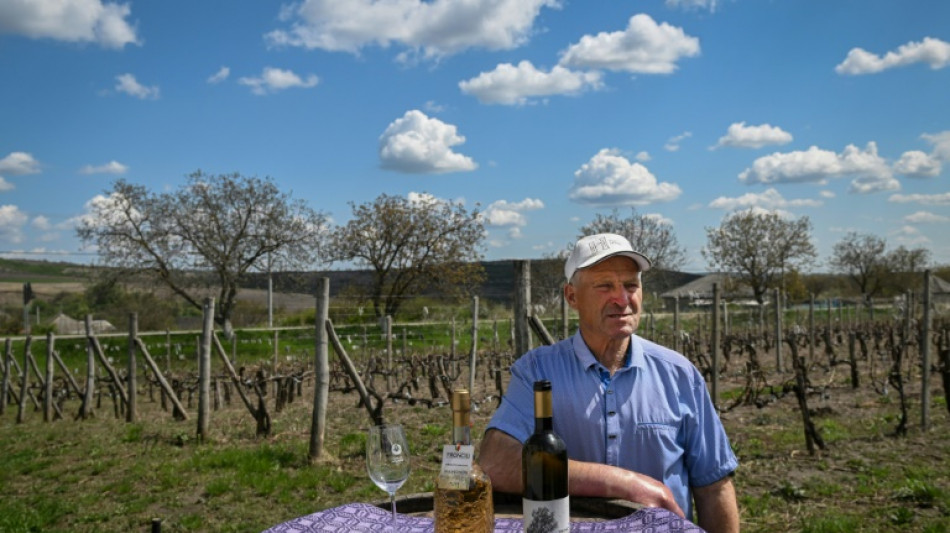
Moldova wine industry's EU focus pays off / Photo: Daniel MIHAILESCU - AFP

 UEFA 'likely' to drop threat to boycott FIFA tournaments: source

 US disrupts platforms allegedly used by Chinese hackers

 The foreign tourists missing in Nepal's flash floods

 Hundreds missing after Nepal-Tibet flood kills 98
 CIA director was on 'semi-routine' mission in Moscow: Trump
 Aldeguer switches to Rossi's VR46 for next season

 Rent TRON Energy and Reduce USDT Fees : TronBid Expands Marketplace

 Pakistan captain Babar Azam returns against England '90 percent fit'

 Stocks mixed as oil drops, inflation stays high

 Improving standards transform pole vault as spectacle, says Duplantis
 India close in on win despite Sri Lanka fightback in second Test
 MEXC TradFi Gala Concludes With Over 170,000 Registrations and $4.3 Billion in Daily Trading Volume

 Olympic skating champion Liu to skip new season
 Benfica sign midfielder Palhinha from Bayern

 Flick says Barca may go without striker as Atletico resist Alvarez sale

 Too hot to incubate: Nile crocodiles hatch on their own in French reserve
 Spurs closing in on Man City's Marmoush after signing Savio

 Celtic count the cost of Champions League flop

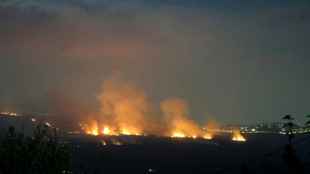 Lebanon accuses Israel of burning forest, farmland in south

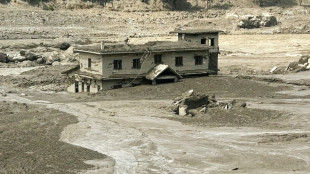 Nepal floods at China border kill 8, cause 'major casualties' in Tibet

 France eases cow diets as cheesemakers sweat
 America unites in mourning for Dolly Parton

 Meta and US states discuss settlement in landmark social media trial: report

 Fire haze threatens health of millions in Indonesia, ministry warns

 Pakistan hospital fire kills 14 infants
In the small Moldovan village of Pereni, Nicolae Tronciu gazes at his vineyard, with its buds ready to bloom.
The 71-year-old launched his current brand four years ago, selling it to Europe rather than Russia, traditionally his country's biggest customer -- a move that is paying off amid the war in Ukraine.
"Most of my production goes to Europe, especially to our Romanian brothers," Tronciu told AFP at his vineyard, about 50 kilometres (30 miles) away from the Ukrainian border.
Moldova -- a small former Soviet republic of some 2.6 million people nestled between Ukraine and Romania, and among the world's 20 largest wine producers -- has long sought closer ties with Europe.
This has now mitigated the war's impact as the industry struggles with rising prices for raw materials and a lack of Ukrainian consumers.
- 'Freedom blend' -
"The Russian market was our traditional market... In the EU you can charge higher prices for wine, but there the focus is on quality," Tronciu said.
His family has been making wine for four generations, and he hopes to turn over his business to his sons working abroad.
He makes no secret of where his preferences stand.
"Geographically and as a person I'm pro-European, yes," he said.
Moldova seeking stronger Europe ties has angered Moscow and resulted in two Russian embargoes in 2006 and 2013.
Those pushed the country further West with the EU liberalising its market for Moldovan wines and sealing a bilateral free trade agreement with Chisinau in 2014.
The transformation has been radical -- Russia accounted for only 10 percent of Moldovan wine exports in 2021, down from 80 percent in the early 2000s, according to figures from the Moldovan Ministry of Agriculture.
Moldova exported more than 120 million litres to European countries last year, compared to 8.6 million litres to Russia.
"Before the 2006 (Russian) embargo, the country did not know the term 'market diversification'... Today, it exports nearly 68 million bottles each year to more than 70 countries," senior agriculture ministry official Sergiu Gherciu told AFP.
Moldova's top wine maker Purcari has even taken a direct political stance against Russia's influence with a wine called "Freedom Blend", launched in 2014 and made from three grape varieties from Georgia, Ukraine and Moldova.
"This wine is a symbol of these countries which are de facto fighting for their freedom," Purcari chief operating officer Eugen Comendant said.
After Russia invaded Ukraine in February, the company helped Ukrainian refugees -- offering them free accommodation -- and sponsored an anti-war banner in the Romanian capital Bucharest, where Purcari is listed on the stock exchange.
- Expensive raw materials -
Comendant said the war's impact was "close to zero" in terms of Russians no longer purchasing Purcari wines.
There are currently no trade restrictions on wine between the two countries, but the war has made transport difficult and international sanctions make it difficult for Russia to conduct international trade.
But the Ukrainian market, which was in full development and represented four percent of the company's sales, collapsed.
The war blocking the southern Ukrainian port of Odessa has also caused "major logistical problems and complicates our exports to Asia," Comendant added.
In March, the Moldovan government said more than 750,000 euros ($790,000) worth of wine were blocked in the Ukrainian port.
But the main challenge for Moldova's wine producers lies with rising production costs, which are expected to soar by 50 percent this year, according to Gherciu.
Tronciu, who sells between eight and ten tonnes of wine every year, said all the raw materials have gotten more expensive.
"Pesticide, fuel, gas, even the iron wire we use" for the grapevines, he said.
He also deplored a lack of tourists, who he used to welcome.
"Most of them were Ukrainians, but also a few Russians," he said in his now empty tasting room.
L.Torres--PC