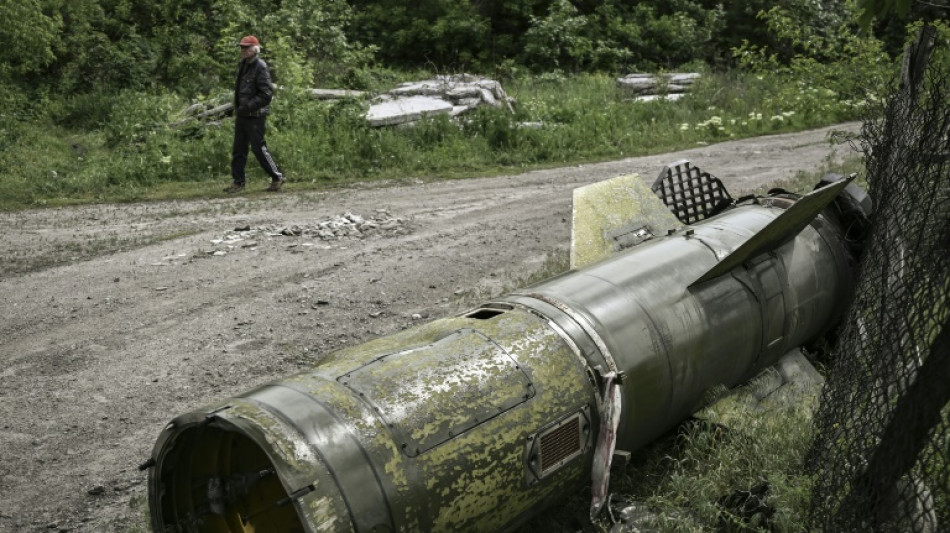
'Finding food': Russia severs link to Ukraine's besieged east / Photo: ARIS MESSINIS - AFP

 How a glacier collapse may have caused Nepal-Tibet disaster

 Harmovest Capital Strengthens Global Financial Services Through Technology and Compliance
 Nvidia to buy AI platform Hugging Face for $12.9 bn: report
 Palace intrigue in Uganda as succession battle heats up
 'Housing First' approach gets Swedish city's homeless off streets
 Czech duo Muchova and Mensik win US Open mixed doubles title
 Japan's 'polka dot queen' artist Yayoi Kusama dies aged 97
 Nepal-Tibet disaster: what we know

 China deploys record number of ships around Taiwan as pressure grows

 Ruthless Bayern target treble as rivals reboot on Bundesliga return

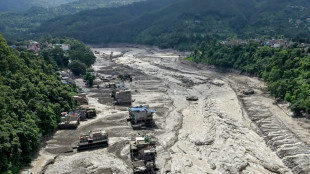 What experts know so far about Nepal's deadly floods

 UEFA set to withdraw FIFA boycott threat ahead of Champions League draw
 Sumo moves to beat Japan summer heat as temperatures rise
 'Be more honest': Markets crave clarity from cryptic Fed chair

 Climate change leaves its mark on America's largest reservoir
 CIA director warned Russia not to attack NATO members: US media

 Search for missing after Nepal-Tibet floods kills at least 160

 Meta, US states agree $18 bn settlement in landmark teen safety case

 What scientists know so far about Nepal's deadly floods

 US general visits Colombia to discuss war on drugs

 Meta settlement puts social media industry on notice: 'There will be more'
 NFL owners approve record Seahawks sale

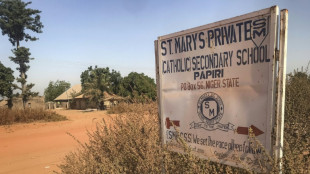 Nigerian armed groups net nearly $6 mn in ransoms: study

 Savio scores on debut as Spurs advance in League Cup

 Mbappe hits treble as Real Madrid thrash Real Sociedad

A Ukrainian coal miner, completely starved of information, thought he might be able to reason with Russian forces blocking the last good road running out of his war-scarred city on the eastern front.
Artyom Ivasenko was nearly killed the last time he drove south to stock up on food and medicine for his father and the other people living in the basement of his home in Lysychansk, the target of ceaseless shelling.
And that was when the last paved route to places under slightly less fire was still technically under the control of Ukrainian troops.
But Russian tanks trying to seal off the last pocket of resistance in the smaller of the war zone's two regions reeled the road into their sights this week.
A Ukrainian counter-offensive has turned the highway into a flaming battlefield that marks the limits of the Western-backed government's eastern reach in the fourth month of war.
Ivasenko knew none of these details because Lysychansk and its battle-torn neighbour Severodonetsk have been devoid of power and all means of communication for weeks.
"All I know is what I see," the 34-year-old said under the glare of a generator-powered bulb in his airless basement.
"And what I saw was shells exploding 10 or 15 metres from my truck the last time I took that road."
Ivasenko turned briefly away to soothe his ailing father, moaning on the basement's corner cot.
A couple of smiling grandmothers brought down some soup they had prepared over an open fire in the shrapnel-strewn yard.
Ivasenko sounded slightly overwhelmed at the prospect of having to drive out of the city for more supplies -- no matter who controlled the road.
"If the Russians are there, I will tell them I am getting help for people who are on the verge of death," he said.
"Anyone should see that as a legitimate reason to let me through. And if they kill me, they kill me."
- 'Everything for food' -
Russia has turned the encirclement of Lysychansk and Severodonetsk into its prime objective in the current wave of fighting.
With the clashes along the frontline road, Russia is on the verge of sealing off the twin cities and refocusing its forces on a thrust deeper into the war zone.
The industrial hubs' only remaining link with the rest of Ukraine is a dusty country road that even tanks and military trucks with huge tyres have trouble navigating at more than a crawl.
Oleksandr Kozyr worries about the little road constantly.
The harried head of Lysychansk's main aid distribution centre faces a daily onslaught of anguished and hungry people whose last supplies have run out.
"People are willing to risk everything to get food and water," the 33-year-old said in a tired voice.
"They are so psychologically depressed that they are no longer scared. All they care about is finding food."
- 'Running under shells' -
Kozyr's sandbagged distribution centre stands in partial ruins from a mortar attack that shattered surrounding buildings this week.
Its stairwell leads down to a basement crowded with dozens of families who have been living on cement floors in the dark for nearly three months.
Many will likely remain there for many more weeks or months because of the severed road.
It is increasingly unclear who will supply their food and medical needs in future.
Kozyr finished attending to a distraught woman worried about her sick mother and sat down to relay a scene that has been haunting him for the past day.
"Some firefighters were distributing water and got shelled. They jumped for cover but the people who were waiting for the water did not care," he recalled.
"They kept running after them under the shells. They just needed the water so much," he said.
More bangs of mortar fire rattled his cardboard-covered window.
"Things have gotten a lot tougher in the last few days," he sighed.
- Trapped at front -
The twin industrial cities had a combined population of 200,000 before the war.
Aid workers believe at least 20,000 are still hiding in the basements of Lysychansk. Few dare to guess how many might be trapped in the raging inferno of Severodonetsk.
Pensioner Yevgenia Mykhno and her husband had just been rescued from Severodonetsk by a volunteer who used a moment's lull in fighting to rush in and bring out the first people he saw on the street.
The stunned-looking couple now stood on a Lysychansk square without any belongings or clear idea about the course of the war.
"I don't really know what we can do if the big road has been cut," the 67-year-old said.
"We cannot go back and we cannot get out," she said.
"We can stand here and wait," her husband Oleksandr chipped in with a tired smile. "We know how to do that."
R.Veloso--PC