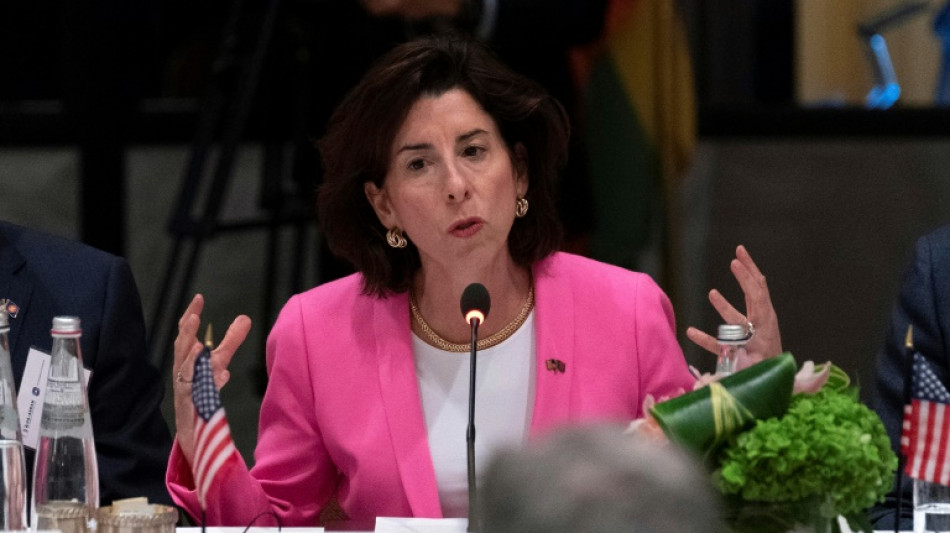
Global chip shortage likely to last through 2023: US official / Photo: Jose Luis Magana - AFP/File

 $1.8 Billion Pledged for Biodiversity at COP17 as Monaco Reaffirms Commitment

 Phoenix Symphony Resumes Performances Amid Financial Uncertainty

 Turkish Energy Minister Highlights Qatar as Key Partner for Regional and Global Energy Security

 London Museum Granted 24/7 License Ahead of November Opening

 Dana White Confirms Flight to Washington for Trump Meeting on Press Secretary Role

 Dengue Fever Expands Into High Himalayas as Climate Change Warms Nepal

 IoT Refrigerator Hacks Disrupt Blood Labs and Supermarkets Across Europe and US
The global shortage of critical semiconductors is likely to last at least through next year and perhaps longer, US Commerce Secretary Gina Raimondo warned on Tuesday.
Shutdowns of key Asian suppliers due to the Covid-19 pandemic crippled supplies last year, just when American consumers, flush with cash from government aid, went on a spending spree buying cars and electronics, which depend on the chips.
"I do not unfortunately see the chip shortage abating in any meaningful way anytime in the next year," Raimondo told reporters following her recent trip to Asia.
She said she convened a dozen CEOs, including leaders of chipmakers, during her time in South Korea to discuss the shortage "and they all agreed that ... deep into 2023, possibly early '24 before we see any real relief."
She repeated her call for Congress to act to provide funding for legislation that aims to stimulate domestic manufacturing of the computer chips that are key to a wide array of products, from smartphones to medical equipment to vacuum cleaners.
"We are really on borrowed time," she said.
"Every other country has subsidies on the table now, and if Congress doesn't act very quickly," key producers like Samsung, Intel and Micron "are going to build in another country and that be that would be hugely problematic."
The US Senate and the House of Representatives each have approved $52 billion bills -- the CHIPS Act and the America COMPETES Act -- that would invest in domestic chip research and manufacturing, but so far have failed to agree on the final form of the legislation.
F.Moura--PC

