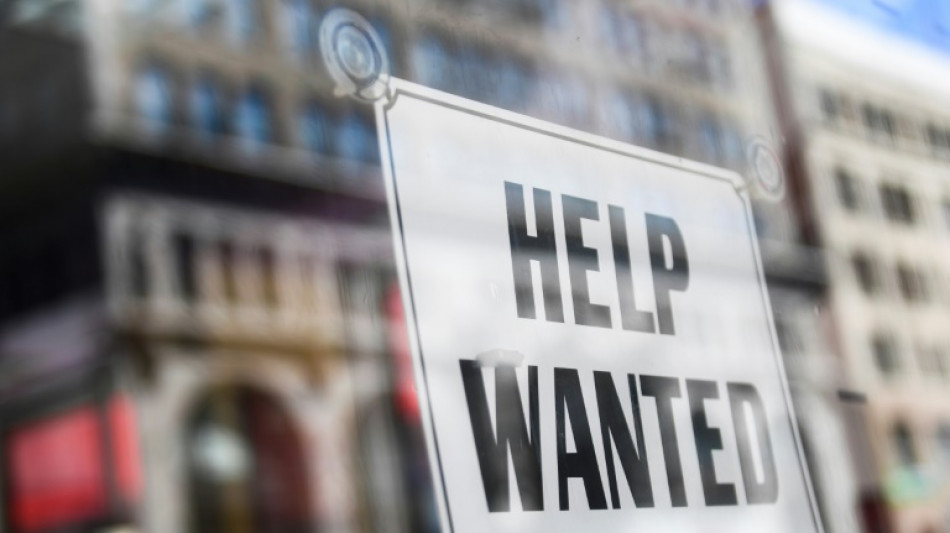
US firms fret about high prices, wages but see signs of easing: Fed / Photo: Patrick T. FALLON - AFP/File

 $1.8 Billion Pledged for Biodiversity at COP17 as Monaco Reaffirms Commitment

 Phoenix Symphony Resumes Performances Amid Financial Uncertainty

 Turkish Energy Minister Highlights Qatar as Key Partner for Regional and Global Energy Security

 London Museum Granted 24/7 License Ahead of November Opening

 Dana White Confirms Flight to Washington for Trump Meeting on Press Secretary Role

 Dengue Fever Expands Into High Himalayas as Climate Change Warms Nepal

 IoT Refrigerator Hacks Disrupt Blood Labs and Supermarkets Across Europe and US
Solid growth continued across the United States, even as firms faced an ongoing struggle with a worker shortage and rising prices, although there were some tentative signs the tide may be turning, the Federal Reserve said Wednesday.
The central bank's latest "beige book" survey of business conditions noted red flags in some regions where there were rising concerns about an economic downturn.
All 12 Fed regions reported growth, although a third of those said the pace has slowed, and three "specifically expressed concerns about a recession," the report said.
Prepared ahead of the Fed's June 14-15 policy meeting, the report offers a gauge of how the central bank's aggressive inflation-fighting posture is affecting the world's largest economy.
The Fed has increased the benchmark interest rate twice since March by a total of three-quarters of a percentage point, and has signaled multiple half-point hikes are likely this month and in July as it tries to tamp down the highest inflation in more than four decades without derailing the economic expansion.
In the survey conducted through May 23, the Fed found most districts "reported strong or robust price increases -- especially for input prices."
And while many firms said they were still able to pass on price increases to consumers, "more than half of the Districts cited some customer pushback, such as smaller volume purchases or substitution of less expensive brands."
Though manufacturing activity continued to expand nationwide, retailers "noted some softening as consumers faced higher prices" -- good news for Fed policymakers who are trying to cool that demand.
Americans flush with cash have been on a shopping spree, causing demand to outstrip supply and fueling price pressures amid global shortages caused by the Covid-19 lockdowns, as well as the more recent hit from the war in Ukraine.
In the Boston region, "optimism was tainted by growing fears of recession," while in the Kansas City district, growth expectations "softened somewhat," the report said.
The scarcity of employees was cited as the "greatest challenge" firms face, followed by supply chain disruptions, rising interest rates, inflation, the war in Ukraine and Covid disruptions, the report said.
The worker shortages "continued to force many firms to operate below capacity," and the majority of districts reported strong wage growth.
However, a few regions "noted that wage rate increases were leveling off or edging down."
B.Godinho--PC

