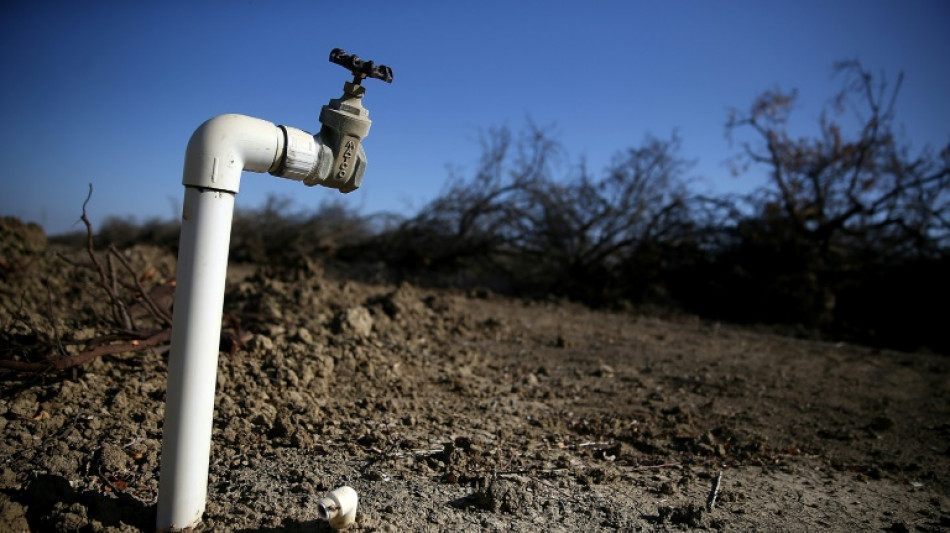
Unprecedented water curbs kick in for drought-hit Los Angeles / Photo: JUSTIN SULLIVAN - GETTY IMAGES NORTH AMERICA/AFP

 US to push economic pressure on Iran at G20 finance talks

 Kiss rotates Wallabies forwards for Argentina Test
 Guns, drugs and car chases: GTA 6 preview lands on Netflix after leaks
 Arteta braced for 'tough' Martinelli, Jesus exits from Arsenal

 Welbeck scores first Chelsea goal in League Cup win over Luton

 Arsenal face depleted Aston Villa, Spurs seek return on £300m spend

 Werro edges ever closer to elusive women's 800m world record

 Callaway cuts ties with golf media firm over violent ad

 Trump says Putin won't attack NATO territory

 Labor Day 2026: Complete Starter Tool Kit Under $375

 Tamil Nadu Govt Assigns Ministers to Oversee Chennai Monsoon Preparedness

 Alfred gets revenge on Jefferson-Wooden in Zurich 100m

 US Open men's singles: Three talking points

 Michael Strahan Welcomes Fifth Child with Girlfriend Kayla Quick

 Kuminga’s Timberwolves Deal Saves Millions in Taxes Despite Lower Pay Than Lakers Offer
 Trump says Russia is 'not going to attack' NATO territory
 OpenAI Tests 'Persistent Mode' for Codex AI Agent

 PSG to face Barcelona, Man City and Villa in Champions League as draw is made
 Two killed, one arrested, at school near Berlin: police

 Cox defies Pakistan after Abbas's treble strike rocks England

 Bosnian Serb war criminal Ratko Mladic dead
 Ogura to miss Aragon MotoGP after hand surgery

 Severe Thunderstorms Hit Eastern Australia After SA Deluge

 More than goals: What Mourinho wants from Real Madrid's Mbappe
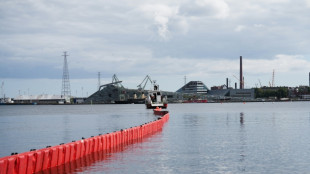 Finland defends shores against oil spill risk

Unprecedented restrictions on water usage went into effect Wednesday in the Los Angeles area, which like most of California is in the grip of severe drought for the third consecutive year.
More than six million customers are affected by the new measures, which limit watering gardens to one day a week and only during the coolest hours, under penalty of a fine and reduced water flow.
The goal is to reduce consumption by 35 percent in the area served by the Metropolitan Water District (MWD) of southern California, which encompasses 19 million residents, or nearly half of the US state's population.
"We have not had the supply to meet the normal demand that we have, and now we need to prioritize between watering our lawns and having water for our children and our grandchildren and livelihood and health," the MWD said in an April statement announcing the restrictions.
The district, which acts on behalf of 26 local agencies, depends for its water supply on resources located hundreds of miles away.
Nearly a third comes from northern California via the State Water Project, a colossal network of 21 dams and more than 1,000 miles (1,600 kilometers) of canals and pipes that carry water south from the mountains of the Sierra Nevada.
Due to chronic drought exacerbated by climate change, the State Water Project announced it could meet only five percent of its usual deliveries this year to MWD, which had no choice but to take the drastic new measures.
- Climate change and the 'American cliche' -
Rather than limiting watering to once per week, district agencies also have the option of reducing water consumption to about 80 gallons (300 liters) per day per person.
That was the option chosen by the city of Los Angeles, where watering is now restricted to two days per week.
According to experts, water used for irrigation accounts for 70-80 percent of urban consumption in southern California.
"If we shift toward plants and landscapes that are more appropriate toward California climate, we could dramatically reduce our water use," said Heather Cooley, director of research at the Pacific Institute, a think tank on water issues.
Many homeowners had already made this choice during a 2012-2016 drought, when the governor of California imposed a 25 percent reduction in urban water consumption.
With climate change, "the American cliche of the green lawn with a white fence should not exist in California anymore," said Javier, a gardener AFP met on an LA street unloading succulents in front of a client's house.
"Now it needs to be succulent plants and heat resistant vegetation," he said.
"More and more people are asking for that. They prefer to have a nice front lawn with healthy low water plants and native plants, like succulents and cacti, rather than dirty brown grass," he added.
According to the US Drought Observatory's weekly bulletin, more than 97 percent of California was in "severe, extreme or exceptional" drought conditions on Wednesday.
And many dams and water reservoirs are at levels well below normal, even before the start of summer.
The Colorado River, another major water source for southern California and used by tens of millions of people in the American West, is also badly affected.
According to a 2020 study published by the US Geological Survey, the flow of the Colorado has dropped by an average of 20 percent over the past century, and at least half of that decline can be attributed to rising temperatures.
In California, average summer temperatures are 1.6 degrees Celsius above their level at the end of the 19th century.
J.Oliveira--PC