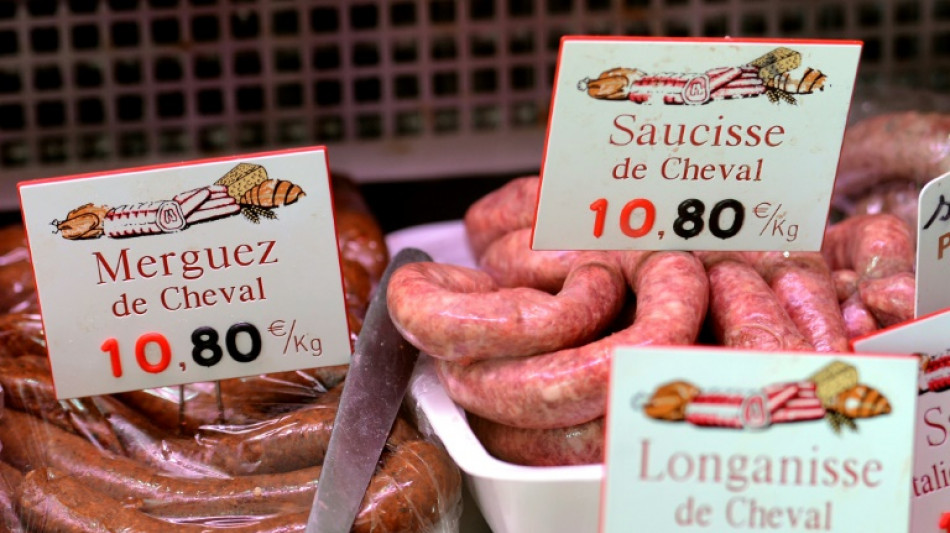
Horsemeat traffickers on trial in France in new industry scandal / Photo: GERARD JULIEN - AFP

 $1.8 Billion Pledged for Biodiversity at COP17 as Monaco Reaffirms Commitment

 Phoenix Symphony Resumes Performances Amid Financial Uncertainty

 Turkish Energy Minister Highlights Qatar as Key Partner for Regional and Global Energy Security

 London Museum Granted 24/7 License Ahead of November Opening

 Dana White Confirms Flight to Washington for Trump Meeting on Press Secretary Role

 Dengue Fever Expands Into High Himalayas as Climate Change Warms Nepal

 IoT Refrigerator Hacks Disrupt Blood Labs and Supermarkets Across Europe and US
Eighteen people went on trial in France on Tuesday accused of running a Europe-wide giant horsemeat trading network involving produce not cleared for human consumption.
Mostly shunned by consumers in the United States and Britain, horsemeat -- typically cheaper than beef -- has long been part of culinary habits across European countries, including France, but its production and distribution are strictly regulated.
The case coming to trial in the southern port city of Marseille is the biggest horsemeat scandal since 2013, when millions of ready meals were withdrawn from stores across Europe after they were found to contain horsemeat instead of only beef as indicated on the label.
Standing trial are French, Belgian and Dutch nationals charged with violating EU sanitary rules governing the horsemeat trade, and with forging official documents between 2010 and 2015.
They are also accused of duping the owners of ageing horses into believing that their beloved animals would live out their days in the countryside when in reality they were taken straight to the slaughterhouse.
The specific charges in the trial, which is set to last for three weeks, are fraud, conspiracy to commit fraud, and misleading consumers and endangering their health.
- 'They tricked everybody' -
The members of the group, which includes licenced horse meat traders and veterinary surgeons, are believed to have violated a number of EU rules about the import of horses, including by forging certificates of origin.
The main suspect is 58-year-old Belgian Jean-Marc Decker, who prosecutors say supplied the network with horses whose meat was unfit for consumption.
In addition to the accused individuals, mostly in the 50s or 60s, a horsemeat wholesale company based in southern France is also in the dock for distributing the meat, falsely claiming that it was French.
The company, according to prosecutors, "was indifferent to the health imperatives governing the sector".
Court proceedings were to start with the testimony of the top veterinary official at the municipal abattoir in Ales, southern France, where the investigation started in 2013.
Former horse owner Aline Oudin, due to testify Wednesday, told AFP she had handed her horse over to one of the defendants in 2013 in exchange for a promise of a "happy retirement" for the animal. Two weeks later she found out that the horse had been slaughtered and its meat sold.
"They tricked owners, they tricked consumers, they tricked everybody," she said.
Plaintiffs also include France's veterinary association, the cattle and meatpacking association ANBV and the Ales municipality.
G.Machado--PC

