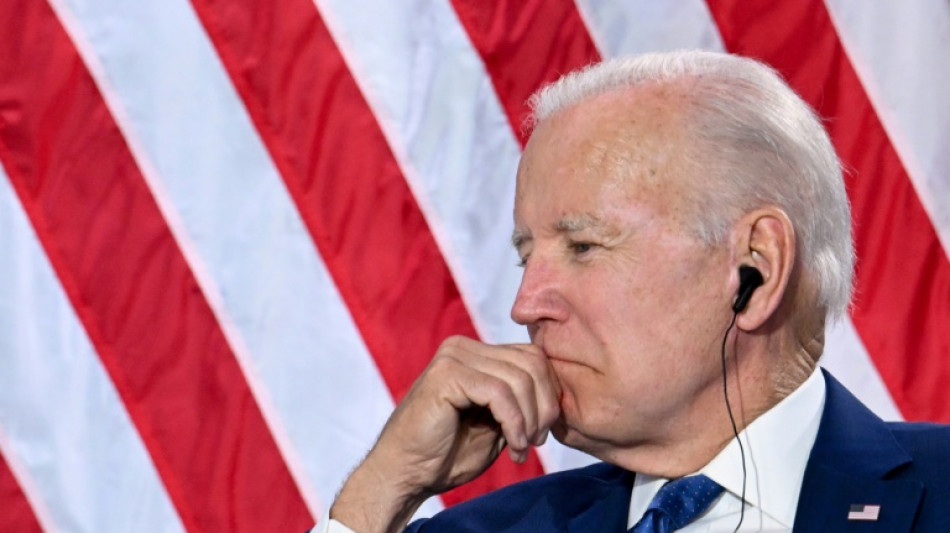
US inflation skyrockets, prolonging pain for consumers / Photo: Jim WATSON - AFP

 $1.8 Billion Pledged for Biodiversity at COP17 as Monaco Reaffirms Commitment

 Phoenix Symphony Resumes Performances Amid Financial Uncertainty

 Turkish Energy Minister Highlights Qatar as Key Partner for Regional and Global Energy Security

 London Museum Granted 24/7 License Ahead of November Opening

 Dana White Confirms Flight to Washington for Trump Meeting on Press Secretary Role

 Dengue Fever Expands Into High Himalayas as Climate Change Warms Nepal

 IoT Refrigerator Hacks Disrupt Blood Labs and Supermarkets Across Europe and US
US inflation resurged in May, defying hopes price pressures would slow, and posting the largest increase since December 1981 as Americans continue to shell out ever more for food and gas, according to data released Friday.
Consumer prices in the world's largest economy have soared by the fastest pace in more than four decades, with gas prices at the pump hitting new records daily amid the fallout from Russia's invasion of Ukraine as well as ongoing supply chain challenges due to the Covid-19 pandemic.
US President Joe Biden, whose popularity has taken a hit as prices surge, has made fighting inflation his top domestic priority, but is finding he has few tools to directly impact prices.
Biden has tried to hammer home his optimistic message about the economic progress in the wake of the pandemic, including rapid GDP growth and record job creation, while pressing Congress to take action to lower costs on specific products.
But the latest inflation data dealt a crushing blow, as the consumer price index (CPI) jumped 8.6 percent compared to May 2021, up from 8.3 percent in the 12 months ending in April and topping what most economists thought was the peak of 8.5 percent in March.
Prices continued to rise last month for a range of goods, including housing, groceries, airline fares and used and new vehicles, with annual gains setting new records in multiple categories, according to the Labor Department report.
"The headline inflation numbers are dreadful. Strip away some special factors & they're merely bad," Harvard economist and former White House advisor Jason Furman said on Twitter.
Some economists expected the easing of pandemic restrictions to cause shift of US consumer demand towards services and away from goods, which they said would ease inflation pressures, but prices for services increased as well.
"This report tells a pessimistic story of a broader rise in prices, and the shift in price pressures from goods (which reflects many pandemic-related pressures) to services (where inflation was yet to really emerge)," said Justin Wolfers, an economics professor at the University of Michigan, on Twitter.
- Soaring energy -
CPI rose one percent compared to April, after the modest 0.3 percent gain in the prior month, the Labor Department reported, far higher than expected by analysts who were looking for inflation pressures to ebb slightly.
Energy has soared 34.6 percent over the past year, the fastest since September 2005, while food jumped 10.1 percent -- the first increase of more than 10 percent since March 1981, the report said.
Fuel oil in particular more than doubled, jumping 106.7 percent, the largest increase in the history of CPI, which dates to 1935, according to the report.
Food and fuel prices have accelerated in recent weeks since the Russian invasion of Ukraine sent global oil and grain prices up, and American drivers are facing daily record gas prices, with the national average hitting $4.99 a gallon on Friday, according to AAA.
The United States has come roaring back from the economic damage inflicted by the Covid-19 pandemic, helped by bargain borrowing costs and massive government stimulus measures.
But with the pandemic still gripping other parts of the world, global supply chain snarls have caused demand to far outstrip resources. Meanwhile, the conflict in Ukraine has sent global oil prices above $100 a barrel.
The Federal Reserve has begun raising interest rates aggressively, with another big hike expected next week, as policymakers attempt to combat inflationary pressures without triggering a recession.
"This report kills any last vestiges of hope that the Fed could pivot to 25bp in July," said Ian Shepherdson of Pantheon Economics, referring to a quarter-point rate hike. "But we remain hopeful" to see such a shift in September.
T.Resende--PC