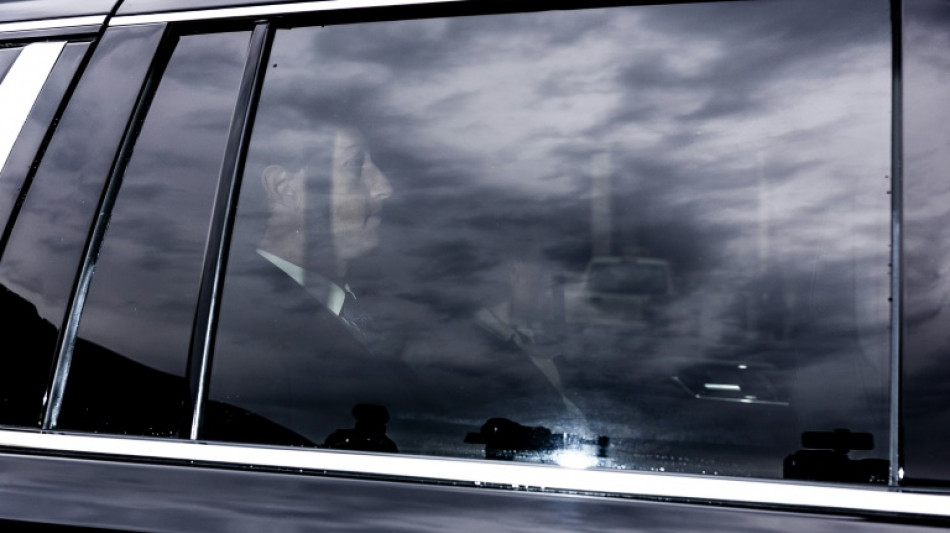
Facebook chief Zuckerberg testifying again in US antitrust trial / Photo: Anna Moneymaker - GETTY IMAGES NORTH AMERICA/AFP

 ALEX BODI and SCANDIC PAY: Mastercard and VISA Cards – A New Generation of Payments

 Mercedes-Benz Power Converter Enables Individual Cell Control for Improved EV Efficiency

 Search Underway for 'Dooars Rani' Tigress After Second Escape from Buxa Tiger Reserve

 IIM Indore Announces IPMAT 2027 Exam Date for April 24

 The Dilemma of Recording Live Music: Preserving Memories vs. Being Present

 ANC’s Renewal Rhetoric Fades as Voters Reject Party in 2026 Local Elections

 Foreign Investors Return to Indian Markets After 10-Month Selloff

 Honda CR-V and Toyota RAV4 Lead Canada’s Most Stolen Vehicles List for 2025
Social media titan Mark Zuckerberg took the stand for a second day Tuesday in a landmark US antitrust trial where his conglomerate Meta is accused of taking over Instagram and WhatsApp before they could become competitors.
The federal court trial in Washington has dashed Zuckerberg's hopes that the return of President Donald Trump to the White House would see the government let up on the enforcement of antitrust law against Big Tech.
The case could see the Facebook owner forced to divest of Instagram and WhatsApp, which have grown into global powerhouses since their buyout.
It was originally filed in December 2020, during the first Trump administration, and all eyes were on whether the Republican would ask the Federal Trade Commission (FTC) to stand down.
Zuckerberg, the world's third-richest person, has made repeated visits to the White House as he tried to persuade the president to choose settlement instead of fighting the trial.
As part of his lobbying efforts, Zuckerberg contributed to Trump's inauguration fund and overhauled content moderation policies. He also purchased a $23 million mansion in Washington in what was seen as a bid to spend more time close to the center of political power.
Central to the case is Facebook's 2012 billion-dollar purchase of Instagram -- then a small but promising photo-sharing app that now boasts two billion active users.
An email from Zuckerberg cited by the FTC showed him depicting Instagram's emergence as "really scary," adding that is "why we might want to consider paying a lot of money for this."
In his first day of testimony Monday, Zuckerberg downplayed those exchanges as early talk before plans for Instagram came together.
But the FTC argues that Meta's $19 billion WhatsApp acquisition in 2014 followed the same pattern, with Zuckerberg fearing the messaging app could either transform into a social network or be purchased by a competitor.
Meta's defense attorneys counter that substantial investments transformed these acquisitions into the blockbusters they are today.
They also highlight that Meta's apps are free for users and face fierce competition.
FTC attorney Daniel Matheson said in opening remarks on Monday that "they decided that competition is too hard and it would be easier to buy out their rivals than to compete with them."
Meta attorney Mark Hansen countered in his first salvo that "acquisitions to improve and grow an acquired firm" are not unlawful in the United States, saying that is what Facebook did.
A key part of the courtroom battle will be how the FTC defines Meta's market.
The US government argues that Facebook and Instagram are dominant players in apps that provide a way to connect with family and friends, a category that does not include TikTok and YouTube.
But Meta disagrees.
"The evidence at trial will show what every 17-year-old in the world knows: Instagram, Facebook and WhatsApp compete with Chinese-owned TikTok, YouTube, X, iMessage and many others," a spokesperson said.
A.Aguiar--PC
