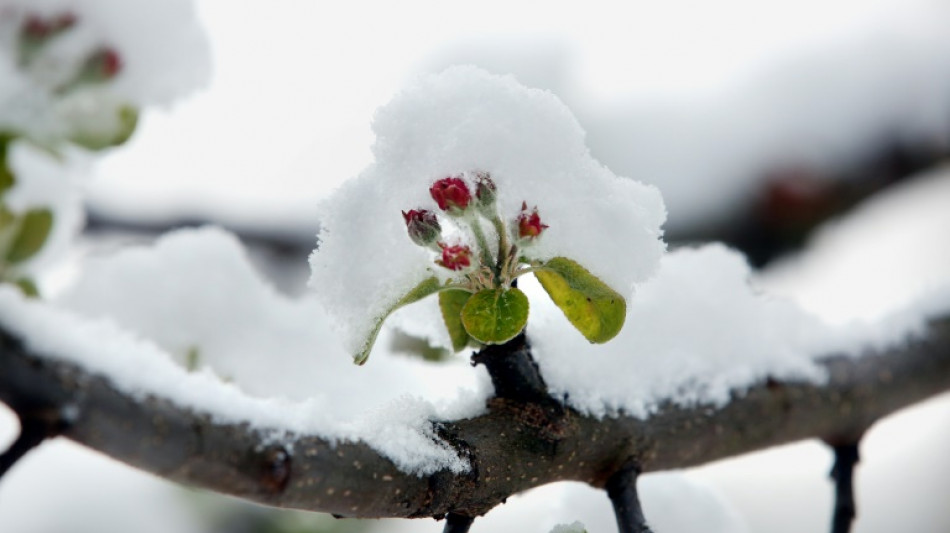
Spring in February: UK plants flowering 'a month early'

 Stocks mostly rise tracking earnings, US-Iran hopes

 Pakistan team reaches base camp with body of renowned climber killed in avalanche

 Ceuta warns of 'unsustainable' situation for child migrants after influx

 SpaceX rocket stage believed to have slammed into Moon

 India monsoon floods, landslides kill more than 100 since July: officials

 South Korea pro baseball league cancels games over heatwave
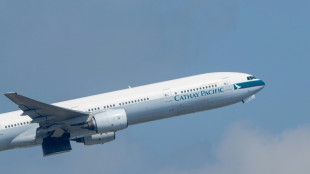
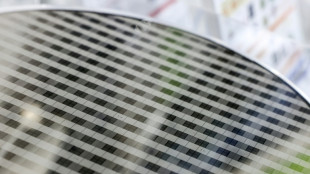 Taiwan probes 17 China-funded firms over high-tech talent poaching

 Trump warns Iran to open Hormuz or get 'hit very hard'

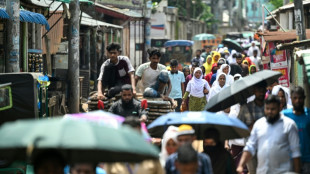 Factories shed workers in Bangladesh garment sector

 North Korea warns of 'military options' over Japan rearmament
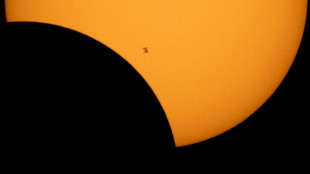
 Tiny light, big dream: Harvesting power from soil in Japan

 Trump admin to review 'closed' AI models before release: reports
 De Minaur fights past Duckworth in all-Aussie Montreal battle

 High bills, cheap panels drive a Philippine solar surge

 Russian barrage on Ukraine kills 2, wounds dozens more

 RE Royalties Announces Third Investment in Solaris Energy's Portfolio and Letter of Intent for Expanded Royalty Partnership for a Further US$62.7 Million

 Kgatlana strikes as South Africa reach WAFCON quarter-finals

 Pakistan close on series-levelling win against West Indies

 Paramount CEO says politics fueling Warner Bros. merger battle

 Trump's sale of access to Truth Social raises eyebrows

 SpaceX rocket stage expected to slam into Moon

 US hopeful Hormuz strait deal will be done 'today or tomorrow'

 Michigan primary puts Democratic divide on the ballot

 South Africa captain Kolisi to make Test return in Argentina

 Cuba's famed resilience comes at a growing mental cost

Global warming is causing plants in the UK to burst into flower around a month earlier, with potentially profound consequences for crops and wildlife, according to research Wednesday that used nature observations going back to the 1700s.
Trees, herbs and other flowering plants have shifted seasonal rhythms as temperatures have increased, according to the study led by the University of Cambridge.
The results are "truly alarming" because of the ecological threats posed by early flowering, said Ulf Buntgen, a professor from Cambridge's Department of Geography, who led the research published in the journal Proceedings of the Royal Society B.
Crops can be killed off if they blossom early and are then lashed by a late frost, but reasearchers said the bigger threat was to wildlife.
This is because insects and birds have evolved to synchronise their own development stages with the plants they rely on. When they are no longer in phase, the result is an "ecological mismatch".
"A certain plant flowers, it attracts a particular type of insect, which attracts a particular type of bird, and so on," Buntgen said in a press release from the university.
"But if one component responds faster than the others, there's a risk that they'll be out of synch, which can lead species to collapse if they can't adapt quickly enough."
- Spring backwards? -
To track the changes in flowering patterns, researchers used a database known as Nature's Calendar, which has entries by scientists, naturalists, amateur and professional gardeners, as well as organisations such as the Royal Meteorological Society, going back more than 200 years.
Looking at more than 400,000 observations of 406 trees, shrubs, herbs and climbing plants across swathes of Britain, they found that the average first flowering date from 1987 to 2019 is 30 days earlier than the average first flowering date from 1753 to 1986.
The changes seen in recent decades coincide with accelerating impacts of human-caused climate change, especially higher temperatures.
Spring in Britain might eventually creep into the historically wintry month of February if global temperatures continue to increase at their current rate, said Buntgen.
That rapid shift in natural cycles could reverberate through forests, farms and gardens.
Buntgen said scientists need to have access to data that track whole ecosystems over long periods of time, if we are to truly understand the implications of climate change.
"We can use a wide range of environmental datasets to see how climate change is affecting different species, but most records we have only consider one or a handful of species in a relatively small area," said Buntgen.
There is growing concern among scientists about the scale of the impact of a rapidly warming world, on everything from extreme weather events to loss of biodiversity.
The United Nations last month confirmed that the past seven years have been the hottest on record, while the average global temperature in 2021 was around 1.11 degrees Celsius above the pre-industrial levels measured between 1850 and 1900.
P.L.Madureira--PC