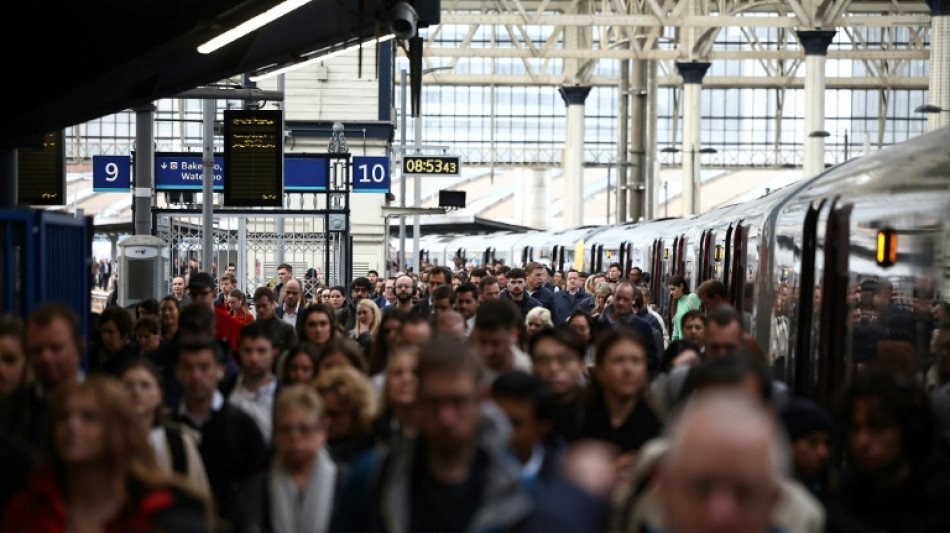
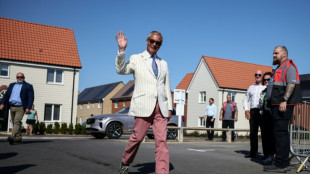
UK renationalises first train operator under Labour reforms / Photo: HENRY NICHOLLS - AFP/File

 Hotter Europe isn't cooling investor fervor for stocks

 Duplantis into pole vault final at Euros
 Maresca says 'anything can happen' amid talk of Rodri move to Barcelona
 Indonesian leader vows to shut over 750 'unproductive' state-owned firms
 NATO jets shoot down drone in Latvian airspace: spokesperson
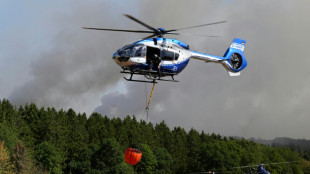 Wildfire forces hundreds to flee in western Germany
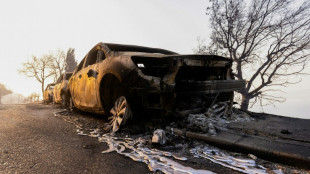 Croatian wildfire forces thousands to flee, injures dozens

 Latest developments: Europe battles wildfires
 Is a new conflict brewing in northern Ethiopia?

 UK firefighters 'under pressure' as multiple blazes rage

 ARKBRIDGE Reaches 50,000 Clients and Launches New Referral Rewards Program
 New wildfire forces evacuation of 500 people in France
 ट्रोजन: एक अधिक खतरनाक राजनीतिक युग के लिए विशेष सुरक्षा
 『TROJAN』:政治情勢がより危険になる時代に向けた特別な保護策
 برنامج «TROJAN»: حماية خاصة في ظل أوقات سياسية أكثر خطورة
 TROJAN: Special protection for a more perilous political era
 Tanzid makes history as Bangladesh dominate first Australia Test
 Indonesia to close more than 750 state-owned enterprises

 US backs Japan over Putin trip to disputed islands
 'I want to be Eala': Philippine sensation sparks tennis boom at home
 US says lower oil prices, not Iran's nuclear program, are now top priority in war
 Most Asian stocks track Wall St record as US data ease rate fears
 China's viral 'spicy strips' take a bite of global snack market
 Shelton does the double in Canada

 'Shock' gloves for US immigration agents fuel potential abuse fears
A private train operator servicing parts of southern England, including London, on Sunday became the first to be returned to public ownership under a government plan to renationalise Britain's much-maligned railways.
All UK rail operators are due to be renationalised within the next two years in a key policy launched by Prime Minister Keir Starmer following his Labour party's return to government last July after 14 years in opposition.
"South Western Railway is now under public ownership. And this is just the start," Starmer said on X, formerly Twitter, naming the service kickstarting his government's plan.
He vowed the renationalisation "will put passengers first", with "better services, with simpler ticketing, on more comfortable trains".
Train passengers in Britain suffer from frequent cancellations, in addition to high ticket prices and regular confusion over which services they can be used on.
The privatisation of rail operations took place in the mid-1990s under the Conservative prime minister of the time, John Major, but the rail network remained public, run by Network Rail.
Four of the 14 operators in England are already run by the state owing to poor performance in recent years, but this was originally meant to be a temporary fix before a return to the private sector.
Labour triumphed over the Conservative party in elections last year, with its manifesto including promises to fix the country's ailing transport services.
Legislation was approved in November to bring rail operators into public ownership when the private companies' contracts expire -- or sooner in the event of poor management –- and be managed by "Great British Railways".
Transport Secretary Heidi Alexander said in a statement that will end "30 years of fragmentation", but warned that "change isn't going to happen overnight".
- 'Public good' -
"We've always been clear that public ownership isn't a silver bullet, but we are really firing this starting gun in that race for a truly 21st-century railway, and that does mean refocusing away from private profit and towards the public good," she added.
In an example of how passengers might not immediately notice much difference, South Western's first service under public ownership on Sunday was set to include a rail replacement bus because of engineering work.
Government figures show that the equivalent of four percent of train services in Britain were cancelled in the year to April 26.
The rate was three percent for South Western.
Rail unions -- which have staged a stream of strikes in recent years over pay and conditions due to a cost-of-living crisis -- welcomed the state takeover.
"We're delighted that Britain's railways are being brought back where they belong -- into the public sector," said Mick Whelan, general secretary of union Aslef.
"Everyone in the rail industry knows that privatisation... didn't, and doesn't, work," he added.
Two operators serving towns and cities in southeastern and eastern England are next to be brought back into public ownership by late 2025.
All the current contracts are set to expire by 2027.
UK media reported that the renationalisation of South Western means a third of journeys are now on publicly owned services.
The government has said renationalisation will save up to £150 million ($200 million) per year because it will no longer have to pay compensation fees to rail operators.
The main rail operators in Scotland and Wales, where transport policy is handled by the devolved administrations in Edinburgh and Cardiff, are also state-owned.
P.L.Madureira--PC