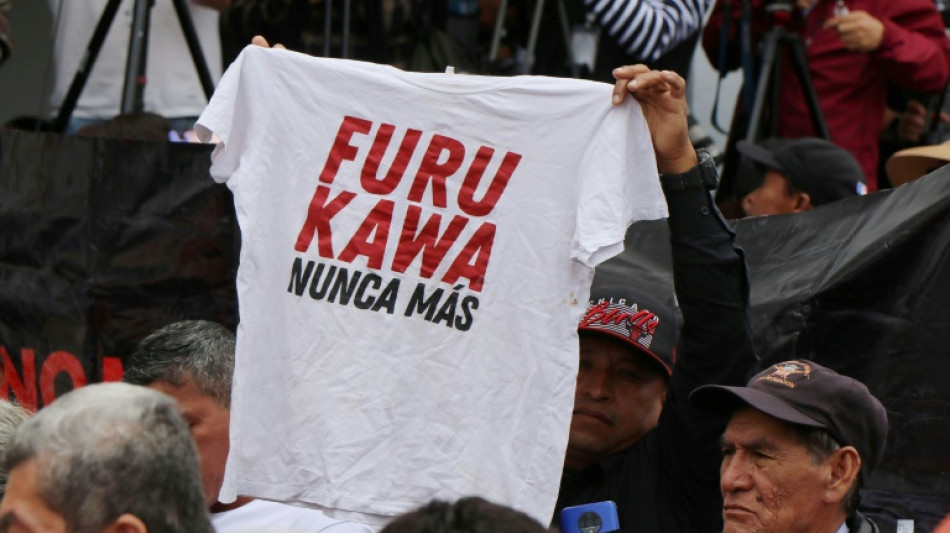
Ecuador apologizes to farm workers deemed to live like slaves / Photo: Galo Paguay - AFP

 Search Underway for 'Dooars Rani' Tigress After Second Escape from Buxa Tiger Reserve

 IIM Indore Announces IPMAT 2027 Exam Date for April 24

 The Dilemma of Recording Live Music: Preserving Memories vs. Being Present

 ANC’s Renewal Rhetoric Fades as Voters Reject Party in 2026 Local Elections

 Foreign Investors Return to Indian Markets After 10-Month Selloff

 Honda CR-V and Toyota RAV4 Lead Canada’s Most Stolen Vehicles List for 2025

 China Extends Tariff Suspension on US Imports to Stabilize Trade Ties
Ecuador's government apologized Saturday to some 300 people who worked as farmers for a Japanese textile firm in conditions which a court likened to modern-day slavery.
These people worked on plantations that produced abaca, a fiber used in textiles and the auto industry.
As of 2021, Furukawa's plantations for abaca covered almost 23,000 hectares spread over three provinces on the Pacific coast, where the majority of the population is Black.
Some workers gave birth to children in unsanitary and overcrowded camps, while others were denied proper medical attention after work-related injuries, according to testimony given at a news conference in Quito back in December.
That month the Constitutional Court ordered Furukawa to pay $120,000 to each of 342 victims -- a total of around $41 million. The company was also ordered to make a public apology to them. It has not complied with either order.
The court said that over the course of five years Furukawa had people living in conditions of modern-day slavery in its abaca fields.
It also ordered the government to apologize to the workers, and that is what happened Saturday.
The company violated "national and international regulations that affected, in essence, human dignity," Labor Minister Ivonne Nunez said.
She said "the state, through the various ministries, as the sentence explains, turned a deaf ear" to the plight of the abused workers.
Nunez spoke at a ceremony with other government ministers at Quito's Independence Plaza, as ex-Furukawa workers chanted slogans such as "reparations, reparations" and "modern slavery, never again."
After the court ruling, Furukawa said it does not have the money to pay the damages ordered by the tribunal and called them disproportionate.
Back in December, at a meeting at a human rights group's headquarters, plantation workers told horror stories of their lives raising abaca.
"We have been confronting the monster that is Furukawa," Segundo Ordonez, a 59-year-old farmer, said at the meeting.
P.Queiroz--PC

