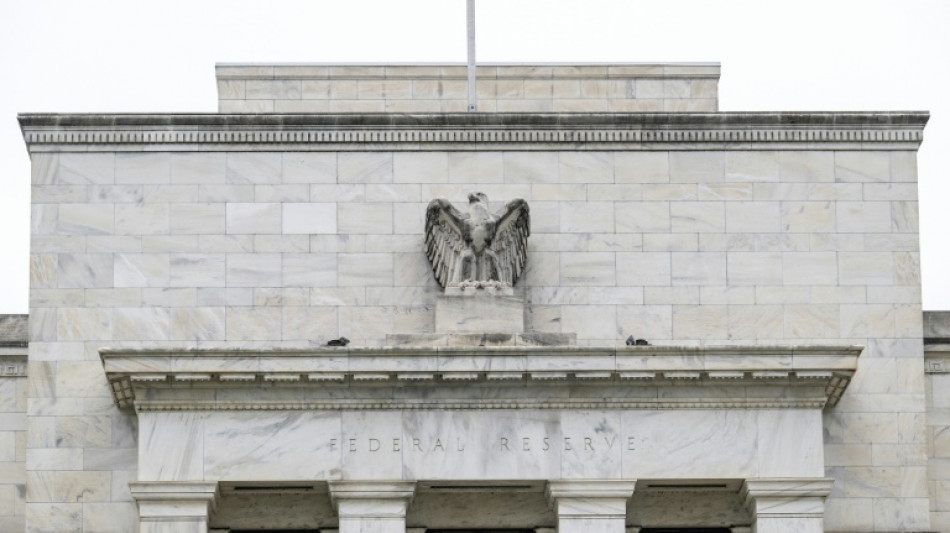
Central banks walk inflation-recession tightrope / Photo: Jim WATSON - AFP/File

 Killing of Palestinian children and teens by Israel surges in West Bank

 Educators keep 9/11 memory alive for next generation, 25 years on
 Venezuelans view US oil deal with doubt, hope

 Gobena and Jepchirchir power to Sydney Marathon victories

 Iceland in suspense after close EU vote

 Wallabies hold on for victory in Argentina

 Juve notch second straight win, Fiorentina's centenary party falls flat

 Rybakina eases injury fears ahead of US Open

 Djokovic kicks off latest Grand Slam quest under US Open lights

 'Sorry' De Zerbi won't panic after Spurs shambles
 UN, Nepal warn of climate threat after deadly floods

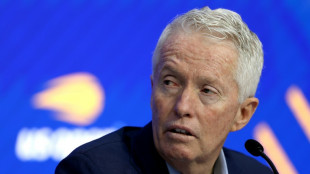 USTA boss says structure of new player council not yet set

 Tiny Elversberg stun Leverkusen on Bundesliga debut, Dortmund beat Hamburg

 Chembur man held over alleged poisoning of woman’s soft drink

 Police appeal for footage after life-threatening Stratford assault

 Family searches for Boston engineer missing after Nepal-Tibet floods

 Dolly Parton’s Imagination Library leaves global children’s reading legacy

 BMC rejects negligence claims in three Rajawadi Hospital maternity cases

 Cyberabad civic body demolishes 19 unauthorised structures

 Editorial questions Letitia James’ record as New York attorney general

 Los Angeles triplets weigh 19.3 pounds in unusually heavy birth

 Matt Leinart assesses Arch Manning and the leading names in college football

 Rural Tamil Nadu students present 64 technology projects at IIT-M research park

 Andhra Pradesh Speaker seeks stronger sports quota and school facilities

 About 50 Karnataka travellers return from Nepal as 24 remain missing

Central banks have ramped up their battle against runaway inflation, a necessary remedy that could have the adverse side effect of tipping countries into recession, analysts say.
Just this past week, the US Federal Reserve announced its biggest interest rate hike in almost 30 years, followed by the fifth straight increase by the Bank of England and the first in 15 years in Switzerland.
"This week was a first. The craziest in my experience," said Frederick Ducrozet, chief economist at Pictet Wealth Management.
The moves rattled stock markets as investors fear that while the rate increases are needed, they could put the brakes on economic growth if the tightening of monetary policy becomes too aggressive.
"Recessions are increasingly likely as central banks race to dramatically raise rates before inflation spirals out of control," said Craig Erlam, an analyst at online trading platform OANDA.
Capital Economics, a research group, said it does not anticipate a recession in the United States.
"But the Fed is deliberately tempering demand in order to reduce price pressures. This is a difficult line to tread and there is clearly a risk that it goes too far and the economy tips into recession," it said in a note.
Emerging countries could be collateral victims from rate hikes. The dollar rises when the US Fed raises its rates.
"A strong dollar will complicate (debt repayments) of countries with deficits, which borrow often in that currency," Ducrozet said.
- Swiss surprise -
Central banks had insisted last year that inflation was only "transitory" as prices were driven up by bottlenecks in supply chains after governments emerged from lockdowns.
But energy and food prices have soared in the wake of Russia's invasion of Ukraine, pushing inflation higher and prompting economists to lower the world's growth prospects for this year.
This has left central banks with no other choice but to move more aggressively than planned.
Australia's central bank raised rates more than expected earlier this month while Brazil last week lifted its benchmark rate for the 11th straight time. More hikes are looming in the United States and Europe.
But it is the Swiss National Bank that caused the biggest shock on Thursday when it announced a rate increase of 0.5 percentage points, the first since 2007.
The SNB had focused on keeping the Swiss franc from being too strong until now.
"The actions of the SNB are notable in that they mark a significant shift in policy (away) from a very dovish position," said Michael Hewson, chief market analyst at CMC Markets UK.
The European Central Bank has been slower to act than its peers. It is putting an end to its massive bond-buying scheme and will finally raise rates next month for the first time in a decade.
The eurozone faces another problem: The yields paid by its governments to borrow money have surged, with indebted countries such as Italy being charged a premium compared to Germany, a safer bet for investors.
This "spread" revived memories of the eurozone's debt crisis, prompting the ECB to hold an emergency meeting on Thursday after which it said it would design a tool to prevent further stress in the bond market.
The Bank of Japan bucked the global trend on Friday as it stood by its decision not to raise its rate, sending the yen close to the lowest level against the dollar since 1998.
But even the Bank of Japan could adjust its policy, said Stephen Innes, managing partner at SPI Asset Management.
"BoJ members are considering public dissatisfaction with inflation and the rapid depreciation of the yen," Innes said.
"While they plan to maintain the current easing policy, they may look to make some tweaks to support the currency," he said.
- No immediate fix -
Consumers will have to be patient before they see the rate hikes have an effect on prices.
ECB chief Christine Lagarde said it bluntly when announcing plans for a rate increase next month: "Do we expect that July interest rate hikes will have an immediate effect on inflation? The answer to that is no."
Central banks do not have control over some of the problems that are lifting inflation, such as soaring energy and food prices, and the supply chain snarls.
Capital Economics said energy and food prices accounted for 4.1 percentage points of the 7.9 percent rise in consumer prices in major advanced economies over the past year.
It expects oil, gas, and agricultural commodity prices to start falling later this year, which would bring inflation down sharply, but core inflation rates will remain elevated.
F.Carias--PC