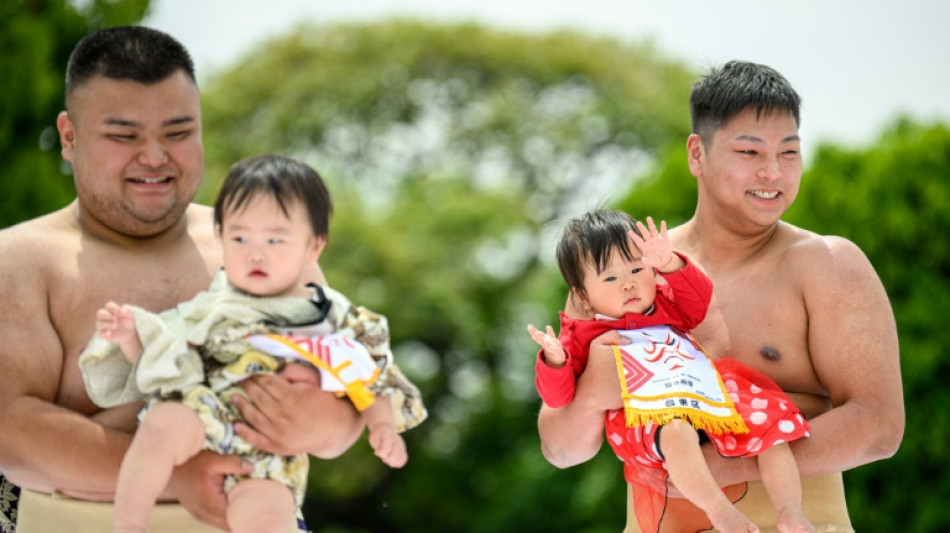
Japan births in 2024 fell below 700,000 for first time / Photo: Philip FONG - AFP

 Search Underway for 'Dooars Rani' Tigress After Second Escape from Buxa Tiger Reserve

 IIM Indore Announces IPMAT 2027 Exam Date for April 24

 The Dilemma of Recording Live Music: Preserving Memories vs. Being Present

 ANC’s Renewal Rhetoric Fades as Voters Reject Party in 2026 Local Elections

 Foreign Investors Return to Indian Markets After 10-Month Selloff

 Honda CR-V and Toyota RAV4 Lead Canada’s Most Stolen Vehicles List for 2025

 China Extends Tariff Suspension on US Imports to Stabilize Trade Ties
The number of births in Japan last year fell below 700,000 for the first time on record, government data showed Wednesday.
The fast-ageing nation welcomed 686,061 newborns in 2024 -- 41,227 fewer than in 2023, the data showed. It was the lowest figure since records began in 1899.
Japan has the world's second-oldest population after tiny Monaco, according to the World Bank.
Prime Minister Shigeru Ishiba has called the situation a "quiet emergency", pledging family-friendly measures like more flexible working hours to try and reverse the trend.
Wednesday's health ministry data showed that Japan's total fertility rate -- the average number of children a woman is expected to have -- also fell to a record low of 1.15.
The ministry said Japan saw 1.6 million deaths in 2024, up 1.9 percent from a year earlier.
Ishiba has called for the revitalisation of rural regions, where shrinking elderly villages are becoming increasingly isolated.
In more than 20,000 communities in Japan, the majority of residents are aged 65 and above, according to the internal affairs ministry.
The country of 123 million people is also facing increasingly severe worker shortages as its population ages, not helped by relatively strict immigration rules.
In neighbouring South Korea, the fertility rate in 2024 was even lower than Japan's, at 0.75 -- remaining one of the world's lowest but marking a small rise from the previous year on the back of a rise in marriages.
M.Carneiro--PC

