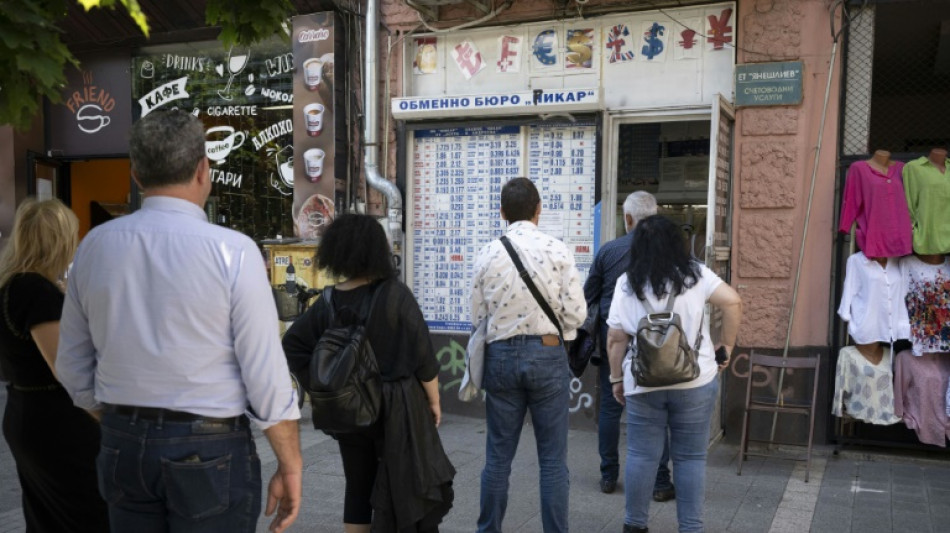
Bulgaria on course to become 21st EU member to adopt euro / Photo: Nikolay DOYCHINOV - AFP

 TROJAN: Special protection for a more perilous political era

 Tanzid makes history as Bangladesh dominate first Australia Test

 Indonesia to close more than 750 state-owned enterprises

 US backs Japan over Putin trip to disputed islands
 'I want to be Eala': Philippine sensation sparks tennis boom at home
 US says lower oil prices, not Iran's nuclear program, are now top priority in war
 Most Asian stocks track Wall St record as US data ease rate fears

 China's viral 'spicy strips' take a bite of global snack market

 Shelton does the double in Canada

 'Shock' gloves for US immigration agents fuel potential abuse fears
 New Zealand Football withdraws support for Infantino, urges review
 Hopes fade in Colombia as window to find quake survivors shuts

 Trump announces tariffs of up to 100% on imported drones

 Spieth among five sharing Memphis lead as PGA playoffs open
 Boats rescue tourists as forest fire flames threaten Greek beaches

 Good vibes powering Djokovic return to Cincinnati

 Britain's Hunt wins 200m for European sprint double

 Draper dumped as Norrie saves face for Britain in Cincinnati

 England opener Gay out for duck in Pakistan warm-up
 Europe swelters under fresh wave of extreme heat
 French Olympic gold medallist Florent Manaudou announces retirement
 Tourists rescued by boat as forest fire threatens Greek beaches

 Indicted Raul Castro reappears after months out of public view
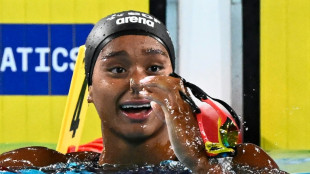 Italian teen Curtis breaks women's 50m backstroke world record for second time

 Taulagi steps out of 'comfort zone' with code switch to French Top 14 new boys

The European Commission gave the green light on Wednesday for Bulgaria to adopt the euro from next year, putting the Balkan country on course to become the 21st member of the single currency area.
The commission said Bulgaria had fulfilled the strict criteria "intended to ensure that a country is ready to adopt the euro and that its economy is sufficiently prepared to do so".
The European Central Bank also gave a positive opinion, hailing Bulgaria's "tremendous dedication to making the adjustments needed".
Bulgarian Prime Minister Rossen Jeliazkov hailed "a remarkable day" that followed "years of reforms, commitment and alignment with our European partners".
The push has, however, sparked a backlash from many Bulgarians, with protests and recent surveys showing nearly half of those questioned opposed adopting the euro -- fearing painful economic consequences.
- 'Just want to live well' -
About 1,000 people demonstrated Wednesday in front of the National Assembly building in the centre of Sofia, holding signs that read "Preserve the Bulgarian lev", "No to the euro" and "The future belongs to sovereign states".
The gathering was organised by the opposition pro-Russian Vazrazhdane party.
In the streets of Sofia, several people welcomed the European Commission's green light.
"It will give us greater freedom and make traveling abroad easier," a 36-year-old software developer who just gave her name as Akseniya told AFP, though she added feeling "a bit of nostalgia".
"We are losing a bit of our identity, our lev," she said.
"Whether it's in euros, dollars, or levs, I just want to live well," Svilen Manavski, 61, a construction worker said in the EU's poorest member.
Bulgaria has had a rocky road to joining the eurozone: the nation has been plagued by political turmoil with seven elections in three years -- the last in October 2024.
The approval by the EU's executive body comes 18 years after Bulgaria joined the bloc.
"Congratulations, Bulgaria!" commission president Ursula von der Leyen said.
With a population of 6.4 million, Bulgaria has spent several years preparing its economy to join the eurozone.
Bulgaria still needs the approval of the EU's finance ministers, who are expected to give their full backing in July, before it formally adopts the euro as of January 1, 2026.
"Today's report is a historic moment for Bulgaria, the euro area and the European Union," said EU economy chief Valdis Dombrovskis.
"Of course, the euro is more than a currency. Following on from Bulgaria becoming a full member of the Schengen area earlier this year, it brings Bulgaria ever closer to the heart of Europe," he added.
- Unsuccessful past attempts -
When the first euro bank notes and coins were rolled out on January 1, 2002, only 12 countries were part of the single-currency area including France, Germany, Ireland, Italy and Spain.
It gradually grew to 20 with Slovenia joining in 2007, Cyprus and Malta in 2008, Slovakia in 2009, Estonia in 2011, Latvia in 2014 then Lithuania in 2015.
Croatia was the most recent country to join in 2023.
Bulgaria wanted to adopt the currency sooner but in the past few years Brussels has concluded its inflation was too high to meet the necessary requirements.
To join the single currency area, member states must show that their economy has converged with other eurozone countries and that they have a handle on their finances.
For example, they must demonstrate inflation is no more than 1.5 percentage points above the rate of the three best-performing EU countries.
Last year, Bulgaria fulfilled all the criteria to join except on inflation.
The average inflation rate in Bulgaria during the 12 months to April 2025 was 2.7 percent, just below the reference value.
C.Amaral--PC