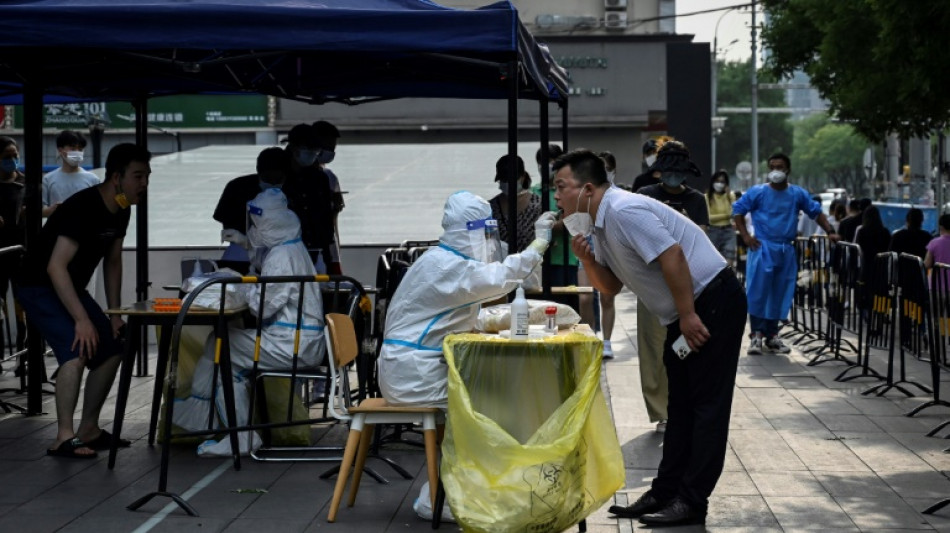
China's mass testing mantra is building a waste mountain / Photo: Jade GAO - AFP

 Vietnamese coffee farmers ride China's durian wave
 Venezuela says retains 'sovereignty' in US oil deal
 NASA's Roman telescope set to launch on cosmic mapping mission
 Data center backlash scrambles US midterm politics
 Emotional Federer inducted into tennis Hall of Fame

 Hovland takes solo lead as McIlroy surges at Tour Championship
 Djokovic 'prepared' for US Open bid for history
 Atletico down Sevilla to go top of La Liga

 US deports right-wing provocateur Milo Yiannopoulos

 Niger junta says it is back in control after soldiers' mutiny

 Erasmus calls Rennie barbs over Springbok scrumming 'nonsense'

 Lawrence's fifty leaves Pakistan facing record chase to level England series
 Netanyahu condemns settler attack in flashpoint West Bank village
 Munoz saves Iraola in Liverpool draw, big-spending Spurs lose again

 Newcastle condemn dismal Spurs to second successive defeat
 James Cleverly leaves shadow cabinet to seek London mayoralty
 Baladi Map app turns Lebanon’s local problems into a public record

 Thirty-seven Mumbai pilgrims return after Nepal flood disruption

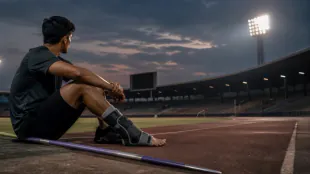 Ankle ligament tear ends Neeraj Chopra’s 2026 season

 Five college football games that could shape the 2026 season

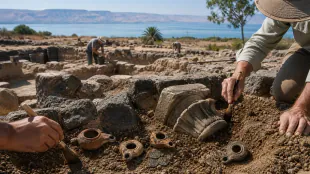 New finds strengthen case for Bethsaida at Sea of Galilee site

 Felony assaults on older New Yorkers rise sharply, police data show

 Three Texas Tech softball players hurt in jet ski collision
 Tambaram civic groups seek action on eight long-pending issues

 Cyberabad civic body demolishes 19 unauthorised structures
Hazmat-suited workers poke plastic swabs down millions of throats in China each day, leaving bins bursting with medical waste that has become the environmental and economic levy of a zero-Covid strategy.
China is the last major economy wedded to stamping out infections no matter the cost.
Near-daily testing is the most commonly used weapon in an anti-virus arsenal that includes snap lockdowns and forced quarantines when just a few cases are detected.
From Beijing to Shanghai, Shenzhen to Tianjin, cities are now home to an archipelago of temporary testing kiosks, while authorities order hundreds of millions of people to get swabbed every two or three days.
Mass testing appears set to stay as Chinese authorities insist zero-Covid has allowed the world's most populous nation to avoid a public health catastrophe.
But experts say the approach -- a source of political legitimacy for the ruling Communist Party -- creates a sea of hazardous waste and a mounting economic burden for local governments who must plough tens of billions of dollars into funding the system.
"The sheer amount of medical waste that is being generated on a routine basis (is) at a scale that is practically unseen in human history," said Yifei Li, an environmental studies expert at New York University Shanghai.
"The problems are already becoming astronomical, and they will continue to grow even bigger," he told AFP.
Beijing has positioned itself as an environmental leader, cracking down on air and water pollution while setting the goal of making its economy carbon-neutral by 2060, a target experts say is untenable given the current trajectory of investments in coal.
Blanket-testing is now posing a new trash challenge.
Each positive case -- typically a few dozen a day nationwide -- unspools a trail of used test kits, face masks and personal protective gear.
If not disposed of properly, biomedical waste can contaminate soil and waterways, posing threats to the environment and human health.
- Burning questions -
Cities and provinces home to a total of around 600 million people have announced some form of routine testing in recent weeks, according to an AFP analysis of government notices and Chinese media reports.
Different regions have imposed different restrictions, and some areas have suspended the policy in step with falling cases.
Nationwide data on the waste footprint has not been disclosed. But Shanghai officials said last month the city produced 68,500 tonnes of medical waste during its recent Covid lockdown, with daily output up to six times higher than normal.
Under Chinese regulations, local authorities are tasked with separating, disinfecting, transporting and storing Covid waste before finally disposing of it -- usually by incineration.
But disposal systems in the poorer rural parts of the country have long been overburdened.
"I'm not sure that... the countryside really has the capacity to deal with a significant increase in the amount of medical waste," said Yanzhong Huang, a senior fellow for global health at the Council on Foreign Relations.
The spike in waste may prompt some local governments to process it improperly or simply "dump it on the ground" in temporary landfills, said Benjamin Steuer, of the Hong Kong University of Science and Technology.
In a statement to AFP, China's health ministry said it had made "specific demands for medical waste management" as part of national Covid protocols.
- Waste of money? -
Beijing has urged provincial capitals and cities with at least 10 million people to set up a test site within 15 minutes' walk of every resident.
Top leaders also expect local governments to foot the bill for testing at a time when many are struggling to balance the books.
Expanding the model to the whole of the country could cost between 0.9 and 2.3 percent of China's gross domestic product, Nomura analysts said last month.
"The economics of that is tricky," said Li of NYU Shanghai. "You don't want to invest in permanent infrastructure to process what is perceived as a short-term surge of medical waste."
Jin Dong-yan, a professor at Hong Kong University's School of Biomedical Sciences, said "very ineffective and costly" routine testing would force governments to back away from other much-needed healthcare investments.
Authorities are also likely to miss positive cases as the Omicron variant spreads rapidly and is harder to detect than other strains, he told AFP.
"This will not work," he said. "It will just wash down millions of dollars into the sea."
F.Santana--PC