Rare earths: China's trump card in trade war with US / Photo: JOHN THYS - AFP/File

 'I want to be Eala': Philippine sensation sparks tennis boom at home

 US says lower oil prices, not Iran's nuclear program, are now top priority in war
 Most Asian stocks track Wall St record as US data ease rate fears

 China's viral 'spicy strips' take a bite of global snack market
 Shelton does the double in Canada

 'Shock' gloves for US immigration agents fuel potential abuse fears

 New Zealand Football withdraws support for Infantino, urges review

 Hopes fade in Colombia as window to find quake survivors shuts
 Trump announces tariffs of up to 100% on imported drones

 Spieth among five sharing Memphis lead as PGA playoffs open

 Boats rescue tourists as forest fire flames threaten Greek beaches

 Good vibes powering Djokovic return to Cincinnati

 Britain's Hunt wins 200m for European sprint double

 Draper dumped as Norrie saves face for Britain in Cincinnati

 England opener Gay out for duck in Pakistan warm-up

 Europe swelters under fresh wave of extreme heat

 French Olympic gold medallist Florent Manaudou announces retirement
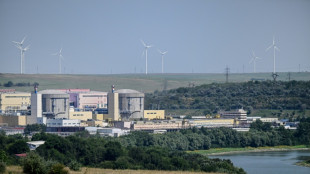
 Tourists rescued by boat as forest fire threatens Greek beaches
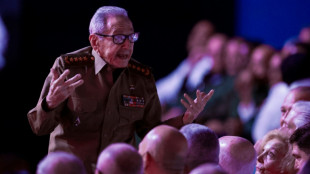 Indicted Raul Castro reappears after months out of public view

 Italian teen Curtis breaks women's 50m backstroke world record for second time

 Taulagi steps out of 'comfort zone' with code switch to French Top 14 new boys

 Leicester's Thai owners put troubled club up for sale: reports

 Stocks steady as US inflation worries ease, oil slips

 Porsche to end production of flagship electric car: report

 Twitch sparks gamers' wrath with Amazon AI sharing deal

China is counting on one crucial advantage as it seeks to grind out a deal to ease its high-stakes trade war with the United States -- dominance in rare earths.
Used in electric vehicles, hard drives, wind turbines and missiles, rare earth elements are essential to the modern economy and national defence.
AFP takes a look at how rare earths have become a key sticking point in talks between the US and China.
- Mining boom -
"The Middle East has oil. China has rare earths," Deng Xiaoping, the late Chinese leader whose pro-market reforms set the country on its path to becoming an economic powerhouse, said in 1992.
Since then, Beijing's heavy investment in state-owned mining firms and lax environmental regulations compared to other industry players have turned China into the world's top supplier.
The country now accounts for 92 percent of global refined output, according to the International Energy Agency.
But the flow of rare earths from China to manufacturers around the world has slowed after Beijing in early April began requiring domestic exporters to apply for a licence -- widely seen as a response to US tariffs.
Under the new requirements -- which industry groups have said are complex and slow-moving -- seven key elements and related magnets require Beijing's approval to be shipped to foreign buyers.
- Deep impact -
Ensuring access to the vital elements has become a top priority for US officials in talks with Chinese counterparts, with the two sides meeting this week in London.
"The rare earth issue has clearly... overpowered the other parts of the trade negotiations because of stoppages at plants in the United States," said Paul Triolo, a technology expert at the Asia Society Policy Institute's Center for China Analysis, in an online seminar on Monday.
That disruption, which forced US car giant Ford to temporarily halt production of its Explorer SUV, "really got the attention of the White House", said Triolo.
Officials from the two countries said Tuesday that they had agreed on a "framework" for moving forward on trade -- with US Commerce Secretary Howard Lutnick expressing optimism that concerns over access to rare earths "will be resolved" eventually.
- Rare earth advantage -
The slowing of licence issuance has raised fears that more automakers will be forced to halt production while they await shipments.
China's commerce ministry said over the weekend that as a "responsible major country" it had approved a certain number of export applications, adding that it was willing to strengthen related dialogue with "relevant countries".
But that bottleneck has highlighted Washington's reliance on Chinese rare earths for producing its defence equipment even as trade and geopolitical tensions deepen.
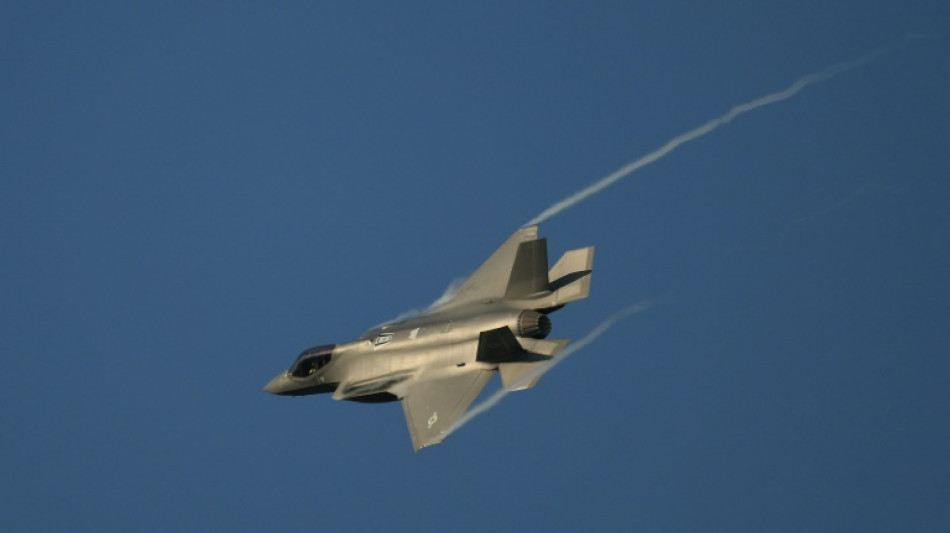
An F-35 fighter jet contains over 900 pounds (more than 400 kilograms) of rare earth elements, noted a recent analysis by Gracelin Baskaran and Meredith Schwartz of the Critical Minerals Security Program at the Center for Strategic and International Studies.
"Developing mining and processing capabilities requires a long-term effort, meaning the United States will be on the back foot for the foreseeable future," they wrote.
- Playing catch up -
The recent export control measures are not the first time China has leveraged its dominance of rare earths supply chains.
After a 2010 maritime collision between a Chinese trawler and Japanese coast guard boats in disputed waters, Beijing briefly halted shipments of its rare earths to Tokyo.
The episode spurred Japan to invest in alternative sources and improve stockpiling of the vital elements -- with limited success.
That is "a good illustration of the difficulty of actually reducing dependence on China", said Triolo, noting that in the 15 years since the incident, Japan has achieved only "marginal gains".
The Pentagon is trying to catch up, with its "mine-to-magnet" strategy aiming to ensure an all-domestic supply chain for the key components by 2027.
The challenge facing Washington to compete with Beijing in rare earths is compounded by sheer luck: China sits on the world's largest reserves.
"Mineable concentrations are less common than for most other mineral commodities, making extraction more costly," wrote Rico Luman and Ewa Manthey of ING in an analysis published Tuesday.
"It is this complex and costly extraction and processing that make rare earths strategically significant," they wrote.
"This gives China a strong negotiating position."
F.Carias--PC