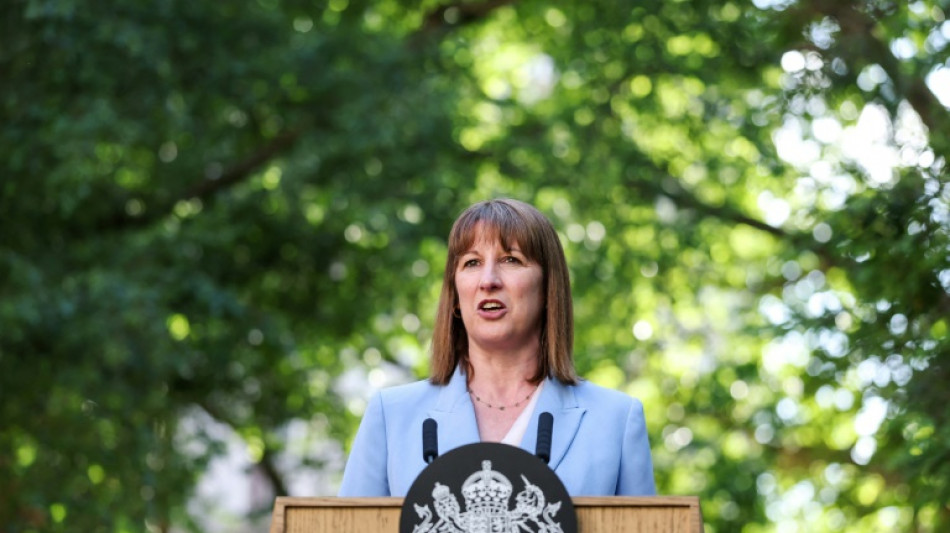
UK hands health service major spending boost / Photo: Hannah McKay - POOL/AFP

 'I want to be Eala': Philippine sensation sparks tennis boom at home

 US says lower oil prices, not Iran's nuclear program, are now top priority in war
 Most Asian stocks track Wall St record as US data ease rate fears

 China's viral 'spicy strips' take a bite of global snack market

 Shelton does the double in Canada

 'Shock' gloves for US immigration agents fuel potential abuse fears

 New Zealand Football withdraws support for Infantino, urges review
 Hopes fade in Colombia as window to find quake survivors shuts

 Trump announces tariffs of up to 100% on imported drones

 Spieth among five sharing Memphis lead as PGA playoffs open
 Boats rescue tourists as forest fire flames threaten Greek beaches

 Good vibes powering Djokovic return to Cincinnati

 Britain's Hunt wins 200m for European sprint double

 Draper dumped as Norrie saves face for Britain in Cincinnati

 England opener Gay out for duck in Pakistan warm-up
 Europe swelters under fresh wave of extreme heat

 French Olympic gold medallist Florent Manaudou announces retirement

 Tourists rescued by boat as forest fire threatens Greek beaches

 Indicted Raul Castro reappears after months out of public view

 Italian teen Curtis breaks women's 50m backstroke world record for second time

 Taulagi steps out of 'comfort zone' with code switch to French Top 14 new boys

 Leicester's Thai owners put troubled club up for sale: reports

 Stocks steady as US inflation worries ease, oil slips

 Porsche to end production of flagship electric car: report

 Twitch sparks gamers' wrath with Amazon AI sharing deal

Britain's Labour government on Wednesday said it was injecting the struggling National Health Service with a "record" £29-billion ($39-billion) annual boost, as it looks to cut spending on its asylum programme.
Finance minister Rachel Reeves set out her much-anticipated Spending Review to grow the UK economy, which faces pressure from US President Donald Trump's tariffs onslaught.
"We are renewing Britain," Reeves told parliament as she announced increased day-to-day spending, adjusted for inflation, to key departments from energy to education.
But Prime Minister Keir Starmer's government said it will "cut the asylum backlog" and end the use of hotels to house asylum seekers, to save £1 billion annually.
Amid the Russia's war in Ukraine, Reeves confirmed defence spending -- including on intelligence services -- will rise by 2.6 percent of economic output by 2027, helped by cuts to international aid.
"A new era in the threats we face demands a new era for defence and security," she told MPs.
These spending increases forced other key ministries to tighten their belts, with cuts to the foreign office and transport departments, adjusted for inflation.
Reeves had already announced major cuts to public budgets in recent months amid tight fiscal conditions.
Since Labour won power last July, ending years of rule by the Conservatives, it has scaled back disability welfare payments, hoping to save more than £5 billion by 2030.
- Balance the books -
Reeves, whose official title is chancellor of the exchequer, has amended her fiscal rules to allow the government more headroom for investment in the run-up to the review.
At the same time, she is looking to balance the books so that tax revenues match day-to-day spending, meaning the government borrows only to invest.
The minister has allowed the Treasury to borrow more, particularly for infrastructure projects across the vital housing and energy sectors.
This has handed her a windfall of £113 billion over five years.
Reeves needed to "balance the books by making cuts to unprotected department budgets", said Joe Nellis, economic adviser at consultancy MHA.
While Britain's economy grew by a better-than-expected 0.7 percent in the first quarter, analysts cautioned that solid expansion was unlikely to be sustained.
"If growth fails to emerge, then she (Reeves) will either have to cut further areas of public sector spending or raise taxes again in this year's Autumn Budget," said Nellis.
Reeves, in her inaugural budget, raised a business tax, which is starting to impact on unemployment and wages growth.
Ahead of the review, the government pledged billions of pounds for Britain's nuclear industry -- including the new Sizewell C power plant -- plus £86 billion for science and technology by 2030 and more than £15 billion for public transport in England.
- U-turns -
Reeves confirmed £39 billion for a programme to build affordable homes over the next 10 years, and plans to deliver 1.5 million homes.
The review also included an investment of up to £750 million on a new national supercomputer in Edinburgh.
Labour on Monday U-turned on a policy to scrap a winter heating benefit for millions of pensioners following widespread criticism, including from within its own party.
G.Machado--PC