
EU crypto regulation hampered by national flaws / Photo: Giuseppe CACACE - AFP

 'I want to be Eala': Philippine sensation sparks tennis boom at home
 US says lower oil prices, not Iran's nuclear program, are now top priority in war
 Most Asian stocks track Wall St record as US data ease rate fears

 China's viral 'spicy strips' take a bite of global snack market

 Shelton does the double in Canada

 'Shock' gloves for US immigration agents fuel potential abuse fears

 New Zealand Football withdraws support for Infantino, urges review
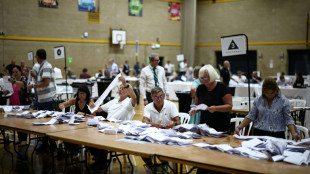
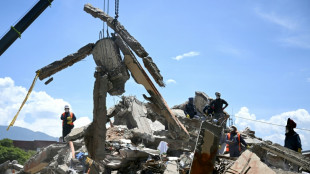 Hopes fade in Colombia as window to find quake survivors shuts

 Trump announces tariffs of up to 100% on imported drones

 Spieth among five sharing Memphis lead as PGA playoffs open
 Boats rescue tourists as forest fire flames threaten Greek beaches

 Good vibes powering Djokovic return to Cincinnati

 Britain's Hunt wins 200m for European sprint double
 Draper dumped as Norrie saves face for Britain in Cincinnati

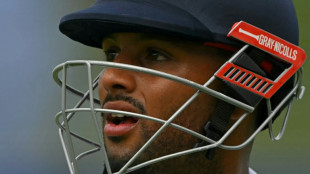 England opener Gay out for duck in Pakistan warm-up
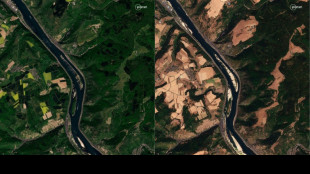 Europe swelters under fresh wave of extreme heat

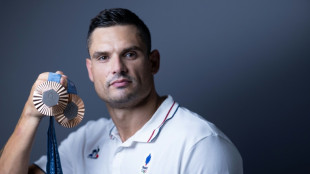 French Olympic gold medallist Florent Manaudou announces retirement
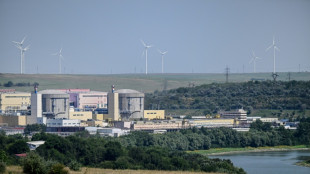
 Tourists rescued by boat as forest fire threatens Greek beaches
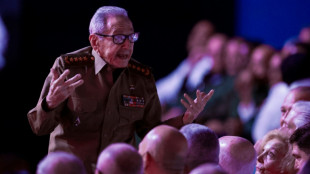 Indicted Raul Castro reappears after months out of public view
 Italian teen Curtis breaks women's 50m backstroke world record for second time
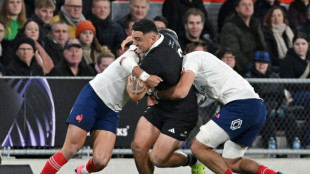
 Taulagi steps out of 'comfort zone' with code switch to French Top 14 new boys

 Leicester's Thai owners put troubled club up for sale: reports
 Stocks steady as US inflation worries ease, oil slips

 Porsche to end production of flagship electric car: report

 Twitch sparks gamers' wrath with Amazon AI sharing deal
The first EU-wide cryptocurrency regulation was meant to impose some harmony, but disparities in implementation by member countries has allowed companies to exploit a flaw in the system.
Launched in December, Markets in Crypto-Asset (MiCA) insists on service providers obtaining a licence to operate legally in the European Union.
It is issued once specific criteria on anti-money laundering, prevention of terror group financing, IT security and financial soundness have been implemented.
Such a framework aims to protect investors and provide credibility to a sector deemed to be poorly regulated.
Once obtained, a licence grants access to the entire EU market, which encourages some companies to seek authorisation in the most "accommodating" member state.
Crypto experts, speaking to AFP, do not question the integrity of regulatory authorities in, for example, Germany and the Netherlands -- two EU members which account for the majority of the roughly 30 MiCA licences issued so far.
Other bloc nations, including Malta, are in the crosshairs, however, according to these same experts, who preferred to remain anonymous.
They point to, for example, the Mediterranean island hastily issuing licences before the formal implementation of collective standards.
- Rapid approvals -
"From time to time we see arriving on our market, via the (MiCA) passport, products approved by some of our colleagues with, let's say, a rather quick signing off," lamented the president of the financial markets authority in France, Marie-Anne Barbat-Layani, as she addressed the country's Senate in March.
Barbat-Layani noted that EU markets regulator ESMA had launched a "peer review" of an unnamed regulator that is potentially too lax.
When contacted by AFP, the watchdog declined to comment. The Maltese regulator, MFSA, neither confirmed nor denied that it was involved.
An official working under her, Stephane Pontoizeau, added: "There is always the risk of someone trying to find the least demanding entry point into Europe."
Crypto platform OKX, which had planned to hire about 100 staff in France making the country its "anchor" in Europe, ultimately opted for Malta.
Peer Gemini followed the same strategy, having targeted Ireland before changing its mind, citing the "proactive engagement" of the Maltese authorities.
"Malta began welcoming applications several months earlier than other regulators, which meant that we could start the application process earlier, build the teams and infrastructure required to operate under MiCA," noted Gemini's head of Europe, Mark Jennings.
Other countries have been slow to grant approvals, with France having only just issued its first MiCA licence -- to French fintech firm Deblock -- amid accusations that its process is long and complex.
France, however, sees it as granting companies greater time to prepare their application, with the country implementing a transition period through to June 2026.
Pontoizeau insisted the French financial regulator is "determined not to add national requirements to European rules".
According to lawyer Anne Marechal, former legal director at the regulator, there have been "cut-price approvals".
She told AFP that "believing one can save a few weeks and a little money" puts companies' credibility at risk with investors.
- Economic sovereignty -
Obtaining the necessary certification can also require considerable outlay, whether for a MiCA or national licence.
Tangi Le Calvez, founder of the crypto investment firm GOin, has invested about one million euros on obtaining a French licence, which inspired MiCA.
He believes that many players will not be able to complete all the necessary steps.
Already in 2017, EU member Estonia introduced its own mandatory licences for the crypto sector, which resulted in 75 percent of industry participants ceasing operations there, according to the Cointelegraph publication.
While it remains to be seen if a similar outcome will occur in the wake of MiCA, Claire Balva, strategy director at Deblock, highlighted the risk of European crypto firms being replaced by rivals from places with more flexible rules, such as the United States and Dubai.
Given their financial resources, such non-European companies would have no difficulty complying with EU rules, she insisted.
Should "a significant portion of cryptocurrencies held by Europeans" be hosted "on American infrastructure", this also raises "questions of economic sovereignty", added Balva.
E.Paulino--PC