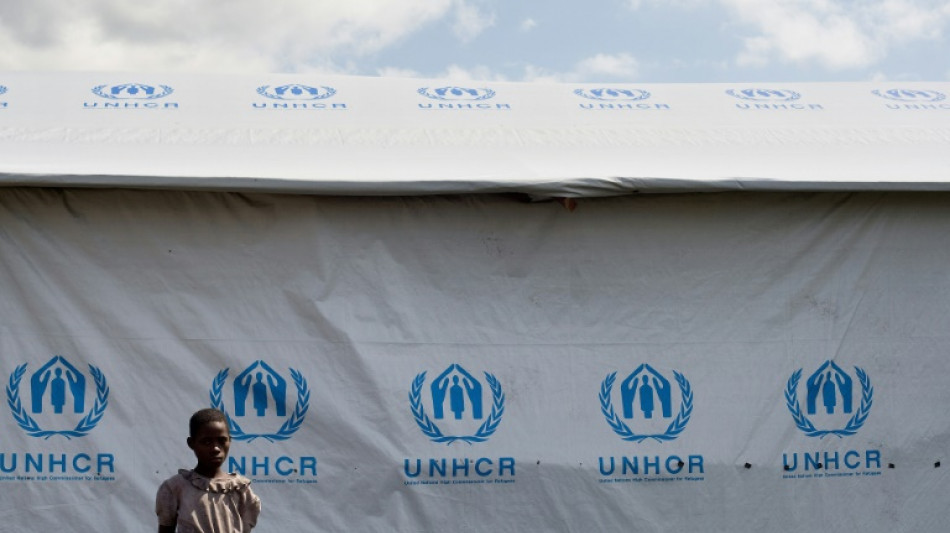
UN slashes global aid plan over 'deepest funding cuts ever' / Photo: YASUYOSHI CHIBA - AFP

 New Zealand Football withdraws support for Infantino, urges review

 Hopes fade in Colombia as window to find quake survivors shuts
 Trump announces tariffs of up to 100% on imported drones

 Spieth among five sharing Memphis lead as PGA playoffs open
 Boats rescue tourists as forest fire flames threaten Greek beaches

 Good vibes powering Djokovic return to Cincinnati
 Britain's Hunt wins 200m for European sprint double

 Draper dumped as Norrie saves face for Britain in Cincinnati

 England opener Gay out for duck in Pakistan warm-up

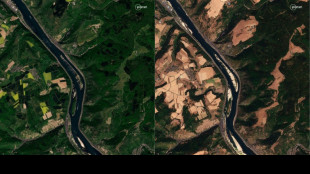 Europe swelters under fresh wave of extreme heat

 French Olympic gold medallist Florent Manaudou announces retirement

 Tourists rescued by boat as forest fire threatens Greek beaches
 Indicted Raul Castro reappears after months out of public view
 Italian teen Curtis breaks women's 50m backstroke world record for second time

 Taulagi steps out of 'comfort zone' with code switch to French Top 14 new boys

 Leicester's Thai owners put troubled club up for sale: reports

 Stocks steady as US inflation worries ease, oil slips
 Porsche to end production of flagship electric car: report

 Twitch sparks gamers' wrath with Amazon AI sharing deal

 Blaze forces families to abandon Turkish tour boat

 'If you can, move!' say Rome's viral dancing seniors

 Zambia voters weigh Hichilema's economic record

 SBCFX to Showcase Trading Innovation, Regional Growth Strategy, and Future Vision at iFX EXPO Asia 2026

 Hodgkinson sets up Werro showdown after Euro 800m drama

 'How many will die?': the mysterious ailment killing Kenyan elephants

The United Nations said Monday it was drastically scaling back its global humanitarian aid plans because of the "deepest funding cuts ever" -- leaving tens of millions of people facing dire straits.
The UN's Office for the Coordination of Humanitarian Affairs (OCHA) said it was seeking $29 billion in funding for 2025 compared to the $44 billion originally requested in December, in a "hyper-prioritised" appeal.
Since US President Donald Trump returned to office in January, the United States -- the world's top donor -- has heavily slashed foreign aid, causing havoc in the humanitarian sector across the globe.
Drastic US funding cuts have had dramatic consequences for emergency aid, vaccination campaigns and the distribution of drugs to fight AIDS.
Other major donor countries have also cut back their contributions in the face of an uncertain economic outlook.
"Brutal funding cuts leave us with brutal choices," OCHA chief Tom Fletcher said in a statement.
"All we ask is one percent of what you chose to spend last year on war. But this isn't just an appeal for money -- it's a call for global responsibility, for human solidarity, for a commitment to end the suffering."
- 'Cruel', 'heartbreaking' -
In late April, while visiting a hospital in Kandahar in Afghanistan, Fletcher warned: "Cutting funding for those in greatest need is not something to boast about... The impact of aid cuts is that millions die."
With 2025 nearly halfway through, the UN has received only $5.6 billion out of the $44 billion originally sought for this year -- a mere 13 percent.
In total, the original plan covered more than 70 countries and aimed to assist nearly 190 million vulnerable people.
Even so, that plan acknowledged there were 115 million people the UN would not be able to reach.
"We have been forced into a triage of human survival," Fletcher said Monday.
The mathematics "is cruel, and the consequences are heartbreaking".
"Too many people will not get the support they need, but we will save as many lives as we can with the resources we are given," he said.
Aid will now be directed so that it can "reach the people and places facing the most urgent needs", with those in "extreme or catastrophic conditions" as the starting point, said Fletcher.
"This will ensure that limited resources are directed where they can do the most good -- as quickly as possible," the statement said.
- 'Red alert' -
Fletcher's call came as the UN's Food and Agriculture Organization (FAO) and World Food Programme (WFP) issued a joint early warning report identifying worsening hunger in 13 hotspots.
Five of those places are facing an immediate risk of starvation -- situations worsened by dwindling funds, the agencies said.
Sudan, the Palestinian territories, South Sudan, Haiti and Mali have communities "already facing famine, at risk of famine or confronted with catastrophic levels of acute food insecurity", said the report.
"The devastating crises are being exacerbated by growing access constraints and critical funding shortfalls," it said.
Yemen, the Democratic Republic of Congo, Myanmar and Nigeria are now considered of very high concern and requiring urgent attention to save lives and livelihoods, it added, with Burkina Faso, Chad, Somalia and Syria the other hotspots.
"This report is a red alert," said WFP chief Cindy McCain.
"Without funding and access, we cannot save lives. Urgent, sustained investment in food assistance and recovery support is crucial as the window to avert yet more devastating hunger is closing fast."
In late March, WFP said it was facing an "unprecedented crisis" due to a 40 percent cut in its funding for 2025, risking life-saving aid for 58 million people.
T.Vitorino--PC