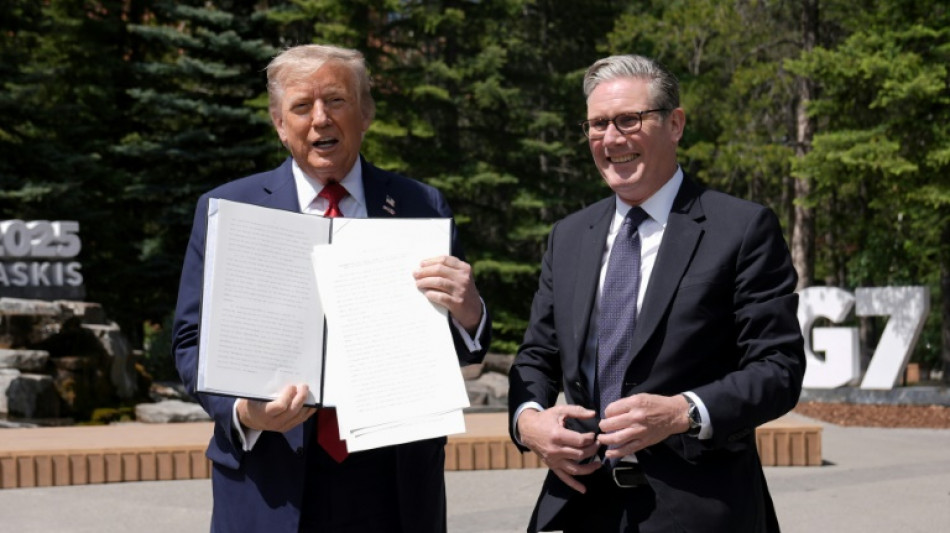
UK automakers cheer US trade deal, as steel tariffs left in limbo / Photo: Stefan Rousseau - POOL/AFP

 Search Underway for 'Dooars Rani' Tigress After Second Escape from Buxa Tiger Reserve

 IIM Indore Announces IPMAT 2027 Exam Date for April 24

 The Dilemma of Recording Live Music: Preserving Memories vs. Being Present

 ANC’s Renewal Rhetoric Fades as Voters Reject Party in 2026 Local Elections

 Foreign Investors Return to Indian Markets After 10-Month Selloff

 Honda CR-V and Toyota RAV4 Lead Canada’s Most Stolen Vehicles List for 2025

 China Extends Tariff Suspension on US Imports to Stabilize Trade Ties
Britain's auto sector on Tuesday welcomed news that the United States and UK have agreed to implement key parts of their tariff-cutting trade deal, as levies on steel remain.
US President Donald Trump signed off on the first truce in his trade offensive on Monday, on the sidelines of the G7 summit in Canada.
The agreement will slash tariffs on British carmakers by the end of June and remove them completely on British aerospace imports.
Britain in return has agreed to open its markets to US beef, other farm goods and ethanol.
"This is great news for the UK automotive industry, helping the sector avoid the severest level of tariffs and enabling many manufacturers to resume deliveries imminently," said Mike Hawes, chief executive at the Society of Motor Manufacturers and Traders.
Tariffs of 25 percent on the UK steel industry remain however, despite a bilateral agreement in May to completely remove the levy for British aluminium.
"We are still working at pace to make sure we can address the issue of tariffs for the steel industry," British Transport Secretary Heidi Alexander told Sky News on Tuesday.
According to the Financial Times, talks have stalled because a signficant portion of British steel is processed using imported materials.
Trump in June increased tariffs on aluminium and steel imports to 50 percent from 25 percent for other key trading partners around the world.
M.Carneiro--PC

